
 E-Paper



India, US rush to firm up maiden nuclear cooperation pact
Eight years after the two countries initialled a historic civilian nuclear agreement, India and the US are engaged in hectic price negotiations to close a signature deal between Nuclear Power Corporation of India Limited (NPCIL) and Toshiba-Westinghouse (T-W) for six nuclear reactors. The deal—the first of its kind involving a US company—could well be inked during Prime Minister Narendra Modi’s visit to Washington for the Fourth Nuclear Security Summit between March 31 and April 1.

 Prefer HTon Google


Eight years after the two countries initialled a historic civilian nuclear agreement, India and the US are engaged in hectic price negotiations to close a signature deal between Nuclear Power Corporation of India Limited (NPCIL) and Toshiba-Westinghouse (T-W) for six nuclear reactors. The deal—the first of its kind involving a US company—could well be inked during Prime Minister Narendra Modi’s visit to Washington for the Fourth Nuclear Security Summit between March 31 and April 1.
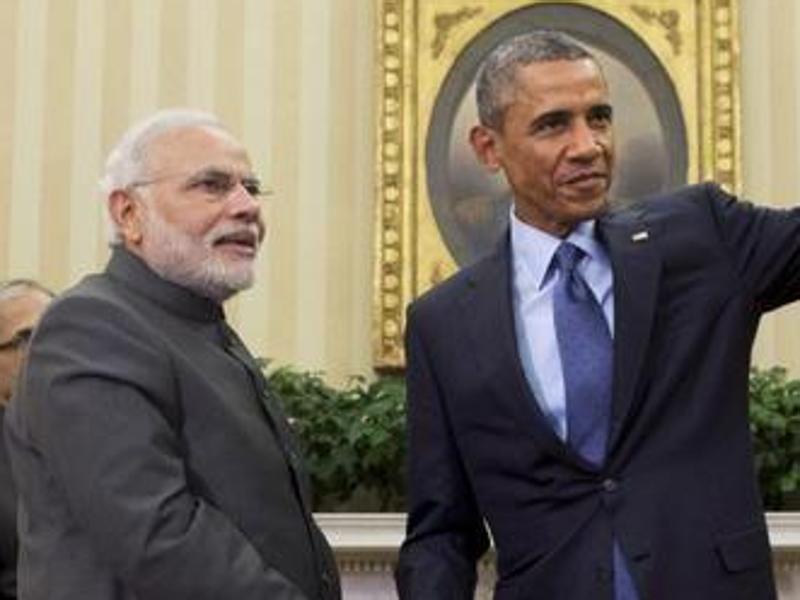
The Modi government remains tight-lipped about the negotiations, but official sources confirm that Toshiba-Westinghouse made a formal “techno-commercial” offer to NPCIL and “uranium fuel offer” to the Department of Atomic Energy (DAE) last week for the Mithi-Virdi 6,000 MW power plant near Bhavnagar in Gujarat. NPCIL and T-W had already initialled a preliminary early works agreement in September 2013.
“Both offers are under examination. The total capital cost as well as per unit power cost is under consideration. A US Exim Bank team is expected in India shortly for the financing package. The deal will be signed once these issues are sorted out,” said a senior official.
The Toshiba-Westinghouse deal is also helped along by the fact that India and Japan signed a similar civilian nuclear agreement during Prime Minister Shinzo Abe’s visit to India in December 2015.
“Commercial negotiations are on but it is not clear whether they can be closed by the time Prime Minister Modi reaches Washington. All efforts are being made to record forward movement,” said a senior official. Nuclear industry sources based in India and the US have independently confirmed the price parleys with ballpark price figures of $4.1 billion (Rs 27,000 crore) for two Westinghouse AP 1000 reactors. The first nuclear agreement after the 2008 India-US agreement was for building three and four units of 1,000 MW each for Kudankulam Power plant in Tamil Nadu with Russia in 2014 at a cost of nearly Rs 33,000 crore.
Top government sources said commercial negotiations with Westinghouse are required as Central Electricity Authority (CEA) has mandated the nuclear power price at Rs 6.50 per unit. To ensure that the commercial price remains within the mandated ceiling, India may negotiate for a bulk order of six AP 1000 light water enriched uranium nuclear reactors instead of two required for the first phase of plant commissioning. “If the two sides reach commercial close the two companies will sign a general framework agreement with techno-commercial agreement as part of the annexure. Both India and US are seeking closure as this is the last year of Barack Obama administration with the government going lame-duck in a few months,” said a senior official.


