
 E-Paper



From horse to high court, BJP’s strategy in Uttarakhand faltering
After rounds of sparring, HC throws out President’s Rule in Uttarakhand, sullying BJP’s’s image dented by Shaktiman’s death.


From horse to high court, the Bharatiya Janata Party’s (BJP) strategy in the hill state of Uttarakhand appears to have fallen off the cliff.
On March 14, BJP organised its biggest protest against Harish Rawat government in Dehradun but all the good work was in vain as the party legislator Ganesh Joshi allegedly assaulted the police horse Shaktiman, critically injuring him.
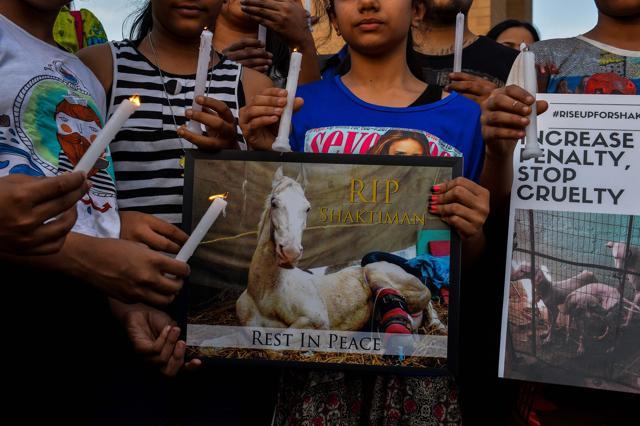
Shaktiman returned to haunt BJP with his death on Wednesday as Union women and child development minister Maneka Gandhi demanded that Joshi should be booked for killing a police officer on duty. Even as the BJP was battling with her stinging remarks, the Uttarakhand high court served a blow on Thursday by revoking the President’s rule — dashing any hope of the party to form the government in the state in near future.
The series of meeting in Delhi in the last two days indicated keenness on BJP’s part to stake claim to form the government thinking a rule of less than a year (election slated by February 2017) can turn tables in its favour.
Read | HC quashes Prez Rule in Uttarakhand, Centre to appeal order in SC today
But, the BJP failed to anticipate that the Centre’s arguments in favour of the President’s rule before the division bench headed by Chief Justice KM Joseph will not hold much ground.
The Centre failed to present any material evidence before the court on how the constitutional machinery in the state had failed.
Governor KK Paul had submitted eight reports to the home ministry on the political situation in the state after March 18, when nine rebel Congress legislators joined hands with the BJP to demand “conscience vote” on the state budget.
In the pandemonium, speaker Govind Singh Kunjwal declared the budget was passed but the BJP and rebels questioned the speaker’s decision. Paul asked Rawat to prove majority on floor of the house on March 28.
The governor, in his reports, termed “political situation volatile” but never recommended imposition of the Central rule and that was apparently the ground taken by the court to revoke the President’s rule.
The court on Thursday was willing to provide a window by asking the Centre to give an undertaking that it will not revoke the President’s rule for a week. The Centre was unwilling probably because Parliament was resuming work from April 25.
Once the session starts, the Centre will have to seek approval for imposition of the President’s Rule from Parliament, including the Rajya Sabha where it is in minority. The opposition will leave no stone unturned to embarrass the government in the upper house by getting the Central proclamation defeated. The Centre’s hope is the Supreme Court where it will challenge the high court order in the next few days.
Read | BJP red-faced as Congress gets upper hand after Uttarakhand HC order


