
 E-Paper



Welfare on a slowdown
With one eye on election and other on fiscal management finance minister P Chidambaram struck a delicate balance between "pragmatism" and "populism" in his meager increase in allocations for the social sector for financial year 2013-14 without compromising on priority areas for the UPA government -- inclusive growth. Chetan Chauhan reports.


With one eye on election and other on fiscal management finance minister P Chidambaram struck a delicate balance between "pragmatism" and "populism" in his meager increase in allocations for the social sector for financial year 2013-14 without compromising on priority areas for the UPA government -- inclusive growth.
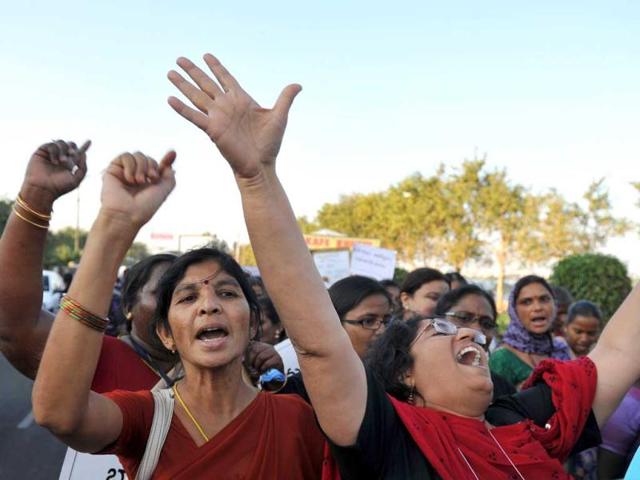
The inclusive growth agenda had earned UPA rich dividend in 2009 general elections and Chidambaram's set the tone for 2014 polls by outlining "three faces" -- women, youth and poor -- for special attention, who constitute more than 70% of the country's population.
Chidambaram's 6.5% increase, or Rs 5,55,322 crore (Rs 5,553 billion) in allocations for welfare and 16 flagships schemes in next fiscal appears small as compared to money given for same in the last budget Rs 5,21,025 crore (Rs 5210 billion) and has not enthused many socio-economists.
But, it, shows his fiscal prudence as government's own estimate shows that the Central ministries ability spend in current fiscal would not be more than Rs 4,29,187 crore or Rs 4291 billion (revised budget estimate).
Keeping elections in view, the finance minister has given hikes to all social sector ministries, kept allocation at same level for industrial ministries and reduced funds marginally for economic departments.
Yamini Aiyar, director of Delhi based budgeting service Accountability Initiative, was not surprised with low increase considering the overall "fiscal environment" and felt that it will not make much difference at the ground level as "spending capacity" of the government was weak.
"The FM's speech had nothing to offer in terms of a policy or vision statement for addressing these problems," she told HT.
The UPA government had effectively introduced its mantra of 'growth for social development' when Chidambaram was the finance minister in UPA-1.
It remained high on the government radar for the next eight years with average annual hike in gross budgetary support (GBS) -- government's support to the Central plan -- being about 15.4 %.
The low GBS in percentage terms for UPA in 10th year in power still meant allocating more than 60 % of total money given for social sector in five years of UPA-1.
The finance minister has increased allocation for sustained priority areas -- health, education and rural India - adding special focus on youth.
"My budget for 2013-14 has one overarching goal; to create opportunities for our youth to acquire education and skills that will get decent jobs or self employment," he said, as he announced an incentive scheme of Rs 10,000 for youth who clear skill certification test.
NC Saxena, member of Sonia Gandhi headed National Advisory Council and former planning commission secretary was not impressed with Chidambaram's money for welfare.
"There is nothing for old people and poor people except some tweaking in existing programmes," he said.
Both Aiyar and Saxena, however, said that Chidambaram lost an opportunity to correct some inherent flaws the way government implements its schemes even though the finance minister announced that number of Central schemes would be reduced to 70 schemes from existing 173 for better monitoring and pan-India coverage of direct benefit transfer (DBT) to plug leakages.


