
 E-Paper



To woo dalits, VHP launches campaign against untouchability
The movement to be spearheaded by VHP leaders and religious gurus aligned to the outfit, aims at ending separate temples, water sources (ponds/wells) and crematoriums for different castes.


Amid sporadic attempts to cobble alliances between dalit and Muslim organisations against the saffron camp, Hindutva outfit Vishwa Hindu Parishad (VHP) has launched a new campaign against untouchability with the aim of uniting Hindus.
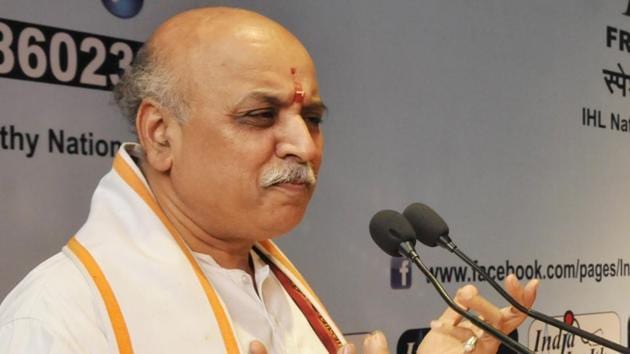
Terming untouchability as a social evil, the programme has been launched with the central slogan, “Ek mandir, ek kua, ek shamshan/ Tabhi banega Bharat mahan. (India will become great only if we go to the same temple, drink from the same well and use the same crematorium.)”
Read: Crawl in a trench, climb a rope, load a gun: A day at a ‘valour training camp’ of Bajrang Dal
The decision was taken during a three-day sant sammelan at Udupi in Karnataka in end-November, organised by VHP and attended by Rashtriya Swayamsevak Sangh chief Mohan Bhagwat and VHP international working president Praveen Togadia among others.
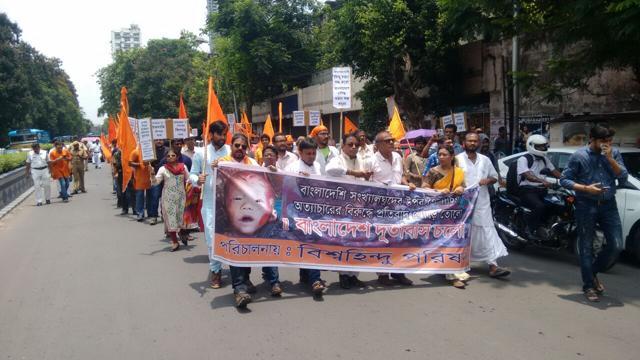
The movement to be spearheaded by VHP leaders and religious gurus aligned to the outfit, aims at ending separate temples, water sources (ponds/ well) and crematoriums for different castes. VHP hopes the move would help thwart ‘conversion initiative by Christian missionaries’.
Within VHP’s organisational structure, one primary step to achieve this goal will be for higher caste VHP organisers to adopt as ‘family friend’ a dalit family. The project has been named ‘Parivar Mitra sankalp’. Leaders have been asked to set example to send the message down the line.
Read: VHP to recruit 5,000 ‘religious soldiers’ in Aligarh to control cow smuggling, love jihad
“Each of our leaders who belong to a high caste will adopt as dalit family as ‘parivar mitra’ or family friend. The dalit family will be invited in all family programmes of the leader. The leader’s family will also visit the dalit family and engage with their programmes,” Sachindranath Singha, VHP’s in-charge of West Bengal, Assam, Odisha, Sikkim and the Andamans, told HT.
“All of us present there spoke against untouchability, as this evil is dividing the Hindus. While West Bengal and Odisha are relatively less affected thanks largely due to Shri Chaitanya, the practice is prevalent in various parts of southern, northern, central and western India. If we needed a united Hindu society, we must end untouchability,” Swami Gurupadananda, one of the attendees from Bengal, told HT. He is the chief organiser of Hindu Milan Mandir, a wing of Bharat Sevashram Sangh.
To implement the programme, religious leaders and temple heads who attended the meet would start visiting dalit neighbourhoods and try to get more people from lower castes involved with daily affairs of temples.
Read: VHP to raise issue of ‘fake babas’ at Karnataka conclave in November
“Ambedkar had said untouchability will end if religious gurus come together to declare it an evil. That moment was here – 2,000 saints from all over India jointly declaring untouchabilty had no religious sanction in Hinduism,” said VHP international joint secretary Surendra Jain.
Gujarat-based dalit activist Martin Macwan, who heads the NGO Navsarjan that surveyed between 2007 and 2010 as many as 1,489 villages across 14 districts in Gujarat, said that the practice of untouchability is far from decreasing in many parts of the country.
The survey found that in 90.2% of villages, dalits could not access temples, in 54% of government schools children from dalit families had separate sitting arrangement for mid-day meal sessions, while in 64% villages dalit sarpanch (panchayat head) or panchayat members had separate glasses for drinking tea and water. The headmen would often sit on floor while panchayat members from higher castes sat occupy chairs.
Read: The Dalit story in today’s India is no longer a side plot of class
Scholars and political observers, however, have welcomed VHP’s move, while saying the move has most likely been prompted by the recent political initiatives - though sporadic but spanning across the country - for a ‘dalit-Muslim alliance’ against the saffron camp.
“I welcome the move. Anybody who takes up the cause is welcome,” said Sukhadeo Thorat, an economist, who also served as the chairman of the University Grants Commission.
“Pre-empting the prospective alliance between dalits and Muslims seems to be the primary agenda, while countering religious conversion looks like another reason,” said Amal Mukhopadhyay, political analyst and former principal of Presidency College in Kolkata.
Read: Ram Lalla not kept warm, VHP cries foul, gets refuted by temple priest
Ghanshyam Shah, a retired professor of Jawaharlal Nehru University, who hails from Gujarat, however, doubts whether VHP is ‘ideologically equipped’ to eradicate untouchability.
“I welcome the move but I am keen to see which side VHP takes in case of confrontation between members of higher and lower castes that untouchability often produces,” asked Shah.


