
 E-Paper



Crisp chemistry: What it takes to make the perfect potato chip


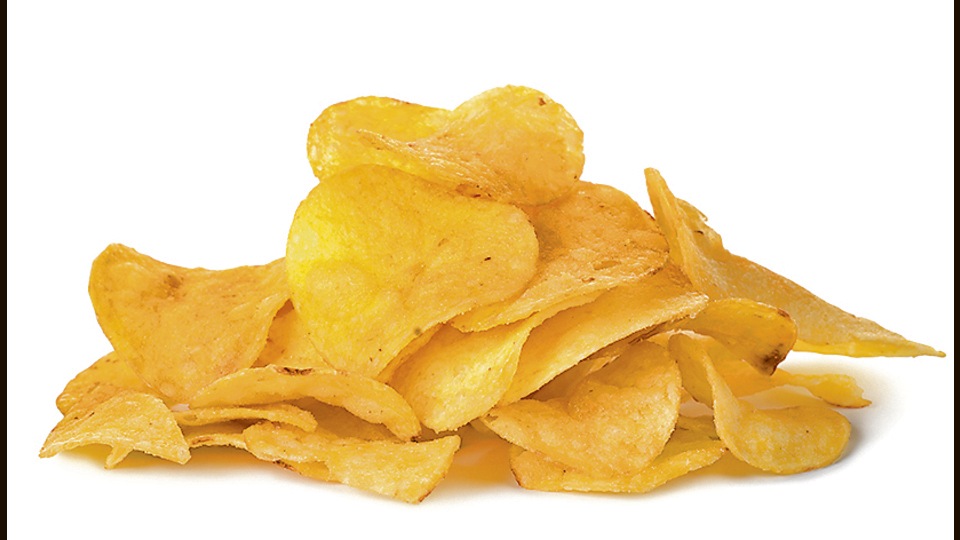
It takes science, technology and immense precision to achieve that perfect shade of gold and irresistible crack and crunch. How is it done, and why is the average chip about 35% oil? Find out in this week’s Sound Bites, with Swetha Sivakumar.
There are few foods more festive than a giant bowl of chips, and few things more delicious.
Read the ingredients list and one should typically see only three: Potato, oil and salt. How do such complex flavours come from so few components? What goes into the perfect chip?
Let’s start with the potato. Most potato-chip makers have poured millions of dollars into developing the perfect breed for their chips. The ideal tubers are somewhat uniform in size, do not suck up as much oil as a regular potato, have a low sugar content (to keep the eventual chips a light gold), and are resistant to pock marks and blemishes.
The genetic editing techniques used by various companies to improve their crops are closely guarded. After all, it can take up to 12 years to breed the right type from scratch, a task made even more difficult by the fact that the potato is a tetraploid (carrying four copies of each chromosome). This is partly why, despite the terrible optics, PepsiCo sued four Indian farmers in 2019, for illegally growing the exclusive Lay’s potato in an “unauthorized cultivation program”. (They eventually withdrew the case).
Harvesting the right potato is just the first step. Each one after this is vital too. Storage, for instance, can be tricky. If the temperature in a warehouse drops too low, the potatoes could end up with sucrose levels higher than 2%. This will result in chips that fry to a much darker brown, a shade that is not as appealing.
Now we’re at the frying stage, and this is where it gets a bit disturbing. A potato is typically 80% water. Slice it and drop it in hot oil and the starches cook, but the water bubbles out. What takes its place in the pores left behind? Oil!
Potato chips basically convert a root vegetable made up almost entirely of starch and water into a snack of cooked starch and oil. Every potato chip is about 35% oil, with the water content usually reduced to less than 2%.
Among foods, even packaged foods, this is an astonishingly low number. For perspective, flour is about 14% moisture; bread is 38% moisture. But these low levels are necessary to achieve that classic crispiness. If the moisture level in a chip rises to even 4%, the product will no longer crunch. And who would eat a limp chip?
Given the low water content, spoiling, in a chip, does not occur as a result of microbial activity. It occurs from the oils turning rancid. To retain the crispness of the chip and prevent the oil from turning rancid through a packet’s six-month shelf life, the right packaging is vital. Chips packets are made from multiple layers of plastic and aluminium, which together keep light and moisture away. The packets are also filled with inert gasses such as nitrogen, which help keep oxygen away, and cushion the wafers while in transit.
Even with all these controls, the potato will exhibit some variability. Some chips are smaller, some have bubbles, some fold within themselves and some are more porous. A perfectly uniform shape is only possible if one swaps the potato with potato flour. That’s how Pringles gets its perfect hyperbolic paraboloid — that trademark double curvature that’s both easy to stack and extra-resistant to breaking. Baked, popped and shaped chips also tend to use flours rather than the actual vegetable.
Back to the potato, the world’s favourite flavouring for a chip, salt, is usually added just before packing. Salt is sprinkled on the hot chips as they pass along on a conveyor or tumble about in a rotating drum. Typical salt levels range from 1.5% to 2.5%.
All in all, not a healthy snack, but an irresistible one that we turn to over and over in times of festivity and cheer. Here’s wishing you a merry Christmas, and a happy new year.
(To reach Swetha Sivakumar with questions or feedback, email upgrademyfood@gmail.com)


