
 E-Paper



Do or dye: How humans chased colour and found it

 Prefer HTon Google


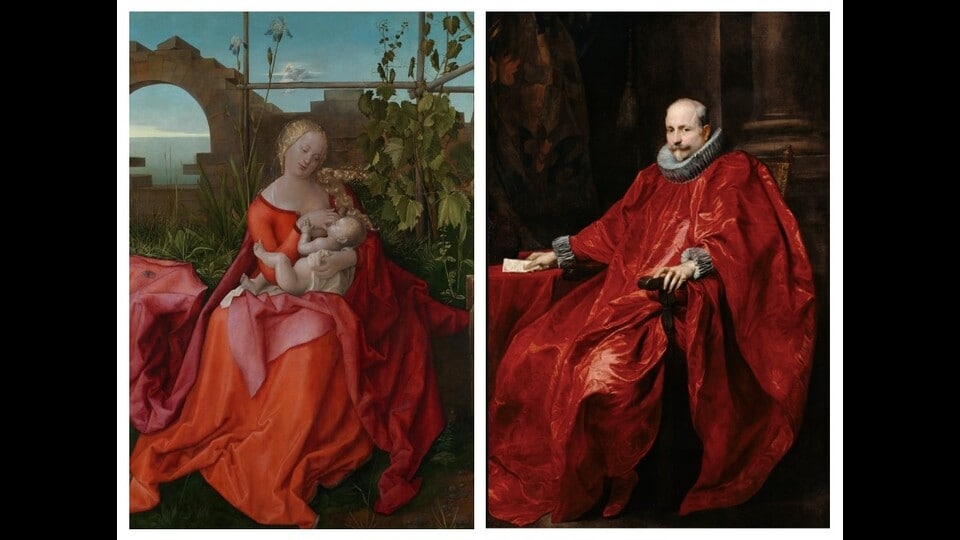
A new book explores how dyes were created through millennia, and the economic and social contexts of the hues that shade our world.
How did we “find” colour, which shades have we lost, and how did synthetic dyes change it all?
Textile designer and researcher Lauren MacDonald, 33, spent three years working on the book she published last year, and it has some of the answers. In Pursuit of Color: From Fungi to Fossil Fuels – Uncovering the Origins of the World’s Most Famous Dyes, explores the economic and social contexts of the hues that shade our world.
It draws on work she began as part of her Master’s thesis in 2018-19, while studying anthropology and material culture at University College London. In the course of that research, she came across start-ups that were trying to reduce the impact of the massively polluting textile-dyeing industry.
“I realised then that the answer to the fashion industry’s colour problem wasn’t going to be engineered bacterial that could poop out colour, at least not on its own,” MacDonald says, “It was going to be about changing behaviours, tightening up practices that already exist, and using materials that we’ve known for millennia.” Highlights from her findings.
Starter pack
The oldest manmade pigments — made from chalk, soil, animal fat and burnt charcoal — have been found in settlements dated to 40,000 years ago. Fast-forward to 26,000 years ago, a time before agriculture, when the woolly mammoth and sabre-toothed lion still roamed the plains, and we come to the oldest known remains of dyed thread.
Microscopic fibres containing hints of pink, grey, turquoise and black were found in a cave in the Caucasus mountains of Georgia, says MacDonald.
The human obsession with coloured fabrics would change the world, shaping the Silk Route and imperialism, contributing to the rise and fall of pre-colonial India.
Recipes for dyes turn up in ancient texts and court records, law books and travellers’ accounts. There are Egyptian papyri in which “instructions for making purple dye (sit) alongside advice for turning lead into gold, and pebbles into precious gems,” MacDonald writes.
Until the era of synthetic dyes, most people would have had some familiarity with materials that produce and alter colour. “We’ve lost a hard-won literacy of color that was earned over millennia,” she writes.
Purple haze
A rich element of that heritage is Tyrian purple, which remains one of the rarest dyes in the world. In the ancient world, it was one of the most valuable. Named for Tyre in Lebanon, where trade in this pigment flourished, it was derived from the carnivorous Murex sea snail, and was popular in clothes as a status symbol, across the ancient Mediterranean. The earliest evidence of it was found in present day Qatar, and dated to 4,000 years ago.
Over centuries, the popularity of the colour caused the snail’s population to plummet. “What’s interesting is there’s nothing about them that’s purple. The colour doesn’t exist on them when they are alive,” says MacDonald. “But once you extract the hypobranchial gland and expose it to oxygen, it turns purple.”
The hue fell out of use in the 15th century, when Pope Paul II changed the colour of his cardinals’ robes from purple to scarlet. There was a political element to this decision; scarlet was derived from the kermes insect, in a recipe that called for alum, “and the papal states happened to control all the alum production in Europe”.
And so the snail was saved, and the hue to aspire to became a shade of red.
In the red
The Kermes vermilio is a bright red parasitic insect that infests oak trees, and it has been used to make different shades of red for thousands of years. Ancient Persia plied a flourishing trade in this dye.
The colour is extracted from the bulbous females of this distinctly red species, when they are heavy with unlaid eggs. It was the most expensive red across the Middle East, North Africa and Europe for over 1,000 years, until the 16th century, when the Spanish discovered the cochineal in South America, and began to use that insect to make the even redder carmine (from the Arabic kermes; the cochineal is from the same Coccoidea family as the vermilio).
“There are three insects that have been used at an industrial scale to produce red in history,” says MacDonald. “The cochineal, which is South American; kermes, which is European; and lac (another member of the Coccoidea family), which is Southeast Asian. Of these, cochineal and lac can be farmed. Kermes can’t. And because of a number of factors, including the forest fires and habitat loss in Greece, it has become a really, really rare source of colour.”
Happy acci-tint
Then came commercial synthetic dyes. The first of these was discovered by accident in 1857, by an 18-year-old English chemistry student conducting experiments in his parents’ attic. William Perkin mixed alcohol and aniline (derived from coal tar) and ended up with a murky, oily solution. When tested further, by mixing with alcohol, it turned a garish purple.
Perkin dipped a bit of silk into the mix, and it emerged lilac. He called the hue mauveine.
“It made him a lot of money, and set off a huge chemistry rage,” says MacDonald. “As soon as we could get colour from coal and later petroleum, we were not reliant on weather, farming or any of those lengthy practices any more, and we could do it faster for cheaper.”
A grim brown
From happy accident to grim reminder, the most sinister source of colour listed in MacDonald’s book is a rather recent abomination: ground-up Egyptian mummies, used to make a hue named Mummy Brown. Amid a brisk trade in mummies, it remained in use from the 17th to early 20th centuries. It was used in works by French masters and pre-Raphaelite British painters. And finally discontinued as public censure grew, mummies became protected, and supplies ran out. While MacDonald doesn’t delve into detail, since the shade was not used in a dye, she did think it warranted a tiny mention, she says.


