
 E-Paper



Fungi whisperer: Meet the scientist studying the secret lives of trees

 Prefer HTon Google


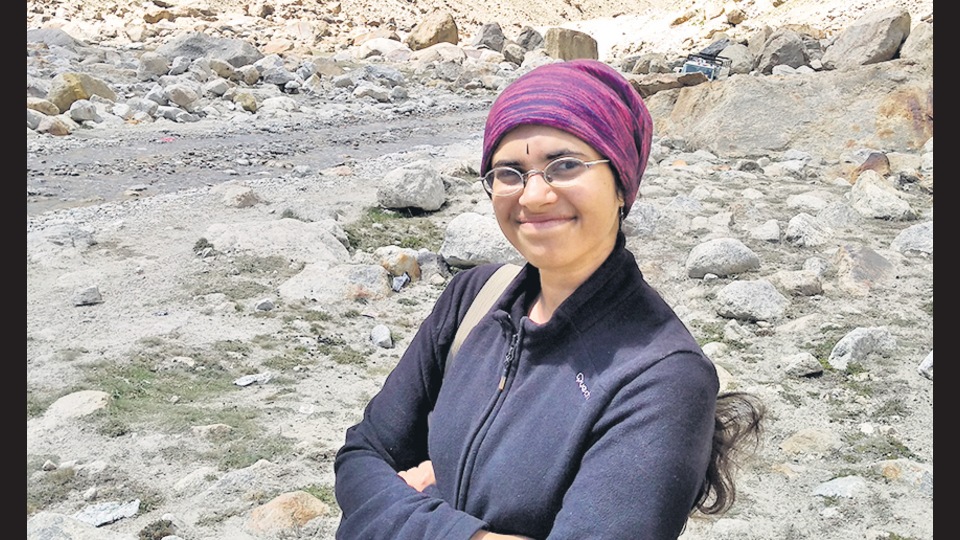
Yadugiri VT knows how much magic there is in every mushroom. Her field of research is the ways in which trees and fungi exchange favours deep underground.
It is generally understood that trees can’t speak, but there’s a lot going on underground. Scientists have, for decades, been studying how plants interact through their roots, particularly with microscopic fungi that help them absorb nutrients from the soil.
Yadugiri VT, 33, a research associate with the department of biotechnology at the Indian Institute of Science’s Centre for Ecological Sciences in Bengaluru, is among those around the world who are studying how the climate crisis could alter these interactions.
The fungi are so minuscule that they’re smaller than the finest roots of plants, she says. “So they can access pools of nutrients and water in the soil that are inaccessible to plants, and act as extended roots.”
The fungi are “paid” in carbon. Anywhere between 5% to 85% of the carbohydrates that a plant produces during photosynthesis (the process of turning water and sunlight into chemical energy) goes to the fungi, which feed on it. An estimated 90% of all land plants, from shrubs to trees, are in this mutually beneficial relationship.
For her PhD, Yadugiri spent three years, on and off, crouched in the Nilgiris in the Western Ghats and in the trans-Himalayan region of Spiti, studying these root-fungal systems. Arbuscular mycorrhizal fungi, the dominant such fungi worldwide, are thought to have evolved about 400 million years ago, hundreds of millions of years before the first dinosaurs. “They may have had a role in helping plants colonise land,” Yadugiri says.
Now, amid rising temperatures, changing rainfall patterns and nutrient availability, alien plant invasion and other such disruptions, Yadugiri is studying the potential future impact on the plant-mycorrhizae interactions and the ecosystems they help nurture.
In one of her experiments, for instance, she studied how the plant-fungi interactions work in the icy, dry Spiti Valley, which has sparse vegetation but supports large populations of herbivores. “We know that mycorrhizae can help plants access water in such a dry place in exchange for carbon,” says Yadugiri. “But they are also losing carbon to herbivores who feed on the plants.”
Yadugiri’s experiments involved setting up miniature greenhouses in which she could manipulate temperatures. She took samples of local vegetation back to the lab and experimented with different climate and nutrient conditions, studying their impact on the health of the eventual plant growth.
Mycorrhizal research can be used to improve agriculture yields and aid ecosystem restoration, Yadugiri says.
“The hope is that a better understanding of the complexity of these ecosystems will lead to more thoughtful and informed conservation, restoration and management of our forests and grasslands.”


