
 E-Paper



Give grease a chance: Swetha Sivakumar on plant fats

 Prefer HTon Google


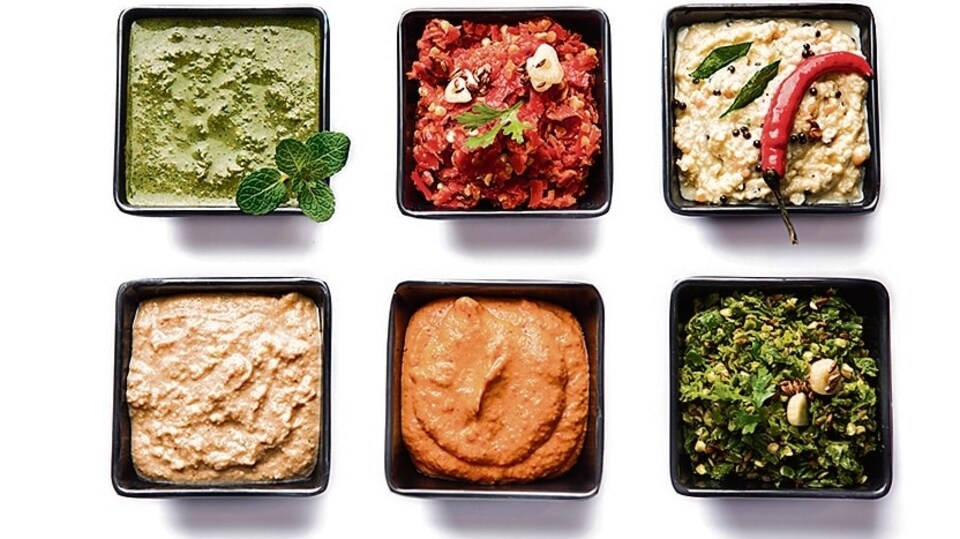
They give our foods some of their most delicious textures and flavours. But they also serve a vital purpose in plants.
We’ve swung like pendulums when it comes to fats (technically, lipids). They’re good. They’re bad. They’re good and bad. Some are good, some bad.
Who knows where we’ll land on this next? For now, one thing we have settled on for certain is that fats serve a vital purpose, even in plants.
They store more energy per gm than any protein or carbohydrate. They pack it in so densely that they make an excellent storage mechanism too, taking up far less room for far more joules. They store so much energy, in fact, that if a unit of glucose is like one rupee, and a unit of starch is like ₹1,000, then a unit of fat is like 1 gm of gold.
Like gold, fats can be gifted like an asset, handed down from a plant to a nut or a seed, for instance, to act as a comfortable cushion as the baby plant grows, buying it crucial time before it must start accumulating energy for itself.
In plants, fats are a vital waterproofing agent as well. Because they are non-polar and do not dissolve in water, plants can use them to develop waxes and cutins that help them combat water loss and protect against plant pathogens.
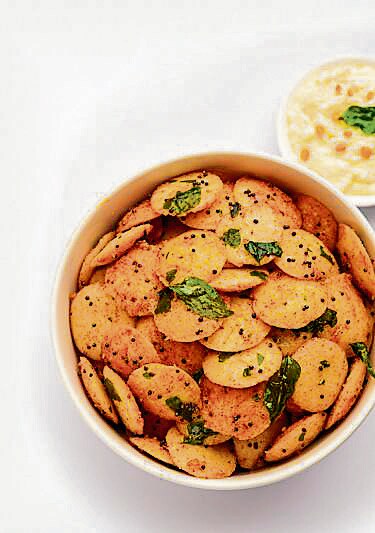
When it comes to cooking, this property turns out to be extremely useful. It is the fats in ingredients that give our foods some of their most delicious textures.
When one coats a flour with a fat, for instance, one impedes the swelling and gelation process. Whether it is the oil or ghee we add when making parathas, or the coconut milk we use when cooking starchy vegetables in a kurma, the presence of fat dissuades a starch from absorbing too much water. This gives the end result a smoother, creamier texture.
It has another distinct advantage: since these foods absorbed less water to begin with, the rate of retrogradation (the hardening or drying of starches) is slower. This is why parathas, typically made with more oil, are so much softer than chapatis the next day.
Fat also equals flavour, in so many ways. Unrefined ones (extra-virgin oils, for instance) are themselves a source of flavour compounds such as lactone (coconut oil) and pyrazine (sesame oil). This is the reason machher jhol don’t taste the same without mustard oil. It’s why we add a glug of unrefined sesame oil to idli milagai podi.
Fat adds aromas. The fatty acid part of the molecule reacts with oxygen and heat to create small, volatile aroma particles. It is these particles drifting about in the air that lure you in as you pass a bhajiya stall on the street.
Fats carry flavour too. The tadka is the clearest example of how hot oil can elevate a set of simple ingredients (hing, karipatta, garlic, red chillies) by essentially holding on to their flavour compounds. Grinding roasted spices with a fat-rich ingredient such as coconut has a similar effect, and is a large part of what gives Malabari and South Indian dishes their superlative flavours.
Why? It’s because aromatic compounds usually have both water-loving parts and water-hating parts. To get the full effect of the aroma, one must dissolve the parts that are not water-soluble, and this is most easily done in oil. Once they are dissolved, the aroma is tied up and stays in the dish longer. Those not bound by fat tend to get carried away by steam.
Even in the mouth, fats do a lot of heavy lifting. They coat our tongues with their dissolved flavour molecules, lingering longer in the mouth and allowing us to appreciate the taste of a dish more intensely. (Water-soluble compounds are washed away much more easily by saliva.)
All in all, I’d say fats are pretty awesome. I, for one, am always glad to see them around.
(To reach Swetha Sivakumar with questions or feedback, email upgrademyfood@gmail.com)


