
 E-Paper



Lucy comes to Europe: See fossil exhibit of 3.18 million year old human ancestor in Prague museum

 Prefer HTon Google


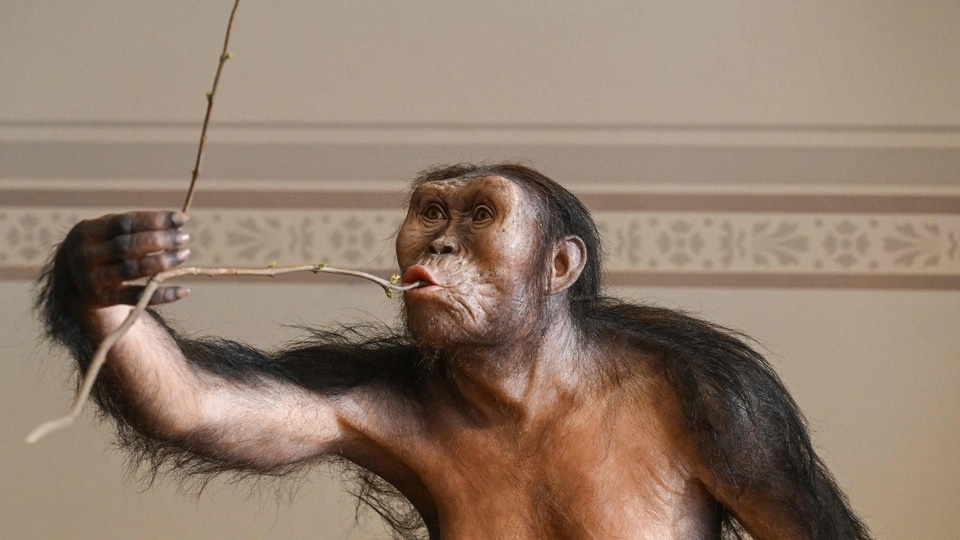
3.18-million-year-old grandmother: Lucy’s bones leave Ethiopia for a historic first-ever European display; Prague museum lands the ultimate fossil exhibit.
The bone fragments of Lucy, a 3.18 million year-old human ancestor which rarely leave Ethiopia, will go on display in Europe for the first time in Prague this year, the Czech premier said Tuesday.
The ancient remains of the Australopithecus afarensis were discovered in Ethiopia in 1974. The find was, at the time, the most complete ever found, and revolutionised the understanding of humanity's ancestors.
"Lucy's skeletal remains will be displayed in Europe for the first time ever," Prime Minister Petr Fiala told reporters as he announced the rare loan by Ethiopia's National Museum. The fragments will be shown at Prague's National Museum as part of a "Human Origins and Fossils" exhibition for two months from August 25.
The remains will be presented alongside Selam, the fossil of a baby Australopithecus who was about 100,000 years older than Lucy and found in the same place 25 years later.
"This historic exhibition... will offer tourists and researchers a once-in-a-lifetime opportunity to see these priceless fossils first-hand," said Ethiopian Tourism Minister Selamawit Kassa.
In her current shape, Lucy consists of fossilised dental remains, skull fragments, parts of the pelvis and femur.
The fossilised skeleton of the 1.1-metre-tall (3.6 feet), 29-kilogramme (64-pound) Lucy last left Ethiopia between 2007 and 2013 when it toured US museums.
The hominid was named after the Beatles' song "Lucy in the Sky with Diamonds" which the team that had found her listened to after the discovery.
Lucy walked on two legs and is thought to have died aged between 11 and 13 -- considered an adult for this species.
She was believed to be the oldest human ancestor found until the discovery of "Toumai" in Chad in 2001 -- a skull dated to six or seven million years old.
In a 2016 study, researchers said Lucy had strong upper arms, suggesting she regularly climbed trees and nested in branches at night.
She also had relatively weak legs that were not used for climbing and were inefficient for walking, the study concluded.
An analysis of a fracture on one of Lucy's bones in the same year suggested that she probably died from a fall from a tall tree.
Long considered the longest living human relative, Lucy was dethroned of her status in 1994 following the discovery -- also in Ethiopia -- of Ardi, a female Ardipithecus ramidus who lived 4.5 million years ago.


