
 E-Paper



How to get your eggs just right: Tips from Swetha Sivakumar

 Prefer HTon Google


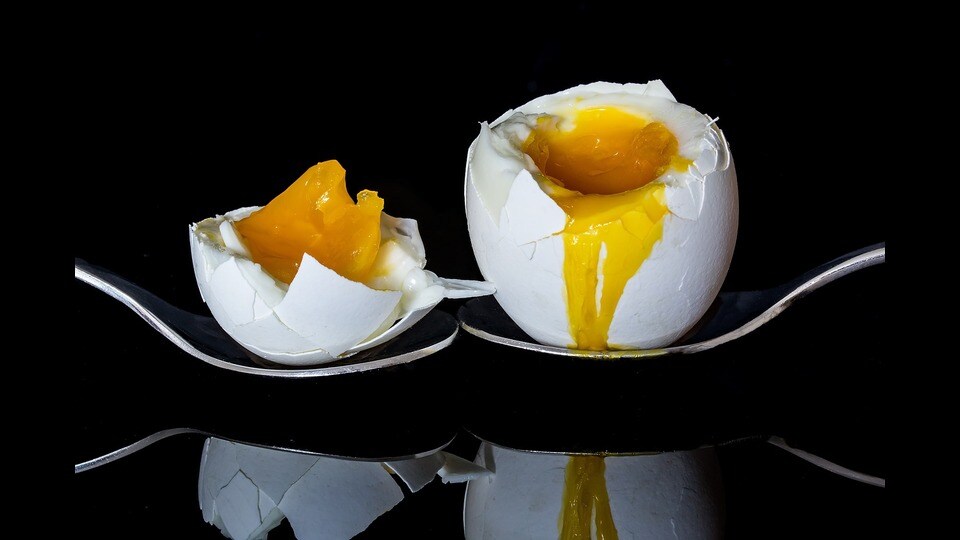
Do you struggle with boiled eggs, or never know when to stop whisking? Read on for a quick, science-based guide.
The peeling problem: Boiled eggs are harder to peel if they’re fresh. As eggs age, the albumen in the whites start pulling away from the shell, making them easier to peel when boiled. If fresh eggs are all you have, here’s a cool trick. Start them off in boiling water rather than letting them come to a boil immersed. The steep temperature difference causes the protein molecules to seize up immediately, pulling away from the shell lining. Once the egg is cooked, it should peel easily. This method was tested successfully on more than 100 eggs, by food-science author J Kenji Lopez-Alt. An A+ to him for commitment to a cause.
Why overwhisking can cause collapse: When you whisk egg whites, some of the proteins in them, especially the globulins and ovotransferrin, start to unfold. These protein molecules are large and complex. Bonds start to form between the water-loving parts, the fat-loving parts and sulphur groups. In between these bonds, air and water are trapped as the whisking continues. This network of protein, air and water, when baked, transforms from a semisolid foam into a solid structure. But you cannot just keep whisking, hoping to get more and more volume. The egg whites can only expand to a point. Beyond that point, the proteins embrace each other so closely that the water starts getting squeezed out and the structure starts to lose volume.
Acids help to stabilise foam: If you add acids such as cream of tartar to egg whites, they take longer to foam but create a more stable foam when they do fluff up. The reason is that acids flood the egg whites with protons, which discourage the sulphur bonds between the proteins from occuring. This makes it harder for the proteins to aggregate too tightly and thus prevents the later collapse of the foam.
Why egg yolk and fat droplets interfere with foam development: A few drops of yolk won’t affect foaming much, but too much yolk or fat creates problems. Not only do they take up the space between the proteins, preventing them from forming a bond, they also don’t provide any structure reinforcement themselves. This is why whisking bowls lined with fat are known to create weak foams. Always use a freshly cleaned bowl to whisk egg whites.


