
 E-Paper



Projection screen in home theatre looking too ‘tech’ and not chic enough? 4 ways to make it blend with your decor

 Prefer HTon Google


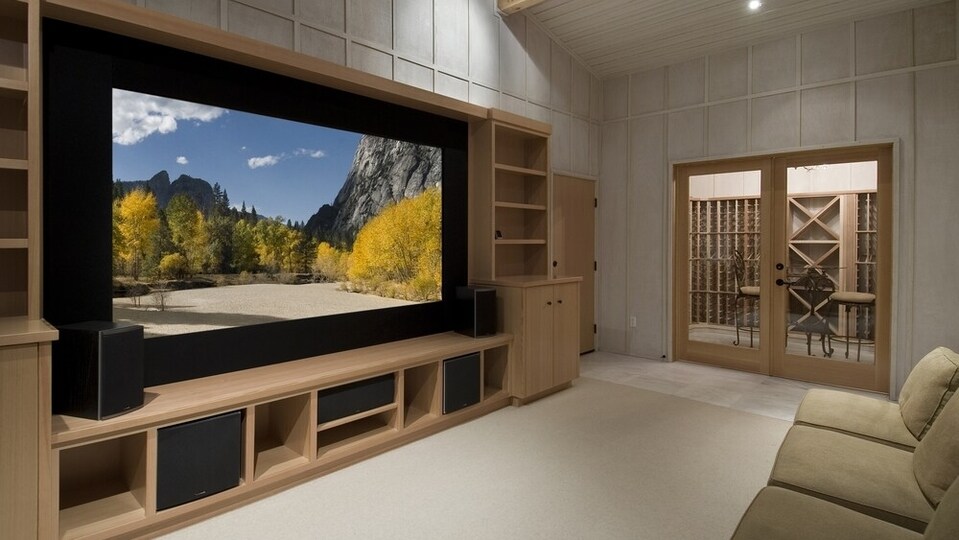
Projection screens are no longer just a huge tech accessory in your room; they're a part of design, beautifully blending in with your decor.
Gone are the days when home theatre projection screens were added as an afterthought, sticking out jarringly from the decor. Today, the incorporation of these screens is moving towards an organic note, intending to cohesively blend into the surroundings. The idea behind this is that a home theatre is not only about the viewing experience but also a place of visual design harmony. Sure, your home theatre is obviously about what you are watching, but it's also a space to relax and enjoy. So the screen ideally shouldn't clash with the decor or stick out like a sore thumb just because it looks too ‘tech’ for the room.
Yusuf Galabhaiwala, Director of Operations at Lumina Screens, shared with HT Lifestyle the growing trend of projection screens becoming a thoughtful part of interior design, smartly maintaining the decor aesthetic and not dominating it.
He explained, “In 2025, home cinemas are no longer relegated to high-tech media rooms. They're taking centre stage, integrating seamlessly with the design and character of the new home. And at the epicentre of this change? The projection screen. What was previously just a functional surface is now being remade as a considered design feature, almost hidden, elegant, and sometimes barely there at all. The next generation of projection screens is not so much about what you're watching; it's about how your room feels when you're not watching anything.”
Yusuf Galabhaiwala shared a guide, covering 4 tips that effectively make your projection screen more cohesive with the decor around:
1. Retractable screen
- One notable change we are seeing is toward retractable and incorporated screens that are invisible when not in use.
- These screens are perfect for houses where the living area also serves as the lounge, dining area, or even a home office, from custom cabinetry to ceiling recesses; they appear only when required.
- Families that prefer open-plan layouts or minimalist design, where visual clutter is taboo, especially like these solutions.
2. Soft neutrals
- Designers and homeowners are moving away from pure white screens. Instead, screens with muted, room-friendly colours like pale grey, stone, beige, and warm ivory are seen.
- These muted colours seem more natural in earthy, neutral-toned homes. They go with walls, flooring, and built-ins instead of opposing them.
- This change also aligns with the general trend of welcoming warm minimalism. Though softened with organic textures and subdued colours, this approach is founded on clear lines.
3. Combine with soft furnishings and layered lights
- The surrounding décor is stepping up as screens grow less vibrant. Designers are combining projecting surfaces with layered lighting, plush modular seating, textured drapes, and natural materials like wood, jute, or linen.
- Even the acoustics are being improved with visual sensitivity. Velvet or wool blends are being used to cover sound-absorbing panels, giving them the appearance of elegant wall art.
4. Screens with frames
- Statement pieces and projecting screens are growing to be more than just blank canvases.
- While others are bordered with metal or wood to resemble huge artwork, frameless and borderless screens provide a modern, elegant atmosphere.
- Some homeowners are even integrating screens within decorative wall panels or lining them inside gallery-style walls, producing a layered, curated appearance that preserves the screen's unity with the design of the room.


