
 E-Paper



Romantasy brings dragons and eroticism together. At last


 Prefer HTon Google


Novels starring hot fairies are selling millions of copies
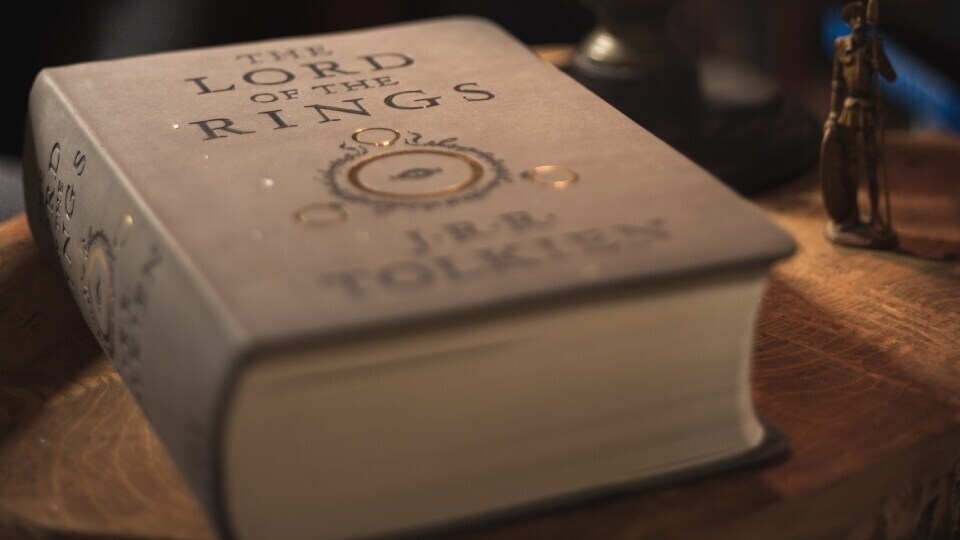
Perhaps it is Frodo’s hairy feet. Perhaps it is because orcs are not that erotic. Perhaps it is because too many characters sing songs containing words like “merry-o” and “deedle-dum-diddle”. Whatever the reason, one thing is clear: J.R.R. Tolkien’s “The Lord of the Rings” is rarely considered an erotic romp.
Fantasy books generally are not. Harry Potter is a child; Aslan is an animal. And though books by writers such as Ursula Le Guin, of the “Earthsea” series, do contain sex, they also contain phrases in the vein of “the hormonal secretion is further stimulated”, which rarely set pulses racing. One exception is “A Game of Thrones”, which does contain lashings of sex. But since it also contains actual lashings, not to mention phrases such as “beat her bloody”, it is not usually considered romantic.
Fantasy is changing, because “romantasy”—the literary love-child of fantasy and romance—has arrived. Romantasy offers precisely what its portmanteau suggests: fornicating fairies and dragons that smoulder in more ways than one.
Romantasy can be a mildly alarming read. Feminism, it turns out, is not a forte in fairyland. Male fairies can be domineering and violent, and have hands “like shackles”, which they use to pin women down. Perhaps even more troubling, in romantasy the word “fairy” is frequently spelt “faerie”. Which is faerlie irritating.
That hardly matters, because romantasy is so successful. One of its most popular authors, Sarah J. Maas, has sold over 38m books worldwide. In bookshops, romantasies are starting to be moved from the shamefaced shelves at the back to the open tables at the front.
Bookshops are slow off the mark. Romantasy, whose popularity has been fuelled by TikTok, a social-media app, has been sitting at the top of bestseller lists for months. Television has started to take notice, too. Amazon has bought the rights to work by Rebecca Yarros, a popular author; there has been talk that Ms Maas’s books could be made into a series by Hulu.
In one sense the success of this genre should not feel surprising. The 20th century may have unsexed the supernatural, but the genre was not always so chaste. Fantasy has its roots “in traditional fairy tales”, says Stuart Lee, a specialist in fantasy literature at Oxford. These were often about “a princess being rescued by a prince and living happily ever after”. Very happily, in some cases: in the original not-so-Grimm telling of “Rapunzel” the prince does not merely drop by the tower to say hello but has sex with Rapunzel while she is locked in there. They have a ball, living in “joy and pleasure for a long time”.
Earlier influences are odder yet. In Arthurian legend King Arthur commits incest with his half-sister. To add romance to fantasy is “a perfectly acceptable way of taking the genre”, says Mr Lee.
The chastity seen in much 20th-century fantasy was partly an accident of the age. When Tolkien was writing, British obscenity laws could be restrictive: the last of the “Lord of the Rings” trilogy was published in 1955; five years later marked the start of the Chatterley trial (in which Penguin Books was prosecuted for obscenity after publishing D.H. Lawrence’s novel, “Lady Chatterley’s Lover”). Even if Tolkien had wished to make the Middle Earth move, he would have been unable to do so.
More recently, it has been the age of the readers themselves that has restrained things. Ever since Harry Potter, many bestselling fantasy books have been aimed at children and young adults. And as Cressida Cowell, author of the “How to Train Your Dragon” series puts it, when you are writing for “middle grade you absolutely cannot go there”.
Lust and fairy dust
But romantasy does go there, and there—and, yes, there. Because outside of Narnia, children grow up. The generation which grew up reading “Harry Potter” and other young-adult fantasy books are now adults, who are still interested in one kind of fantasy—but also in another. These books (mainly written and read by women) give them both.
One popular series is set in a military training college for dragon riders: picture Hogwarts but with older, hotter students. Muscles ripple; sexual preferences are fluid; everyone is having a lot of sex and talking about it in the sort of terms that would prompt Professor McGonagall to put them in detention. Two characters have sex so good that it seems to result in actual thunderbolts. The adult world is like that.
While in one way these books inhabit an adult world, in another they are in full flight from it. Characters spend a lot of time defeating evil, and very little time filling in tax returns or taking the bins out. At other times fantasy’s enthusiasm for exposition makes the characters seem less adult than aged. Like visitors in an old people’s home, they often take to reminding each other about important details of their own lives. “You fought at Strythmore,” one character tells another, helpfully, as one might to an elderly relative. “They gave you the Order of the Talon for taking out that battery behind enemy lines.”
If the fantasy element of these books is more or less what you would expect, the romance is arguably not. These books are being read by a generation that came of age after #MeToo; a generation in which women at least equal and often beat their male peers in their educational achievements; a generation that is encouraged to commence consensual seduction by the use of such phrases as “I’d like to have sex tonight, would you?” and “What do you want to do or try tonight?” and “May I…?” This sounds less like someone offering a night of passion than offering to open a door.
Suffice to say faeries do not waste much time saying “May I?” On perturbed online forums, romantasy readers debate the problematic nature of non-consensual sex in faerieland, offering trigger warnings as they do so. But if romantasy should come with an elf-warning, so too should much other romantic literature. Early books from Mills & Boon, Britain’s top romance publisher, demanded that characters should come together with what the editor Alan Boon called the “punishing kiss”. The books, which were almost entirely written and read by women, contained marital rape, as well as lines like he “pinioned her with one strong arm.”
But inequality of some kind has long been an essential part of romance. The girl finds the handsome prince, not the handsome gardener; even Jane Austen’s Elizabeth Bennet dated her love for Mr Darcy to “first seeing his beautiful grounds at Pemberley”. It is possible to search the Mills & Boon website by keyword: type in “boss” and you are offered 439 titles; “brooding” gives you 73. “Subordinate” and “cheerful” return zero. The “Twilight” series offered romantasy before the word was widely known; it spawned the fan fiction “Fifty Shades of Grey”, which contains about 500 shades of sadomasochism. Whatever the problems with romantasy are, they go deeper than this genre.
That barely matters. Faerie sex might, for some, seem objectionable. But it is also very profitable. Publishing houses, much like the heroines of their books, are not immune to the charms of a good income—and the income offered by romantasy makes Mr Darcy’s ten thousand a year look piffling. Whatever its problems, romantasy will continue to seduce.
© 2023, The Economist Newspaper Limited. All rights reserved. From The Economist, published under licence. The original content can be found on www.economist.com


