
 E-Paper



Stellar starting points: Writers born in 1922

 Prefer HTon Google


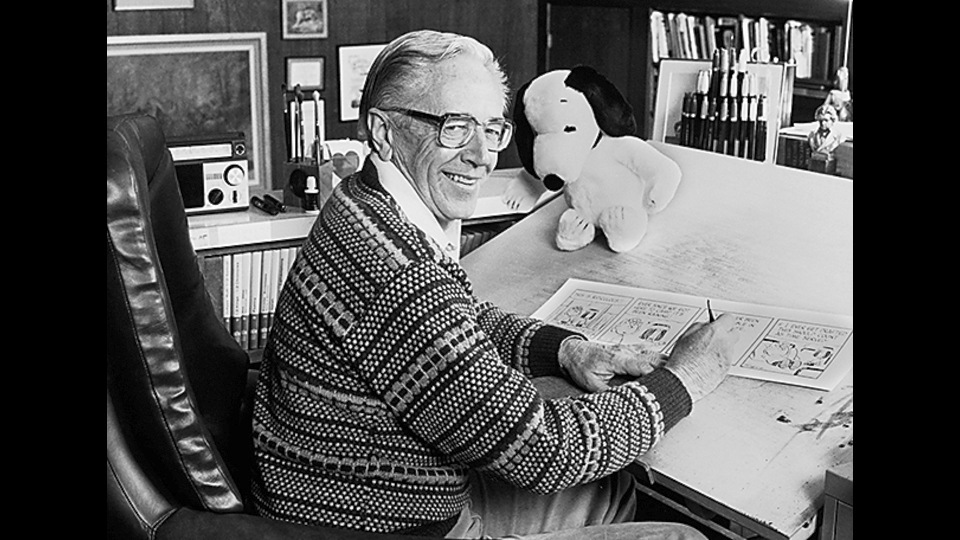
The poet Philip Larkin, the conflicted Alistair Maclean, soldier-turned-anti-war novelist Kurt Vonnegut, comic-book legend Stan Lee and Charles M Schulz of Peanuts were among this all-star cast.
In 1940, Philip Larkin, just 18, failed the military medical exam that would have allowed him to serve in World War 2, because of his poor eyesight. Over the next five years, he would write poems about England during the war, an England half-lit at dawn or dusk, a cold, wet and windy England. Larkin spent the war years first at Oxford, and later as librarian at the University of Hull, where he would live for three decades.
It is hard to say how things would have shaped up had Larkin been allowed to serve in World War 2, but it was the overriding theme of his first volume of poetry, The North Ship.
Larkin would become friends with Kingsley Amis, another Oxonian born in 1922. And while Amis did serve in the war (he was a commissioned officer and spent three years in France, Belgium, and Germany), there’s not as much about the war as there is about the world of post-war England, in Amis’s writing.
One author on whom the war made an indelible impact was Kurt Vonnegut. Shipped to Europe in 1943, at 21 (three months after his mother died by suicide), Vonnegut was captured in 1944, and along with 50 other American soldiers sent to Dresden, just in time to see it firebombed by Allied forces in 1945. Vonnegut survived the levelling of the city by hiding in an underground meat locker for three days, an experience that makes its way into his Slaughterhouse 5, one of the greatest anti-war novels ever written.
Also writing about the war was Alistair Maclean, who became one of the world’s bestselling authors of all time, with over 180 million copies of his novels sold. While he gained fame as the author of fast-moving thrillers featuring ultra-competent men, violence and plot twists, Maclean’s first book, HMS Ulysses (about life after a mutiny on an ill-fated battleship), was compared with works of note such as Herman Wouk’s The Caine Mutiny.
Maclean found popularity and riches as a writer of thrillers, but struggled with alcoholism all his life, and often spoke of himself as a “hack”, making one wonder what he might have been, in another timeline.
1922 was not just a great year for books. It produced some of the most famous, influential or popular literary figures of the 20th century – people whose influence is still felt, a century after their birth.
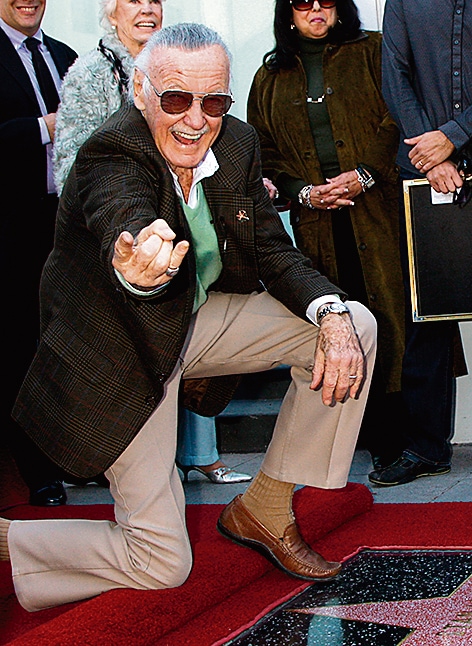
Take Stanley Martin Lieber, born to Jewish Romanian immigrants to the US. At 17, he got his first professional writing assignment – doing a short text story in the comic Captain America Comics #3. Stanley Lieber, now Stan Lee, joined the US Army, in the Signal Corps, where he was trained to install phone lines. But someone noticed the young Lee’s talent, and transferred him to Signal Corps Training Film Division, where he worked with people like William Saroyan (whose short stories still appear in English textbooks today), Charles Addams (the creator of The Addams Family), legendary filmmaker Frank Capra, and Theodore Geisel, better known as Doctor Seuss. Lee would go on to create or co-create most of the Marvel Comics superhero pantheon.
Charles Monroe “Sparky” Schulz was born in 1922 as well. At 15, he sent his drawings of his dog, Spike, who would “eat anything”, to Ripley’s Believe It Or Not. The drawing was published, and attributed to “Sparky”.
After service in the US Army in World War II, where he was a squad leader on a .50 caliber machine-gun team, Schulz, returned to his native Minnesota, where he worked as teacher, artist, letterer, and then newspaper cartoonist. Then he created Peanuts in 1950.
Peanuts would go on to run for 50 years, syndicated in 2,600 newspapers, read by 355 million readers across 75 countries, becoming one of the most influential comics of all time. Bill Watterson, the creator of Calvin and Hobbes would say “…what a well-crafted, beautifully written and drawn strip it is. Peanuts is one of the very rare strips with true heart. The sophistication and subtlety of the work is unbelievable. Comics don’t come better than this.”
Comics with subtlety aren’t what you would associate with William M Gaines’s most famous creation, Mad Magazine. Gaines, also born in 1922, was arguably more influential than Schulz, though his audience was much smaller. His father, Max Gaines, was instrumental in introducing the characters Wonder Woman, Green Lantern and Hawkman to the public, and William followed in his footsteps. Gaines, along with Harvey Kurtzman, founded Mad in 1952, and over the next five decades, the magazine regularly punched above its weight – influencing everyone from Monty Python to Roger Ebert, Jerry Seinfeld and Alan Moore. The singer Patti Smith famously said “After Mad, drugs were nothing.”
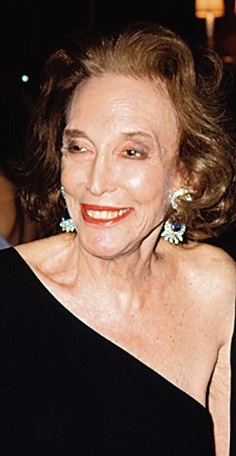
Helen Gurley Brown (another child of 1922) also changed the face of magazines, but of a different genre. After the success of her novel Sex and the Single Girl in 1962, she took over as editor-in-chief of Cosmopolitan magazine, where she reigned for 32 years. While there, Brown’s greatest contribution was to make women comfortable with their sexual desires. Her legacy has been re-evaluated unfavourably, as her attitudes are now considered anti-feminist, but there is no denying her influence on women in the 20th century.
1922 was a great year for books. It may have been a greater year for authors and poets.


