
 E-Paper



Wake me up!: The a-zzz of sleep streaming

 Prefer HTon Google


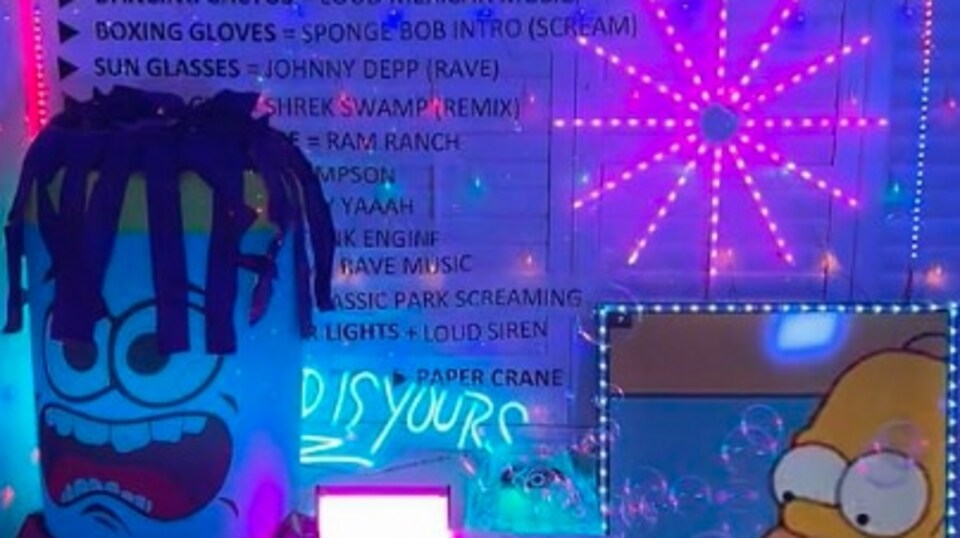
It started out as a quiet community of insomniacs and worriers tuning in to watch others sleep. See how it became the blaring free-for-all it is today.
The crack of a gunshot, blinding lights and a blaring siren punctuate Mikkel Stanley Nielsen’s sleep. He is paid to be disturbed.
For a dollar, viewers on Twitch can activate a bot to read out a message to him (“Every second you’re not running, I’m getting closer,” says one); for $48, they can turn on a speaker by his bed; for $95, they can zap him via a shock bracelet he wears.
He has over 500,000 followers across YouTube and Twitch, and is interrupted, on average, about 200 times in a three-hour livestream. Each stream has about 9,000 views.
Nielsen aka StanleyMOV is a Denmark-based sleep-streamer, operating in a streaming sub-category that wasn’t always this chaotic.
Sleep-streaming first took off on TikTok amid the pandemic, in 2020. People battling anxiety, restlessness or insomnia tuned in to watch a stranger sleep. Viewers found it calming; the peacefulness of it helped them fall asleep too. In those months devoid of human contact, some said it made them feel less alone.
By 2022, a different category of creators was emerging, who found that they could boost numbers if they were willing to be disturbed in their sleep. This marked the dawn of “interactive” sleep-streaming.
Cosy lights and white noise machines were replaced with app-controlled sirens, speakers, laser lights and other props. In Queensland TikToker Jakey Boehm’s videos, he instructs viewers to “Control my room! Don’t let me sleep!” Viewers can pay to trigger loud Mexican music, set off strobe lights, activate an inflatable doll so that it rocks back and forth.
California-based Asian Andy’s offerings include text-to-speech disturbances where viewers can send him voice notes. One viewer urges him, over and over, to check if there’s someone outside his window.
This isn’t sleep, of course; it’s performance. It is no more an attempt to rest than mukbang is an attempt to refuel the body.
In fact, that streaming sub-genre has quite a lot in common with interactive sleep-streaming. Mukbang started out in South Korea, with lonely office-goers logging in and streaming their lunchtimes live, just for a sense that someone was with them. It soon became a vibrant pay-on-request genre, with people logging in to watch influencers eat strange foods or messy dishes, chomp loudly or eat really fast.
Both mukbang and sleep-streaming may have been born of the intense loneliness of our times (ironic in itself, given the many new ways we now have to connect with one another). But what both sub-categories come down to, in their current form, says consultant psychologist Kuldeep Datay, is power.
“These trends reflect an increasingly voyeuristic audience,” says Datay, who works with the social enterprise Institute for Psychological Health. “Our brain works on a reward principle and, for many, the reward no longer comes from just watching. It comes from shocking, troubling content or behaviour that gives the viewer an inflated sense of control over another person.”


