E-Paper



Tight tropes: How they write the perfect crimes

 Prefer HTon Google


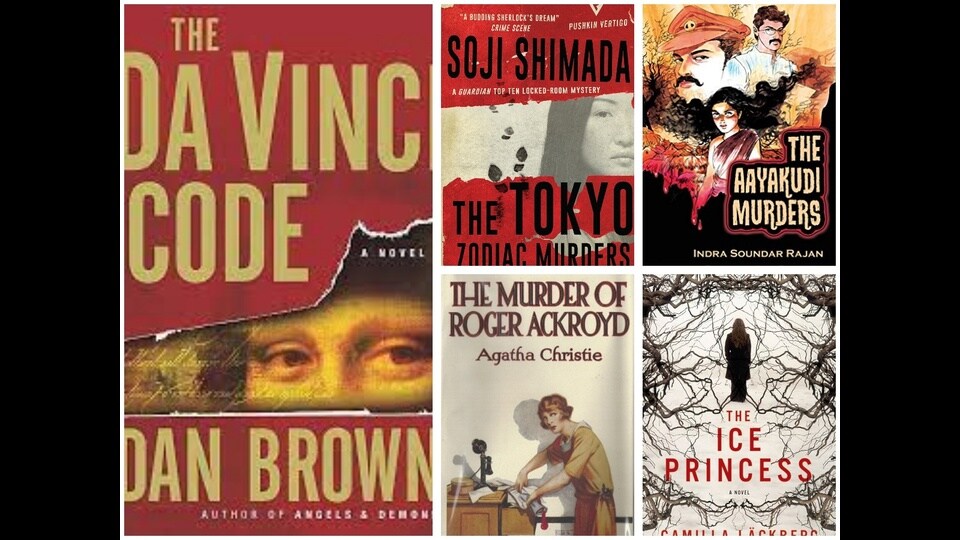
Intricate puzzles, dashing detectives, subtle clues... and careful not to let a trope become overused. Here’s a look at how some of the best get the job done.
The detective who can tell what you had for lunch, from the mud on your shoe. The soothsayer with a secret identity. The rich old man everyone seems to have wanted dead… murder mysteries are a heady cocktail of the familiar, teased into ever-new shapes. How are such devices used differently by, say, a Tamil pulp-fiction writer and an American mystery novelist? When did the tropes originate, and why did the ones we know so well catch on? Take a look.
The butler did it?
He rarely did, in real life. But in fiction, the butler was so often a menacing, controlling, quietly violent presence, that the trope became a cliche, something of a lazy resolution. By 1928, it was coming in for some seriously flak, with American critic SS Van Dine (aka Willard Huntington Wright) listing it at #11, in his book, Twenty Rules for Writing Detective Stories. It’s too easy; no good writer should do it, he said.
Soon enough, the butler became the decoy, the first to be pointed to when a murder occurred in the house, until the arrow eventually swung around, often to a debauched or lost younger relative, seeking money or revenge. So it is in classics such as The Murder of Roger Ackroyd by Agatha Christie (1926; featuring Hercule Poirot) and The Adventure of the Musgrave Ritual by Arthur Conan Doyle (1893; featuring Sherlock Holmes).
When the help and butler are the killers, that’s no longer considered enough. So, frequently, it turns out that they weren’t really the help at all. They were instead secret heirs in disguise. Friends of a now-dead child of the house. Or simply murderous killers looking for an easy in, which of course is a tragic tale that unfolds all too often in the real world.
Laws of physics get in the way
A victim is found dead, in a windowless room with the door locked from the inside — or some version of that. Or two murders attributable to the same killer occur at the same time, or very far away from each other. Who did it is no longer as compelling a question as: How!?
In Japanese author Soji Shimada’s debut novel, The Tokyo Zodiac Murders (1981), for example, a murder mystery fan and his artist friend set out to dig into the serial killings of six women — the daughters and nieces of an artist named Heikichi Umezawa. He is found murdered in his locked studio, next to incriminating notes that detail how he supposedly wanted to create the perfect woman, with the severed parts of six.
Soon after his death, parts of the women’s dismembered bodies begin turning up in different parts of the country. It’s an example of the logic-based Japanese honkaku locked-room mystery genre. This one turns out to be a five-act puzzle, with the reader acting as an accessory to the mystery fan and the artist as they attempt to unlock it.
The killer “wants to be found”
Writing on the mirror, messages in blood, invisible ink and puzzles that unlock to reveal a clue: When a murder mystery holds within it a completely different puzzle — one that the reader can participate in directly, turn the page upside down to view anew — it can certainly elevate the plot.
Authors have become particularly creative with this trope. Think of the ambigrams, ancient art and Fibonacci-linked maths in Dan Brown’s The Da Vinci Code (2003; about a symbologist helping with a murder investigation, who ends up also trying to track down the Holy Grail) and the substitution ciphers and labyrinthine library in Italian semiotician Umberto Eco’s The Name of the Rose (1980; about an abbey with a secret night life and a series of seven bizarre deaths).
The autopsy points in a new direction
Pathologists, though oft-overlooked, play an almost-as-vital role as the detectives that stand at centrestage in the murder-mystery plot.
Though most readers would be hard-pressed to name a single coroner, some of our favourite plots could not have been unravelled without the clues they uncover. Hidden ink on a body may tell of links with a gang or a cult. Old scars can point to childhood trauma; new ones to a recent journey. A man found dead in his wheelchair may turn out to have died of drowning. An old woman who slipped away peacefully in her sleep may in reality have had strychnine stirred into her last cup of tea.
In such a manner, a suicide is found to in fact be something else entirely, in Swedish author Camilla Läckberg’s The Ice Princess (2003).
It’s why forensic experts are a sought-after bunch among murder-mystery writers. Pétur Guðmannsson of Iceland, in fact, launched a course in forensic pathology at the University of Iceland, so he wouldn’t have so many questions directed at him individually.
He is one of a very few forensic pathologists in a country with a very low crime rate, but a famously high appetite for crime-fiction. Icelandic murder mysteries and the larger genre of Nordic noir — twisted stories set in the frozen tundras of Scandinavia — are, in fact, storming genre bestseller lists (think of the Swedish detective series Joona Linna by the husband-wife duo Lars Kepler, or the books by Jo Nesbo), aided by the spate of recent screen adaptations by streaming platforms.
The “Scooby-Doo” hoax
This is a term traceable to the wiki community TV Tropes (a wiki community is a group of editors and contributors who build new open-source or wiki web pages together). The term “Scooby-Doo hoax” describes the sub-genre of murder mysteries in which the supernatural phenomenon that the plot started out investigating, turns out to be just a cover-up.
This is, of course, the plotline of every episode of the classic cartoon show, Scooby-Doo.
In the real world, in swamps across continents (including in India), gangsters and smugglers have used tales of the supernatural to keep locals away from dens used for illegal activities such as gambling, drug deals or hooch-brewing. In the new Tamil novel The Aayakudi Murders by Indra Soundar Rajan, for instance, a tip about ghosts in the titular village turns out to be a cover-up for an escaped convict’s criminal activities.
And in an example from the classical canon, The Hound of the Baskervilles, Holmes discovers that a supposedly demonic monster canine was actually a large dog let loose by a forgotten heir hoping to take over the family estate.
The unreliable narrator
This one can be immense fun. It can also be frustrating. Because once the reveal is done, one feels one must revisit the entire work in an attempt to see things differently.
Exemplary instances of the use of this plot device include the films The Usual Suspects (1995) and Fight Club (1999). (Keyser Soze of the former remains a byword for deceit.)
The true skill lies in balancing the truth and deceit so artfully that the main character can narrate an authentic crime story, imbue it with emotion, build a bond with the reader — and then snap it in the conclusion, in a way that makes every piece make more sense.
For an interesting take on the unreliable narrator device, see the Korean novel The Good Son (2016) by You-Jeong Jeong, in which a young man wakes to find that he has killed his mother, and must now attempt to piece together truths he cannot vouch for, in a mind turned cloudy by years of seizures, medication and life with a domineering parent.
The trick question
What’s the best way to catch a killer? Amass a small heap of circumstantial evidence, then top it off with a fabricated piece.
Was a torn $5 bill found at the scene? Confront them with a “recovered fragment” of a $1 one instead. Or, as in the case of that Jack Nicholson classic A Few Good Men (1992), take what the killer views as an honourable motive and replace it with one much more shallow or tawdry. Even the smartest are likely to crack.
This trope actually draws from a tactic used frequently, in quite the reverse way, during police investigations. Some elements of a crime are usually withheld from the press and public, so that interrogators can later determine whether a suspect in custody is a copycat, an opportunist, or someone who actually wants to confess.
The genius bar
Perhaps the most delicious elements in a well-written murder mystery are the obscure clues that slowly pile up, leading to a conclusion that feels inevitable, even though one never saw it coming.
This depends almost entirely on the writer’s ability to create a detective so insightful and all-knowing that he takes on a life of his own. Such as Satyajit Ray’s Feluda (who dates to 1965).
Detectives like him, Poirot and Holmes wield what Ray called “magaj-astra” (Bengali for “intellect as a weapon”). And the reader ends such a novel knowing more about the world, people and how the two work.
Things we learnt from Holmes, Feluda and Poirot? E is the most-used letter in the English alphabet. Limestone and sandstone can be buffed to look like gold. And thallium kills, but is almost impossible to trace in the human body.