E-Paper



Woman among the buoys: Wknd spends a day with a lifeguard

 Prefer HTon Google


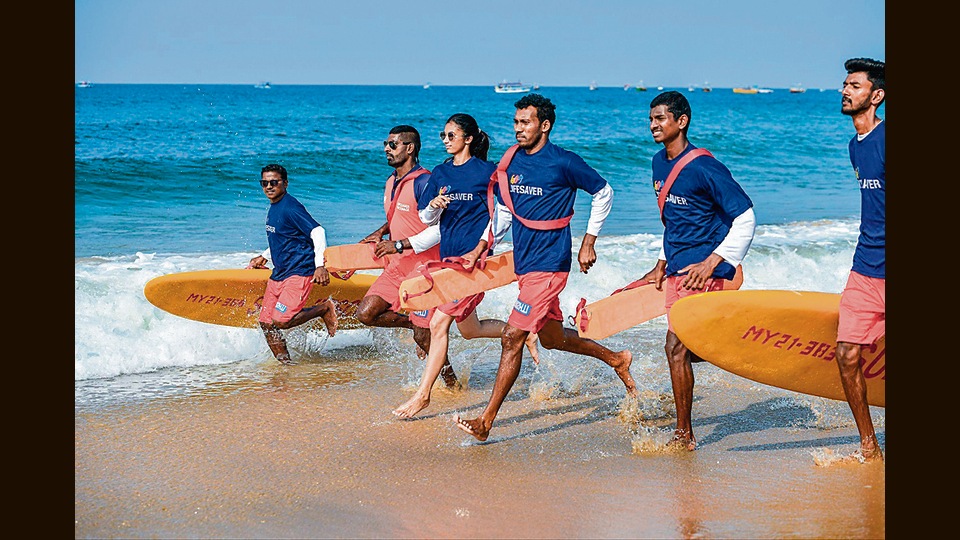
She loves the sea but it isn’t always idyllic, says Ananyaa Bath. It can be hard patrolling, saving lives and trying to keep the peace on a Goa beach.
It takes a fair bit of skill to stare endlessly at the ocean, says Ananyaa Bath, 28. The sea is not always honest about what it is doing.
One moment it’s calm, with a gentle breeze blowing and people splashing languidly in the water, says the lifeguard. The next, a choppy current has snuck in, and people are starting to struggle and flail.
Bath has been one of Goa’s 450-odd lifesavers since 2018, working with the government-appointed lifeguard service Drishti Marine (Drishti being Hindi for Vision). These ace swimmers and CPR experts patrol beaches, carry out rescue operations and help maintain law and order.
“A job by the sea sounds idyllic, but people forget about the scorching sun and the burning sand beneath our feet and sometimes blowing in our faces,” Bath says, laughing.
In a small but very real challenge, glaring at a shimmering sea makes the eyes water, and that alone takes some getting used to. Then, of course, there are the swimmers who simply won’t heed warnings. “You can be in the middle of rescuing one person, and others will still be wading into a dangerous sea,” she says.
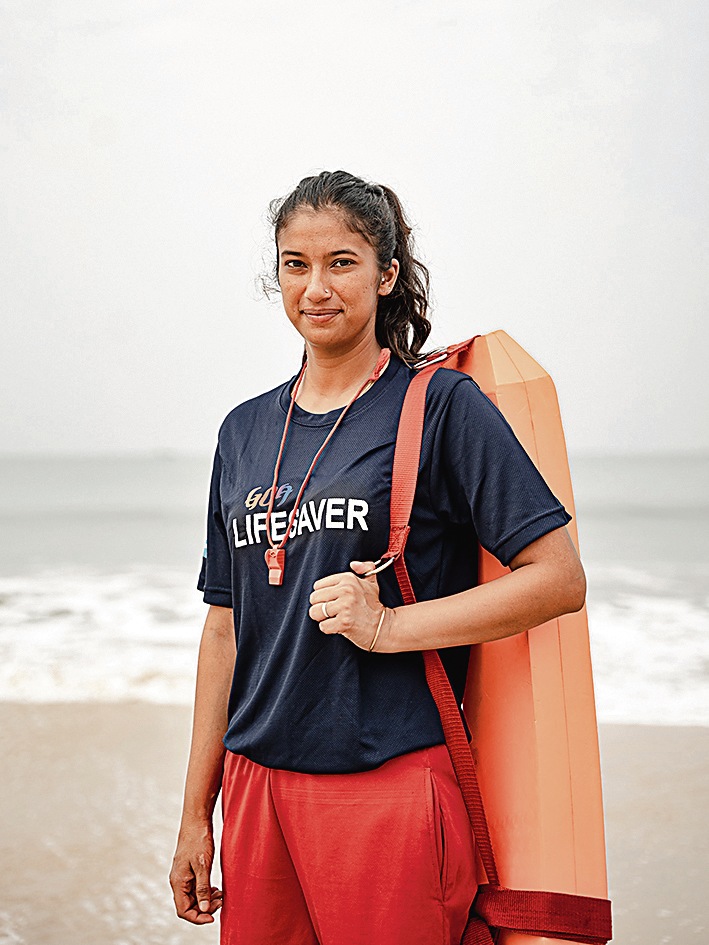
On days like this, the idea that every life on the beach is in her hands can feel like a heavy weight.
The job is trickiest in the monsoon. “Heavy rain can obstruct vision, and the rip currents are choppier. These are strong, localised, narrow currents that drag one metres and metres into the sea very quickly,” Bath says. “It’s hard to explain to people who are on holiday that the sea may look calm, but in the monsoon, one simply can’t tell just how risky it might be to go in.”
In line with most lifeguards around the world, Bath uses an orange swim buoy that makes her clearly visible, particularly in the water, and of course helps her keep a flailing swimmer afloat. She sometimes uses a lifeboard too, and has access to a speedboat for urgent rescues further from the beach.
Her skills are perhaps her most crucial tool. All lifeguards renew their certification through retraining and retesting, once a year. During these tests, they are assessed on their running, swimming, strength and stamina, first-aid skills and CPR.
Interestingly, Bath, Goa’s first woman lifeguard and first woman lifeguard instructor, didn’t grow up by the beach. She was raised amid the Himalayas, in Kasauli, Himachal Pradesh, but was always drawn to water, she says. Her family visited Goa at least once a year, to spend time with close friends. “By 2017, I was in love with the sea,” Bath says.
After graduating in psychology and English, she took some time off to figure out what to do next and, in that hiatus, signed up with Drishti.
She underwent training and was posted at a cruise terminal first, then the beach. “I love interacting with new people and helping them. I was hooked almost immediately,” she says.
More women have since joined, and as instructor, Bath has helped train them. She also conducts sessions at schools and colleges, hotels and corporate offices. In the pre-monsoon months, she conducts flood-rescue training for volunteers.“I want to work on becoming a divemaster and a diving instructor too,” she says.
As for being the only woman on the squad, “initially, it felt a little weird, and I’m sure the male lifeguards felt a little weird too. But we all quickly bonded. This is a profession where teamwork is vital.”
The hardest part of the job? Undoubtedly the unruly revellers, Bath adds. Some have tried to hit her while she was rescuing them — and after. Inebriated tourists pretend they don’t believe she is a lifeguard. “They then make Baywatch jokes. Many such men also deliberately wade into the water despite warnings, to force me to go up to them and engage with them. All this doesn’t bother me much,” she says. “My male colleagues spot these trouble-makers and tackle them before I even have to ask.”