
 E-Paper



Bordering on a trend: Burmese food is finally getting India excited

 Prefer HTon Google


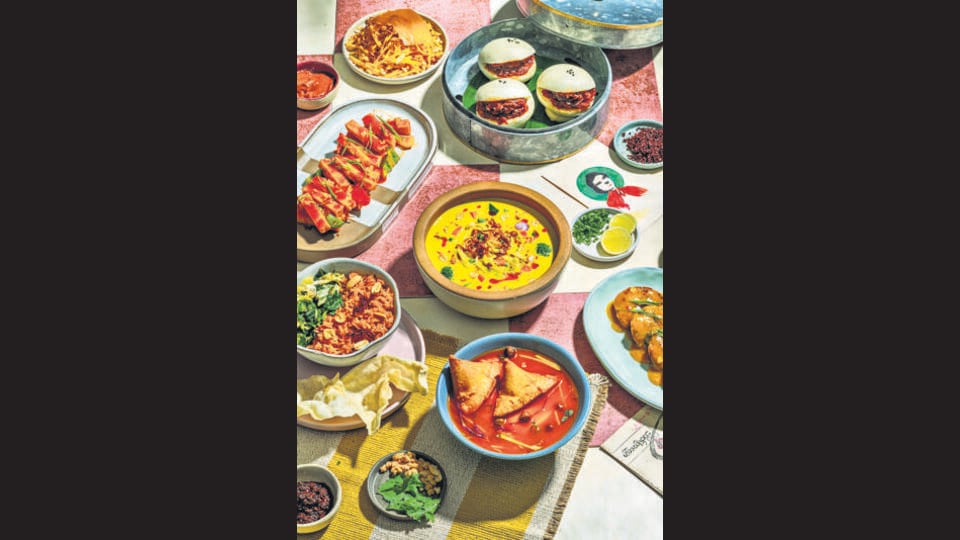
Burmese cuisine, rich, light, diverse, is close enough to feel familiar but still seem unusual. No wonder it’s popping up all across India
Ordinarily, a conversation around the cuisine of Myanmar would start and end with khow suey. The noodle soup — thick, bursting with flavour, typically accompanied by condiments — is the layperson’s initiation to Burmese cuisine. But restaurants around the world, and increasingly in India, also serve other staples of the cuisine: the congee-like san pyoke; the rice-noodle and fish soup, mohinga; atho, a noodle preparation; a range of refreshing salads (some even made with tea leaf); and the country’s own version of the samosa. For a nation that shares a border with India, the food sure took a while to cross over. But its mix of both familiar and new flavours is a hit across the length and breadth of the country—from Delhi to Chennai and Bengaluru, from Kolkata to Goa and Surat.
“The soaring popularity of Burmese food appears to be following the same trajectory of regional Indian food,” says Smitha Menon, TasteHunter for the annual World’s 50 Best Restaurants rankings. “Generic Indian restaurants largely served dal makhani and butter chicken. But in the past 10 years, there’s been this wave of micro and sub cuisines.” Similarly, Burmese cuisine goes a step beyond pan-Asian, staying within the territory but offering something unique.
Breaking it down
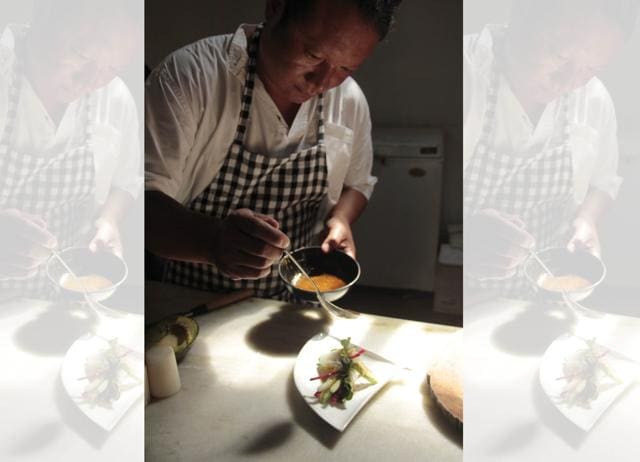
For a nation of 53 million, the food varies tremendously, much of it carried influences from its bordering countries. “In my hometown of Kachin in the north, the food presents similarities with neighbouring Yunnan province of China and North East India,” says chef-restaurateur Bawmra Jap, who serves modern Burmese cuisine at his award-winning restaurant, Bomras, in Candolim, Goa. “In these parts, you find much less coconut and seafood than in the south, where the food is more similar to the fare from Thailand.”
Ankit Gupta, co-founder of fine-dining restaurant chain Burma Burma, which has outposts in Mumbai, Delhi, Kolkata, Bengaluru, Ahmedabad and Hyderabad, says that almost every tribe of Myanmar’s 120-odd indigenous communities has a distinct cuisine. “The food is spicier in the north, mild in central Myanmar and tangy in the south,” he says. “The Kayan region bordering China uses a lot of mala, or Sichuan pepper sauce.”
Then there’s the Indian influence, dating back to the flourishing sea trade between Yangon and Madras in the 1800s. “It’s common to find people eating their own variety of dosa in Myanmar,” Gupta says. Locally called kaut mote, there are sweet and savoury varieties of this “folded snack”.
A hill to climb
Despite the proximity, it’s long been easier to source ingredients from Japan, South Korea or the US than from our neighbours. Burmese restaurants in India have had to get creative to procure fermented dried mustard, nagpe (fish sauce), fermented soya bean, local spices, lahpet (a pickled-tea leaf salad), tea-leaf paste, even Burmese sunflower seeds. “It took me four or five visits and around four years to get the supply chain streamlined,” recalls Gupta.
Even today, Bawmra imports the green-tea shoots he uses for their best-selling pickled tea-leaf salad. However, he takes pride in making shan tofu—a chickpea tofu native to Burma—in-house for their curries, salads and tempura fry.
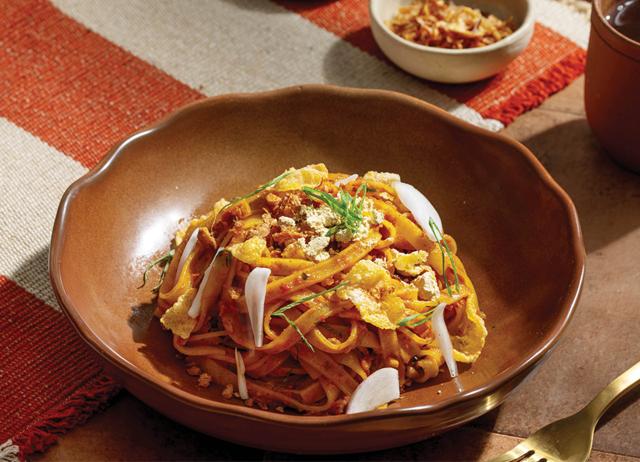
India-Myanmar connections run deep in parts of our population. Nikhil Chib, managing director of Busabong & Co, didn’t look far for inspiration when he opened his pan-Asian eatery Busago in Mumbai in 2012. Their best-selling khow suey, authentic in its consistency and flavours, is what he learnt from his maternal grandmother — she hailed from Rangoon and had settled in Calcutta — and his mother.
Gupta grew up on the dishes his Burmese-origin mother whipped up — in fact, the menu at Burma Burma is a mix of such heritage recipes and other elements he picked up on his numerous visits to Myanmar along with modern tweaks. And Chef Bawmra, who draws inspiration from his early life in Burma, says, “My cuisine is really myself on a plate.”
Simmering history
Under British rule, there was plenty of trade and migration between India and Burma. Communities arrived in the country with their own influences and left with just as much. “Food travels, which is how Burma has dishes like the samosa soup, curry samosa, and a nice, fragrant yoghurt curry,” Gupta points out. “Even Bandel cheese (a Portuguese-style cheese made in West Bengal) and Bengal gram is common in their food. That’s how their flavour profile is so diverse.”
Similarly, Burmese food thrives in refugee colonies across India, as the people fled religious turmoil and prosecution for decades. Jaipur has a Burmese Colony. Janakpuri in West Delhi has a settlement of the Chin ethnic group. Kolkata has a large community of migrant Bengalis with Burmese antecedents. Somne stores in Chennai’s Burma Bazaar are still run by Burmese settlers. Each spot keeps the foods of a home that once was alive, with a few desi tweaks.

Surat, for instance, has its own version of the khow suey—their Rangooni Khawsa comes with besan papdi and Schezwan sauce—and Rangooni Paratha, a maida paratha stuffed with a minced meat of your choice, coated in egg and deep fried. In Puducherry, Vijayan Rajendran opened Burmaa King in 2021 after sampling Burmese street food in Chennai; he loves to treat his patrons to atho (a dish of fried noodles) and mohinga. And in Kolkata, Deep Das, owner and head chef at Burmese Bahar, finds that the cuisine is especially popular “among some elderly Indians who still have nostalgic memories of Burma”.
Bowled over
It could be, as Chib says, that diners simply have more disposable income today, and Burmese food is a new option to spend on. But the cuisine has a unique competitive advantage: it’s vegetarian friendly. “The non-vegetarian variations are mostly in the broth and toppings of pork,” says Gupta, whose Burma Burma chain is meatless; they use mock meats, vegan fish sauce and mushrooms as alternatives.
Either way, the flavours are familiar enough to get the average Indian diner comfortable. There’s lemongrass, coconut milk, chickpea flour and cilantro to lend it a flavour distinct from other Asian fare. “Their generous use of ginger, garlic, onion and chilli work fit naturally with Indian taste buds,” says Chib. “Fish sauce and oyster sauce infuse the additional umami notes.”
Indian chefs do add an ingredient here and a condiment there to cater to the local palate. Bawmra tones down the fermented seafood notes. Gupta mellows the strong umami taste of his pickled-tea salad with cream.
“Popular Burmese dishes have become part of the street food culture in Chennai,” Rajendran says. “Authentic mohinga surely tastes different from what the pushcarts serve—the former is made with catfish and the latter with plantain stem, onions, garlic and rice noodles.”
It wouldn’t be far off the mark to say it’s all about appreciating the flavours of the world and becoming more adventurous with food. And Gupta concludes, “If there’s high demand and low supply, the general popularity does rise, right?”
From HT Brunch, December 9, 2023
Follow us on www.instagram.com/htbrunch


