
 E-Paper



HT Brunch Cover Story: Striking a chord

 Prefer HTon Google



Three young musicians talk about how they are using social media to take their first step towards success
We’ve all grown up memorising the lyrics to three-minute-long random songs, having constant earworms stuck in our brains. And we’re able to sing them verbatim even 20 years later. But in this age of Reels and TikToks, and the phenomenon of going viral overnight, it’s the 15-second songs and hooks and crazy drops that you now find playing on loop. Even in your head.
With social media platforms providing tools that enable anyone to use snippets of audios (after giving due credit to the creator, of course) while getting creative with their own videos, there’s been a steep rise in musicians creating these 15-second clips.
The benefits are plenty: The creator has their own space online, with an audience tailor-made for their music, their work gets noticed and lands them production work and compositions for web series and films and, of course, brand endorsements, collaborations and online performances which transition to in-person concerts.
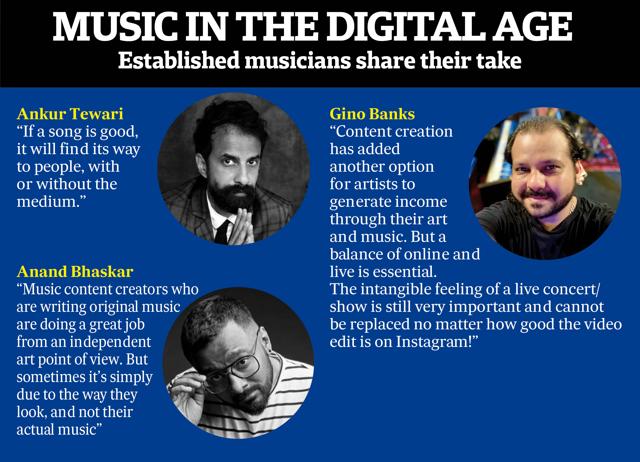
Another bonus: Being independent of corporate music labels. Explains musician, composer and producer Anand Bhaskar of Mirzapur and Masoom fame, “Musicians signed by labels have to listen to what the labels tell them. There’s very little emphasis on letting the artiste do their own thing.”
When Anand was starting out, he had bills to pay and had to make the music that corporations wanted. “Once my income was regular, I started teaching myself music production and other things that would make me a better musician and composer,” he says.
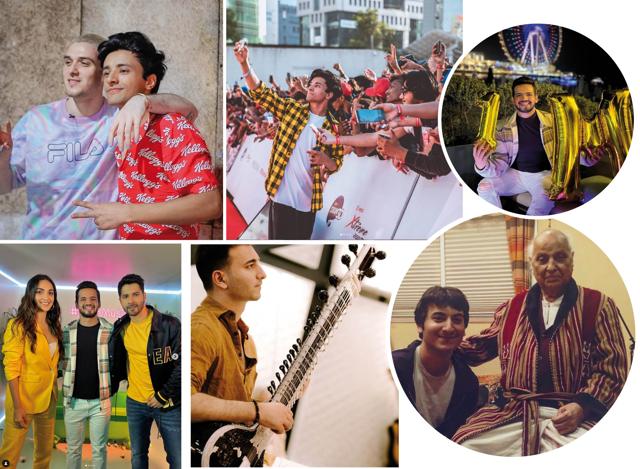
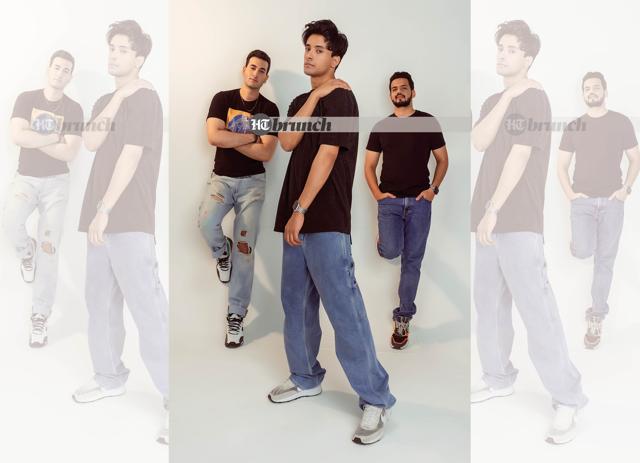
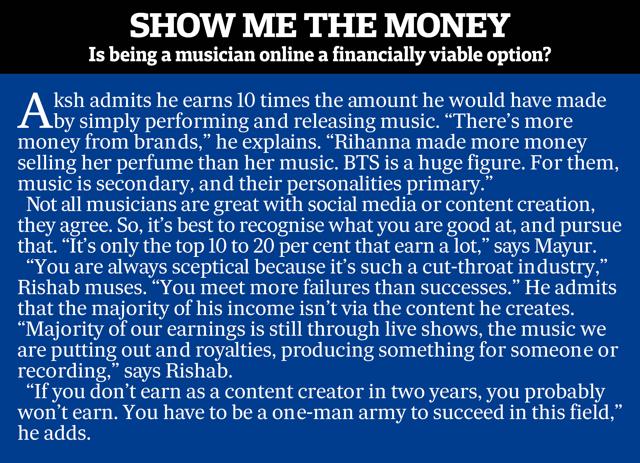
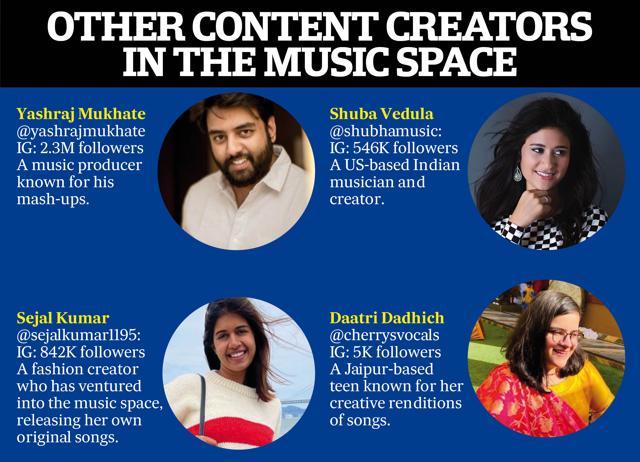
The musicians of today don’t have to do what Anand did. They just utilise technology and the streaming platforms at hand to distribute their music. Meet Mayur Jumani, Rishab Rikhiram Sharma and Aksh Baghla, our three HT Brunch cover stars, musicians and creators eager to share their own experiences.
The last disciple
Rishab Rikhiram Sharma
The musician who focusses on mental health
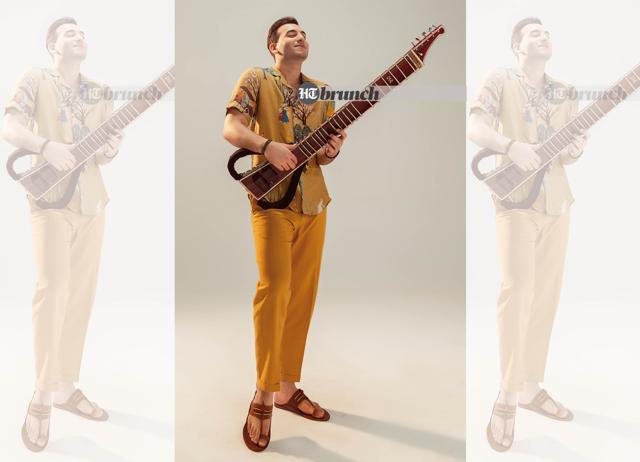
Born into a family of musical instrument makers called the Rikhirams, who opened a store in Lahore in 1920 and moved to India after Partition, Rishab Rikhiram Sharma, 23, is the fourth-generation of instrument makers and the only one in his family to have performed onstage.
Rishab was 10 when he picked up the sitar, his father his first teacher. He then started classes with Pandit Ravi Shankar at the age of 12.
The legacy lives on
“Guruji was 90 and told me I would be his last disciple, the only one from my generation he was teaching, and hence, I had to carry the legacy forward,” says Rishab.
Rishab rose to fame during his Sitar for Mental Health live music sessions from his bedroom at the end of 2020. “That was the first time I was vulnerable in front of my followers and wasn’t just posting sitar videos,” he says.”I started doing rooms on Clubhouse and Instagram Lives to battle my own anxiety. My therapist also recommended it.”
Soon after, he found his DMs flooded with messages about the calming effect his music was having on people; he also got requests for tributes to loved ones his followers had lost.
“This tightened the community, and we went from 10-15 people tuning in, to 600K. That’s when my following grew, and so, gave me the opportunity to do a tour in India,” says Rishab, who also feels responsible for taking forward his familial legacy of making sitars. In fact, he has plans to do limited-edition designer sitars, and is also working on a new type of electric guitar, he tells us right after finishing his in-person Sitar for Mental Health concerts across India.
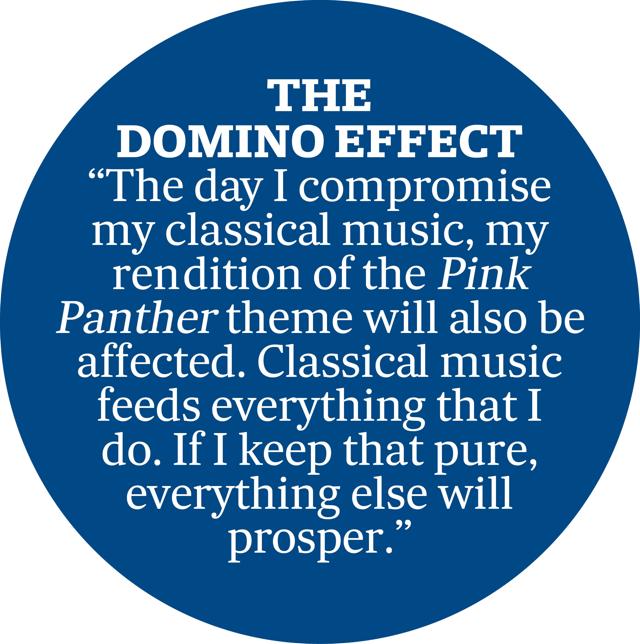
Since the music content creation universe is still in the reactive stage, there’s no formula yet for what works and what doesn’t. “The fact that classical music is good for your mental health is a 5,000-year-old tradition. I’m just bringing it into focus and putting it in more relevant terms for Gen-Z and millennials,” says Rishab.
Attention please
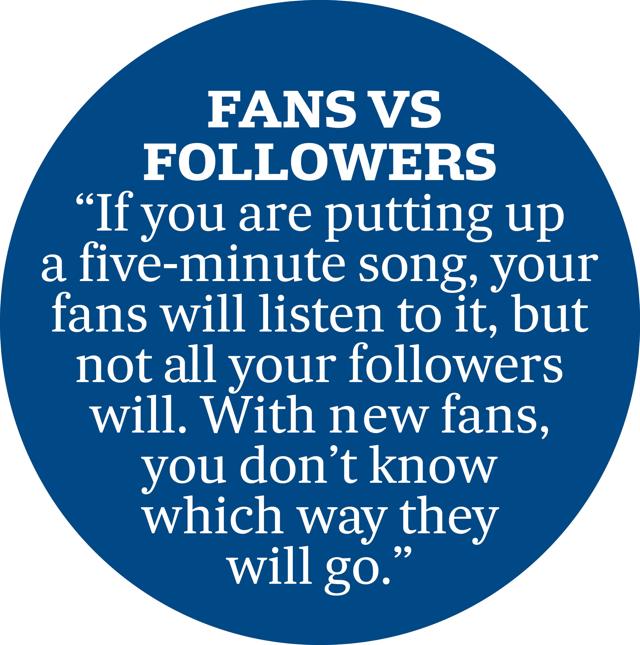
“Songs were five to six minutes long. Now, they’re a maximum of three minutes. Because that’s the maximum attention span you can get from someone today. People are just making songs for those short videos so that people can use them. Which is great because artistes like Yeat who went viral with their TikTok audios are now touring the world,” says Rishab.
As a Gen-Zer who listens to Hindustani classical music and loves hip-hop, Rishab claims he’s in a weird place. “The classical audience is conservative. And I’m very modern and make beats. You can’t please everyone. Your niche will get narrower, but if you are building a strong support system around you, there’s no need to be anxious about losing followers or embarrassing yourself,” he says. This works only if you have your basics in place: Rishab ensures he doesn’t give anyone the opportunity to doubt his ability to play a raga properly.
As a content creator you hold the responsibility to broadcast correct content because you have influence. “If I say I am playing Raga Yaman and play something completely off, people will believe me and when they actually hear the real thing, they won’t even know it,” explains Rishab.
Man with a plan
Aksh Baghla
The musician who just released his first single

Aksh Baghla, 27, decided to showcase his musical talent by doing covers on social media so that when he begins to work on originals, he will already be popular enough to be able to bypass corporate music labels.
Aksh brought together the two things he loves the most—music and technology—and the career choice was a no-brainer. Even though his family in Palampur, Himachal Pradesh, wanted him to join their business, as someone who had picked up the guitar and piano in high school in Chandigarh, was in a band, and grew up listening to cover artistes on YouTube while also keeping an eye on the great number of views these videos got, Aksh managed to convince his folks to give him one year to give singing a shot.
Conscious call
Soon, he was uploading videos of himself performing covers, but didn’t really manage to get a lot of views. So, he gave up the idea and joined his family business. When a video of his did go viral in 2017, with nine million views, it got a surprising number of hateful comments accusing him of lip syncing. To prove a point, he posted another video of himself wherein he mimicked 30 singers, which did the trick.

“Paying attention to my social media music content was a conscious call I made in 2017. Why? So I can get my own audience and don’t have to rely on corporate labels when I come out with my originals. My musician friends aren’t happy with labels, even though more of them these days are more mindful of an artistes’ rights,” explains the Chandigarh resident who made his peace with his live performance being canned due to the pandemic by making decent revenue via online shows and brand endorsements.
Music content creation is a step towards ‘adapting to survive’ in today’s social media-obsessed world. “But Reels will be an additional marketing force for songs. Reels music falls into the user-generated content space and aren’t artistic pieces. So, I don’t think we’ll only have 30 second-long songs,” says Aksh, explaining that the trend of creating music for short videos started as a marketing strategy by Jason Derulo, followed by Drake’s Ki Ki Do You Love Me challenge. “Now, every artiste is doing this to make songs discoverable. This is just the industry reacting and making content accordingly,” he shrugs.
Aksh smiles as he signs off. “To those who say I’m not really a musician, I’ll say: Check out my original composition, which released last week. On Instagram!”
Because who needs labels when you’ve already built a 505K-strong audience waiting for your work to release, on a platform of your choice.
Short, snappy & catchy
Mayur Jumani
The king of mash-ups

Mayur Jumani, 30, a composer whose original music has already made it to Bollywood, had been gigging while pursuing a corporate job, but had never seen it as a career. Till his acceptance letter from the Berklee College of Music arrived.
Born into a family comprising a doctor for a father, a mother working in the field of science, and an engineer sister, Mayur studied to be an engineer and even worked as a user interface designer for two years before he quit in 2016 to pursue a Masters in music. He had always loved music and had learned the keys and the guitar from YouTube videos when he was a teen, moving to using his laptop to make electronic music during his second year in engineering college.
Lockdown project
The long lockdown of 2020 worked for him, when two of his songs were featured in the movie Bypass Road. “Bollywood is something every composer looks up to, irrespective of social media numbers,” shrugs Mayur.
But most social media users know Mayur as the man who created extremely entertaining content during the bleak initial months of the pandemic. “I started putting comical posts on my page rather than just showing off my singing prowess,” he grins.” Around the time TikTok was banned in India and Reels was picking up, I took an Arnab Goswami dialogue and mixed it with a beat. I thought it would make my then less than 2k followers smile. The next day, it was everywhere.”
This was supposed to be a lockdown project. “But the response I got was so overwhelming that I had to continue. It was all about the timing—the pandemic pushed me to experiment. In my right mind, I would not have done this. I always considered myself to be doing more serious music,” laughs Mayur.
Why so serious?
Mayur’s sister had told him to make a list of 10 back-up plans for what he could do in music in case he didn’t make it big.
“In three years, I have done eight of those things, such as accepting jobs like removing the background noise in interviews,” Mayur says. It took about five videos to go viral before he started getting requests for music production gigs in 2020. “Social media helped me get more involved in the composition space and showcasing my production skills. I had brands coming to me to make 30-second pieces for them,” adds Mayur, whose first big gig was a number for the IPL.
The whole thing became so successful that Mayur has now taken up content creation, and the music production and composition work that’s come his way via that, full time. “My family is happy that I’m pursuing something that I am passionate about,” says the musician and creator, who notes that in today’s day and age, everyone is thinking about short audio snippets that may trend.
“Even bigger names are sitting in their dressing rooms and thinking about the 30-second part from their song that can be used in a ‘viral’ video,” explains Mayur. “This is nothing new—people are always thinking of ways to convey messages in the shortest amount of time. It’s good that people are trying to make catchy tunes that people will like as soon as it starts. But, at the same time, it’s not great because you stop innovating and only look at data. And music isn’t about looking at data or just going by what works.”
Musicians online also face accusations of not being “real musicians.” Something Mayur was told recently, accompanied with, “yaar, tu TikTok banata hai, na [You make TikTok stuff, right]?”
“It’s good to have feedback because you can build your content according to that and figure the balance between your own musicianship and what the audience likes,” says Mayur.
Follow @kkuenzang on Instagram & Twitter
From HT Brunch, July 2, 2022
Follow us on twitter.com/HTBrunch
Connect with us on facebook.com/hindustantimesbrunch


