
 E-Paper



Old fears unlocked: Which childhood stories still scare you?

 Prefer HTon Google


This Halloween, look back and laugh at your oldest fears. Monkey Men, Bloody Mary, falling fans, that highway ghost, quicksand. Wait. Did we all have the same childhood?
Carved pumpkins are silly. But don’t pretend that nothing scares you. Humans have lived through waves of fear and mass hysteria for centuries. Women in Europe and the US were burned at the stake, on accusations of witchcraft, between 1450 and 1750. Americans in the 1980s lost their minds over Satanic Panic, a fear that their kids were being used in demonic rituals. We’ve lived in the shadow of the atomic bomb (real), the hole in the ozone layer (real) and new viruses (real). We’ve also worried needlessly about haunted havelis, chudails lurking in the parking lot, the Y2K bug, and the apocalypse at the end of the Mayan calendar on December 21, 2012.
Some fears are so deep-seated, they still have a chokehold on many of us as grownups. How many of these spooked the daylights out of you when you were little? Don’t lie…
Bloody Mary, Bloody Mary, Bloody Mary…
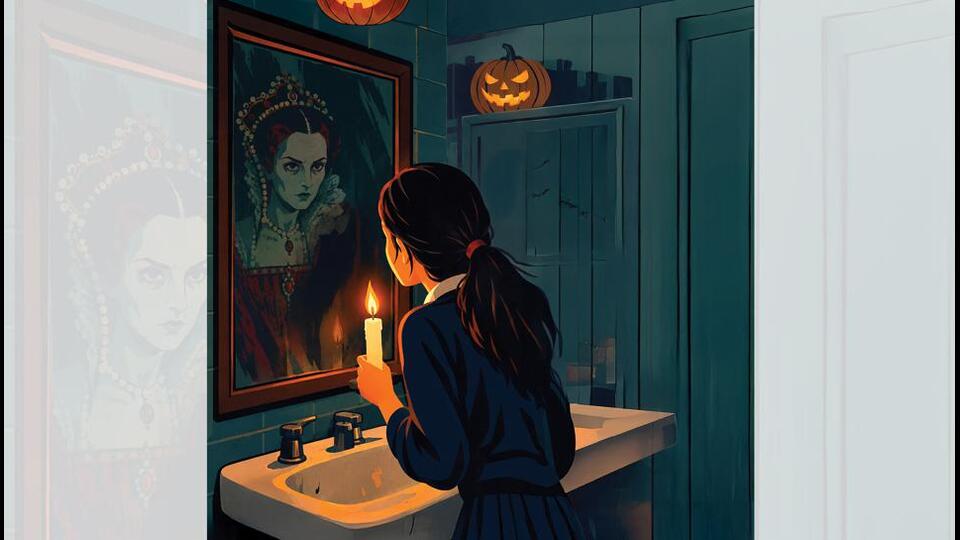
It doesn’t matter how you fared in school. Every kid learnt that if you held up a candle, looked into a mirror at 3am and invoked Bloody Mary’s name three times, a vengeful spirit would appear. Blame colonialism for this urban legend. Bloody Mary refers to Queen Mary I of England, who burned more than 280 Protestant dissenters at the stake in the 1500s. She died childless – ostensibly her ghost has nothing better to do than visit unsupervised children at odd hours.

In Indian schools, it’s been something of a dare for generations. Seniors pass on the lore, urging classmates to say her name three times in the washroom mirror. It’s how Azania Patel, 27, researcher and co-founder of India Ghost Project, was inducted. “I don’t think anyone knew what was supposed to happen to you after,” she says. “But it took hold of our collective imaginations.”
Actor Tanuj Virwani, 39, recalls how he’d be terrified of a rickety wardrobe with a mirror in the Lonavala farmhouse his family would stay at. “I was certain there was something inside. Just the prospect of passing by it at night terrified me for years.” Turns out, there’s science behind why mirrors are lowkey scary. In 2010, psychology professor Giovanni B Caputo worked out that gazing into one’s reflection for over 10 minutes, especially in low light, causes us to perceive distortions in our face. So, that creepy figure in the mirror is not long-dead Mary. It’s probably you.

The woman on the highway
Where there are roads, there are stories of solo drivers (mostly men) trying to get home late at night on a deserted stretch, and encountering the spectral figure of a woman. In India, she’s typically in a white sari or some kind of bridalwear, and almost always asking for a lift, then vanishing into thin air. It’s the male fantasy of being able to pick up a woman in your vehicle, with a scary twist.
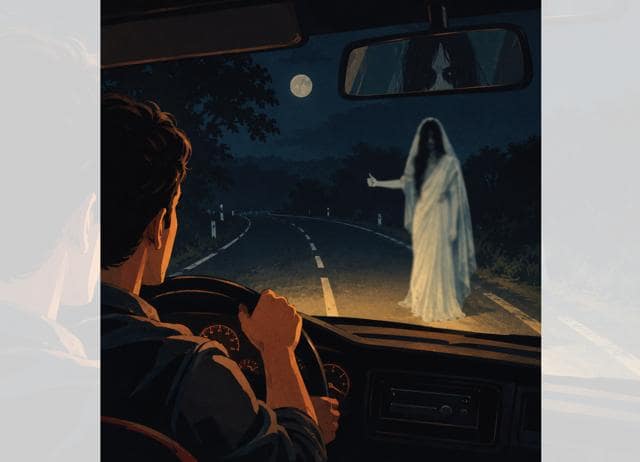
“These stories are older than we think,” says Patel. “Researchers and folklorists in the US studied accounts of travellers who believed they saw hitchhikers who’d terrorise travellers. They traced the stories back to the days when people travelled in horse carriages.” The earliest recorded version appears in a 1602 Swedish manuscript. There are versions in the Philippines, from South Africa’s N9 highway, and on the Freedom Road in South Korea. The phenomenon plays out even in busy Mumbai, where streets are lit and rarely empty.
Believe none of it. Travel ghost stories emerged because in the old days, travel was so dangerous, “there was a very real possibility that you’d go out and never come back”. Today, most hallucinations occur when the driver is drunk, sleep deprived or just tired.
The Bermuda triangle, quicksand and other imported fears
In the ’90s, there was a simple test to determine whether someone grew up with satellite TV at home. You asked them about the Bermuda triangle or quicksand. The two fears preoccupied Americans, which means they showed up in many shows that aired in India. Every children’s show — Courage the Cowardly Dog, The Jungle Book, Tom and Jerry — had an episode in which the characters were trapped in quicksand. Impressionable ’90s kids spent hours visualising what they’d do if the plane flew too close to Florida and Puerto Rico, or the best ways to distribute body weight to stay afloat in a ditch until help arrived.
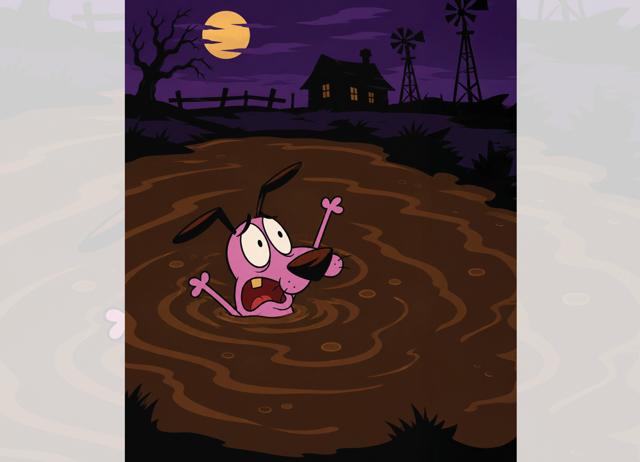
“The statistical likelihood of us encountering quicksand is really low,” says Patel, laughing. “We thought it would be a bigger problem than it really was.” There was even a rumour that Mumbai’s Aksa Beach had quicksand, possibly to deter weekend parties.
The world outgrew its Bermuda Triangle fear after data emerged that ships and planes do not vanish there any more often than in any other busy ocean region. A missed opportunity for Patel, at least: “Somehow, I think we secretly wanted to experience flying over that area and seeing what happened.”
Delhi’s Monkey Man, Mumbai’s Pinprick Panic
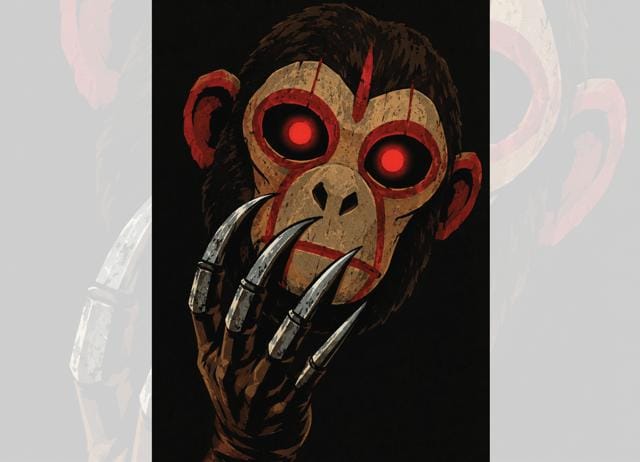
In Delhi in 2001, stories spread like wildfire of a human-sized ape who went around scratching kids and grownups, between midnight and 4am. People claimed that he had glowing red eyes and metal claws. One man reportedly died of fright when he fell off a building, believing the creature was after him. The hysteria was so widespread that even The Guardian and Washington Post published reports. Filmmaker, actor and storyteller Sudhanshu Rai, 41, was in his teens at the time and recalled it being a hot topic in school. “The fear was so real that people felt they could see him in broad daylight too,” he says. The story thankfully died out.

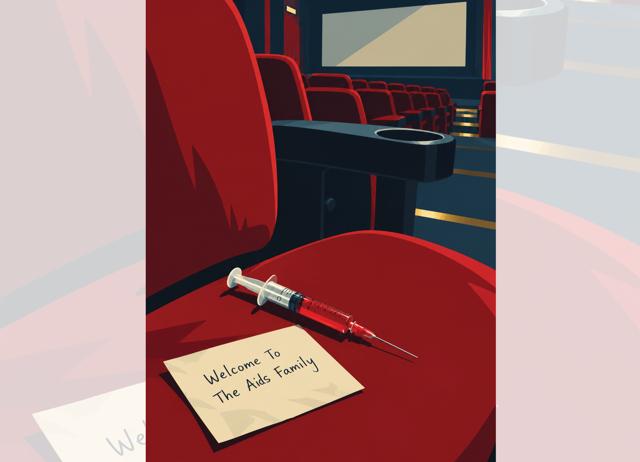
In Mumbai, around the same time, moviegoers were in a panic. Rumours began to circulate that an HIV+ gang, armed with a syringe full of infected blood, were injecting unsuspecting folks in the dark of the cinema and leaving behind notes saying “Welcome To The Aids Family”. No documented cases ever emerged. The virus, while deadly, does not survive long outside the human body, anyway. A gang, if it even existed, would have known this method to be a transmission fail.
Oddly specific parental warnings
No one drops cautionary tales like Mummy and Papa. Don’t swallow fruit seeds; a tree will grow in your stomach. Don’t swallow chewing gum; it’ll stay in your tummy for seven years. Don’t cross your eyes; they’ll get stuck that way. Don’t crack your knuckles; you’ll get arthritis. Yes, we were all lied to. “Our parents made this up to keep us in check,” says horror-content creator Muskan Khanna, 25. “And we believed it for longer than we should have.”

Some fears didn’t even make sense. There’s no way a snake can slither upwards to a high-rise toilet – but a surprising number of adults still have a moment of fear in the bathroom. Modern fans are lightweight, and won’t come crashing down without weeks of wobbling, grunting and other warning signs. Khanna still worries, and only uses the slow speeds. “Even when I was in school, they’d make so much noise, it was lowkey stressful.”
All those haunted trees
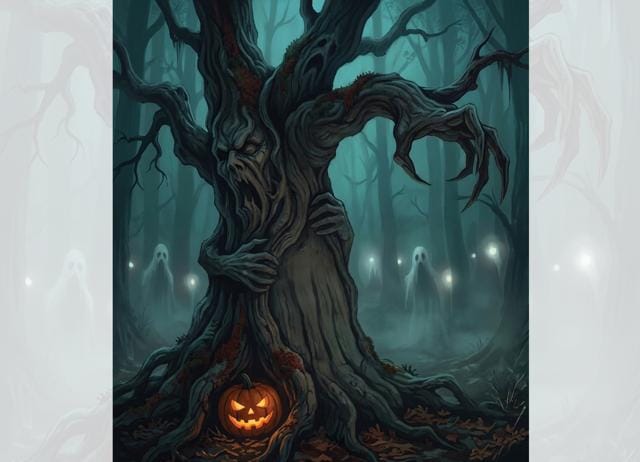
No matter the village, town or city you live in, you know of at least one haunted tree. You’d have been warned not to pass under it after dark (there lay a fate worse than bird droppings). Rai grew up wary of a bamboo outcrop in his native village in Gorakhpur, Uttar Pradesh. Locals told him that “djinns resided in that particular cluster, and if you looked directly at them after sunset, you’d get possessed”.
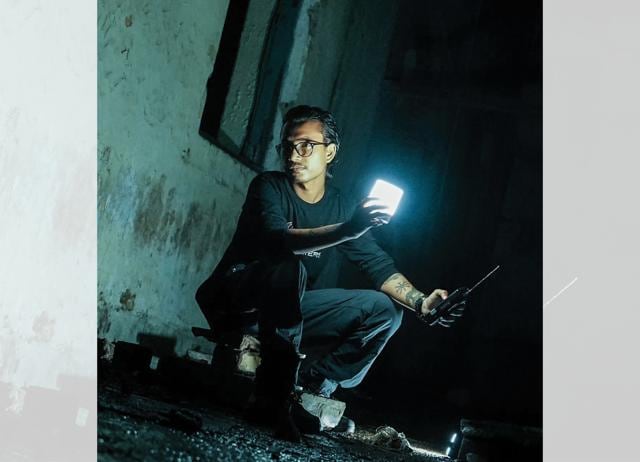
Paranormal investigator Sarbajeet Mohanty, who co-founded the Parapsychology And Investigations Research Society, also grew up fearing trees at night, after his uncle told him that the trunk opens up on new-moon nights, unleashing a woman who grabs bystanders. “I didn’t know which tree it was, so I started fearing all trees,” he says. It may well have been a way to deter troublemakers from hanging around at night. “Today’s kids, who grew up in cities, fear abandoned buildings and liminal spaces more than trees,” says Rai.
From HT Brunch, October 31, 2026
Follow us on www.instagram.com/htbrunch


