
 E-Paper



Rocking the boat: How kayaker Bilquis Mir became Kashmir’s Aqua Queen

 Prefer HTon Google


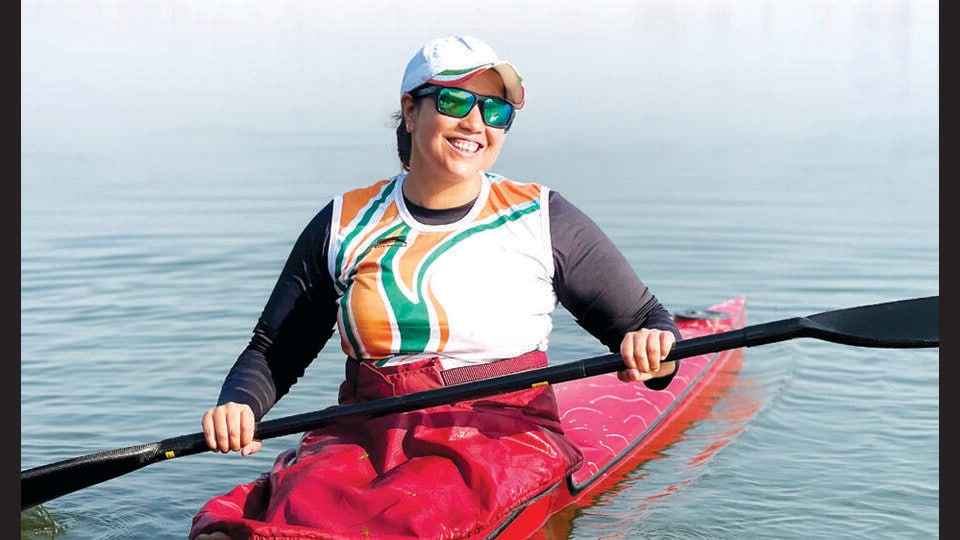
Bilquis Mir is a canoeist, kayaker, coach and Olympics judge. To the women athletes of Kashmir, she’s a counsellor and friend. Here’s how she paddled to the top
You’ll probably hear about a lot of women this time of the year. International Women’s Day brings out tales of women’s resilience, their fight to be counted, their lifetime of invisible labour.
What you probably won’t hear about are stories of women who’ve done all that, from a part of India where achievement of any kind, even by men, has been harder.
Bilquis Mir is 38, from Kashmir,and a canoeist, kayaker and water sports coach. She also served as a jury member at the Paris 2024 Olympics, when she judged the water sports events. To Kashmiris, and to her fans across the world, she’s simply Aqua Queen. Seems fitting, doesn’t it?
“My journey started at the Dal Lake; it’s taken me all the way to Paris,” Mir says. Along the way, she’s coached the national canoeing and kayaking teams. She became the first Indian woman to qualify for the prestigious International Canoe Federation Sprint World Cup in Hungary. But her biggest contribution, and the reason she’s smiling so wide on the cover of our magazine, is “making more women believe they can step out of their homes and make a life for themselves”, she says. And she’s paddled upstream all through.
The oar and the lore
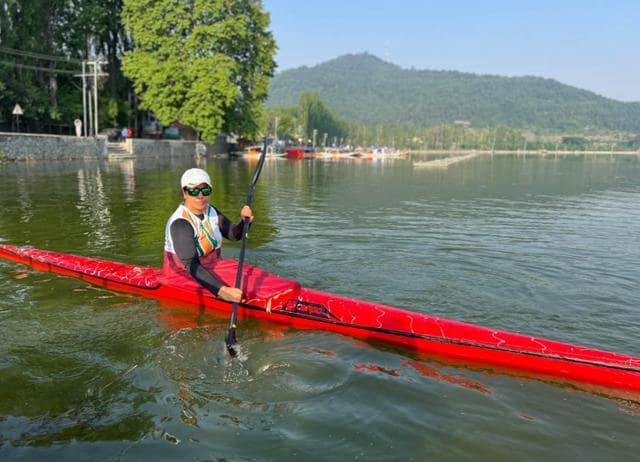
Mir grew up in Khanyar, in downtown Srinagar, in the early ’90s, a time when canoeing and kayaking were just beginning to take off. The Indian Kayaking and Canoeing Association, which governs the sport, had been established only in 1985. Small water sports clubs were just about setting up.
Back then, it was mostly men, extending their shikhara-paddling skills to the new sports. Women weren’t seen out of the home, let alone on the lake. Mir was 11, and hanging around outside Nehru Park, on the banks of the Dal Lake, waiting for a friend to finish his canoeing practice, when an instructor came up to her. He asked her to either sit inside the park or get into a boat and paddle with the rest of the group.
It was a loaded choice. “At that time, a girl waiting alone in the park was a reputation-killer,” she says. “I had no choice but to take the life jacket he gave me and try to steer the boat. I must have got in and fallen out, got in and fallen out, at least fifty times during that one hour.”
It was only when she was heading home, her school uniform soaking wet, that she realised the enormity of what she’d done. “Acchi khasi pitai ho gayi us din,” she recalls of the beating she received at home. “But that night, my dreams were full of that rocking motion of being on the water. It was love at first sight.” From then on, Mir began to bunk her after-school tuitions to go out on the water, and learn to paddle straight into the centre of the lake.
Making a splash
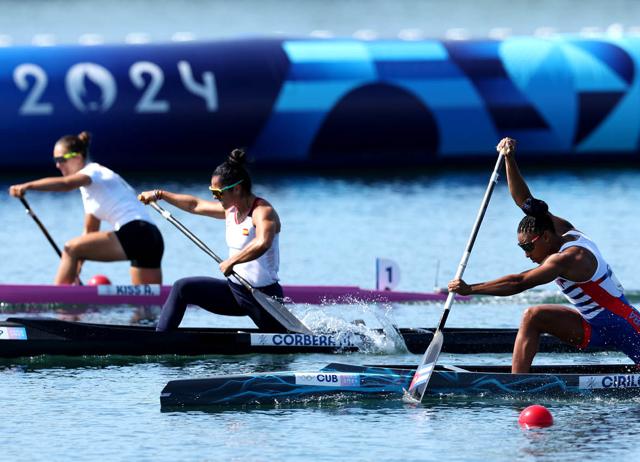
Mir won her first competition, a local tournament, a few months later. Her family remained sceptical. At that time, becoming a teacher – or if you had the money, a doctor – was the accepted career option for women. “They felt I was losing my values, that I’d ruin my future.” They came around after seeing her name in the papers and the medals and trophies she kept bringing home. “My mother, Hameeda, became my biggest support. She even sold some of her jewellery to help pay for my paddles and uniforms.”
Then, a setback. Mir injured her hip and shoulder at the 2009 Canoe World Cup in Hungary. It cut short her career as an athlete. “It was the peak, so it was very disappointing. Water sports was the only love of my life.” As only a kayaker could, she swiftly adjusted to the current, giving back to the sport by training others in it.
In 2013 Mir began coaching girls in Kashmir, beginning with the most difficult task of all: Convincing parents to send their daughters to paddle alone on the water. “At times, the questions I got were insulting.” They’d ask why Mir was endangering or corrupting their daughters. But I kept going from door-to-door, village-to-village, telling girls and their families that they had this option.” Her first batch had 20-25 girls. But even when they showed promise, their families were reluctant to send them out of state for a competition. “I’ve seen promising young athletes shelve their dreams because of this. It still hurts.”
That Mir has now coached more than 3,000 young women across India over a decade is through sheer force of will. She’s up before sunrise, watching the mist clear over the lake as young women, paddles in hand, troop in for training. Her voice echoes over the water as she issues instructions on how to launch a canoe or kayak onto the water, how to stay upright, how to paddle forward and back. Her most important lesson: “Telling them that they can do it. It’s as simple as that. I tell them that there’s no shortage of challenges and obstacles; but they should fight them. Accepting your fate will never make your future brighter.”
By her estimate, Mir has helped Kashmir win 110 medals in the past four years. “When the girls started getting jobs, after winning at the national level, the tide turned.” Most of the time, it’s not even the training that they come to her for; it’s guidance and support. “We’re not just coaches to them, but also friends, counsellors, and guardians. Sometimes we have to intervene on their behalf with their families.”
Current affairs
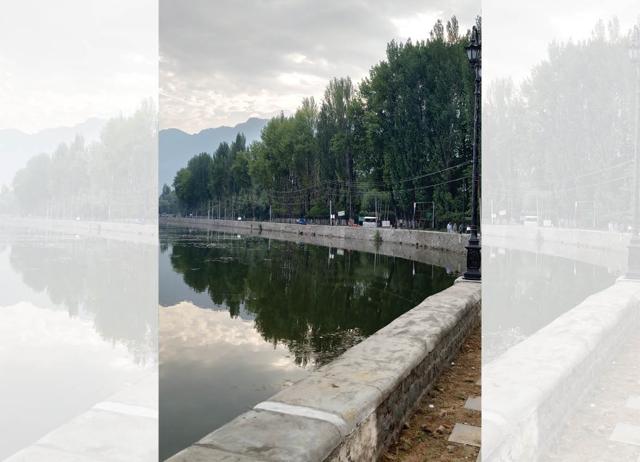
Things have changed since she was 11, Mir says. Women are visible in public life in Kashmir. The Dal, on the other hand, is visibly polluted. “Back then, you could swim without a wetsuit and ingest the water. Now, if I forget my goggles, my eyes and face sting for hours afterwards.”
What makes her happy is that more girls are taking to water sports. Last October, she helped organise a women’s-only race on the lake. More than 150 girls and women showed up, in salwar kameezes and jeans, because they couldn’t afford wetsuits or sports swimwear. “And these are girls who had to fight to get out of the house,” she says. “There were married women too. They told their husbands, ‘You can’t stop us. We’re going to participate in this race.’”
Aqua Queen hopes she can pass the crown on. “I don’t want to be the only Bilquis who succeeded. My students tell their parents, ‘We want to be like Bilquis Madam’. It’s my dream to put Kashmir on the water sports map. Then I’ll feel like I’ve made it.”
From HT Brunch, March 08, 2025
Follow us on www.instagram.com/htbrunch


