E-Paper



Rude Food by Vir Sanghvi: An egg is all it’s cracked up to be

 Prefer HTon Google


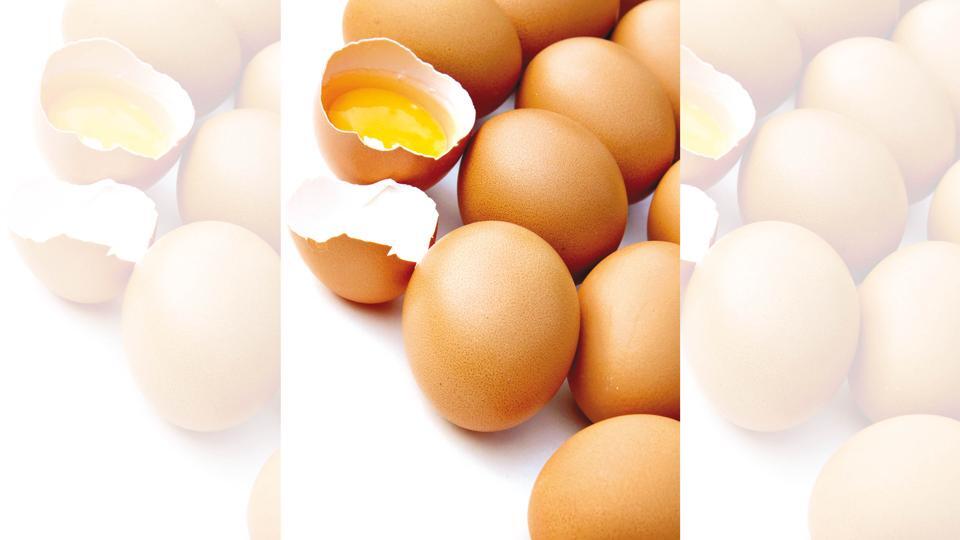
Indians don’t really bother with the mechanics of the inside of the egg. It’s a pity, because good eggs have much to offer, even to vegetarians
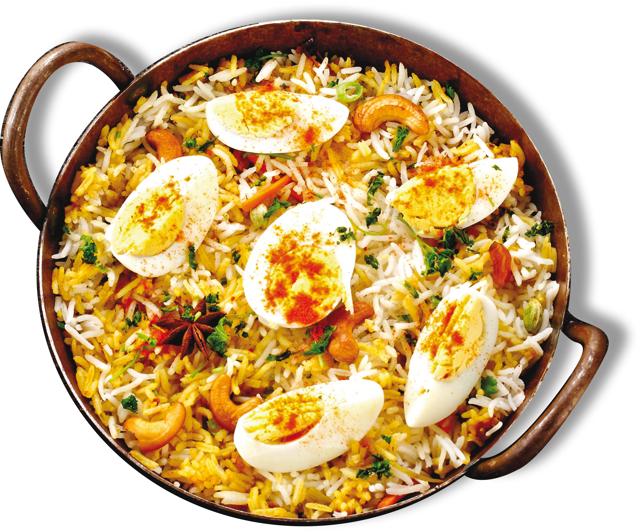
For most of us Indians, eggs are no big deal. We have grown up with them in some form or the other: as ande ki bhurji, as masala omelettes, even as the boiled eggs in mutton curries and biryanis.
What we therefore miss is that eggs are not an ancient Indian ingredient. It is hard to find an egg dish in any account of an ancient Indian banquet. There are virtually no recipes for eggs in ancient Indian cookbooks. And almost every Indian egg dish you can think of can be traced back to medieval (ie: Islamic) influences.
Even KT Achaya, the noted food historian who usually managed to find a South Indian connection for most ingredients, threw up his hands in despair. “Some sort of taboo seems to have prevailed in Hindu India against the eating of eggs”, he noted sorrowfully. Achaya checked historical records and found that in 716, Al Masudi, the Arab traveller and historian noted “the prohibition of all kinds of eggs among the people”. And as late as the mid-seventeenth century, Father Sebastian Manrique, the Portuguese traveller and missionary, said that eggs were not eaten in Bengal.
So eggs are not part of the Hindu culinary tradition. There is no evidence that even non-vegetarians (the majority of Hindus) ever ate them. Which is odd because the chicken was domesticated in the Indus Valley and then sent around the world. Did the Harappans only eat the chicken and throw away its eggs? Or was this a pre-Hindu civilisation?
We do know that there are vegetarians in today’s India who will refuse to eat eggs even when it has been explained to them that eggs are as non-vegetarian as milk or ghee. Yes, they come from an animal, but they would not ever hatch and let a little chicken run out. Even Gandhiji got the point and gloried in the virginal nature of the hen, writing: “The hen is not allowed to see the cock and yet it lays eggs. A sterile egg never develops into a chicken. Therefore he who takes milk should have no objection to taking sterile eggs”.
Though most non-egg eaters are forced to eat eggs when they travel (in cakes, mayonnaise, sauces, ice-cream etc) they try and avoid them at home, preferring to consume vast quantities of industrial chemicals, which are used to create so-called eggless sauces, ice-creams, cakes and even naans.
Perhaps it is because of our eggless ancient history or our current obsession with eggless products that the remarkable nature of the egg passes us by. Most of us eat really horrible eggs, of a quality so poor that the generations before ours would probably have spat them out.
In the old days, eggs came from hens that ate grass and plants and ran around farms. Now, they come from factory-reared chickens who are kept in boxes, live on a diet of industrial chicken feed and are bred solely to keep producing eggs. Such birds produce three to four times the eggs of a free-range bird but what the breeders gain in quantity, we, the consumers, lose in quality.
Industrial eggs have watery whites, pale yolks and very little flavour. But they are cheap and until recently, there was no alternative, so we buy them anyway. Shamefully, even five star hotels, which mark up their egg dishes three or four times, use these eggs, which is why to eat eggs at a breakfast buffet at an Indian hotel is to want to throw up; unless you do what I do and stick to the Indian options.
Over a decade ago, I wrote about Keggs eggs. They were free-range eggs that had just been launched. In the years that followed, Keggs became a big deal and now there are many others who also sell free-range eggs. They cost more, but they are well worth it, especially if you are baking or cooking with them. The highly regarded baker, Mandakini Gupta, told me she gets her eggs from Romana’s farm in Punjab. They only deliver to Delhi once a week, but the eggs, she said, were worth the wait. I took her advice and ordered my eggs from Romana’s (their Instagram handle is @romanafarms) and the eggs were delicious.
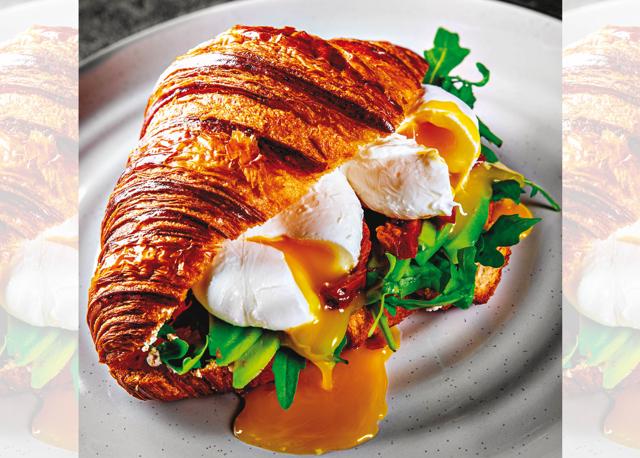
Because we have no indigenous egg tradition (only one borrowed from the Middle East) we don’t really bother too much with the mechanics of the inside of the egg. Most of us don’t poach eggs, which requires skill, or make the creamy scrambled eggs that they love in the West. It is hard to even find a good fried egg with a sunny golden yolk.
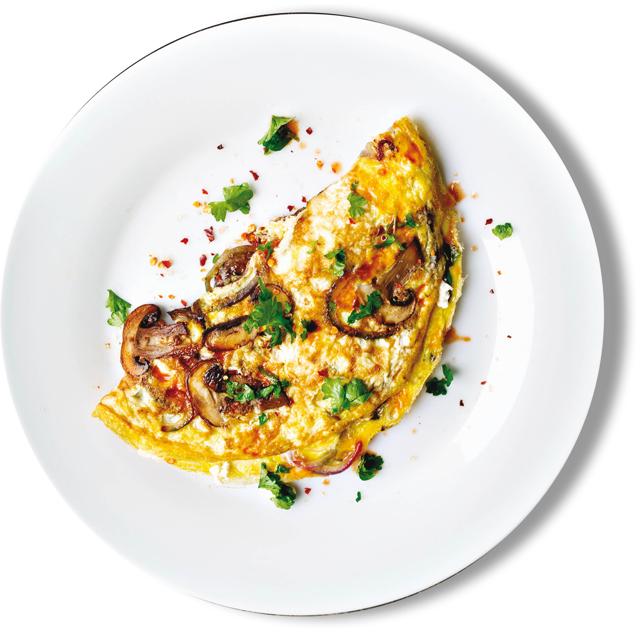
Instead we make bhurji (probably descended from the Persian khagina), masala omelettes (for which the eggs don’t need to be very fresh, which partly accounts for the dish’s popularity) or that old standby, the hard-boiled egg, which turns up again and again in street corner stalls as well as curries and nargisi kofta. We hardly ever use eggs in cooking, except in dishes we imported from abroad. A good naan needs eggs, as does custard. But we make eggless naans and packaged cornflour custard.
Which is sad because over the last two decades or so, the world’s great chefs have become fascinated by eggs. Heston Blumenthal created Bacon and Egg Ice-cream, and Andoni Luis Aduriz experimented with slow-cooking eggs. Andoni discovered what most chefs now know, that the reason it is so difficult to cook the egg delicately is because the white and the yolk cook at different temperatures.
Heston Blumenthal’s research has established that the white is ready when it reaches 68°C while the yolk is only ready at 72°C. So the trick to cooking an egg is to balance the different cooking times.
I don’t think Indian chefs bother too much with all that, which is why our egg dishes can be simple and basic. But I often wonder: why don’t some Indian chefs use eggs to create new dishes? Well educated vegetarians (who know that the egg doesn’t have a baby chicken hiding inside) will be able to enjoy them as much as non-vegetarians. And eggs (even free-range eggs) are much cheaper than meat or fish.
But no, Indian chefs are simply not interested in being adventurous with eggs. Perhaps it is our ancient Hindu disdain for the egg!