
 E-Paper



That Feeling When by Nikhil Taneja: The internet is turning us into jerks!

 Prefer HTon Google


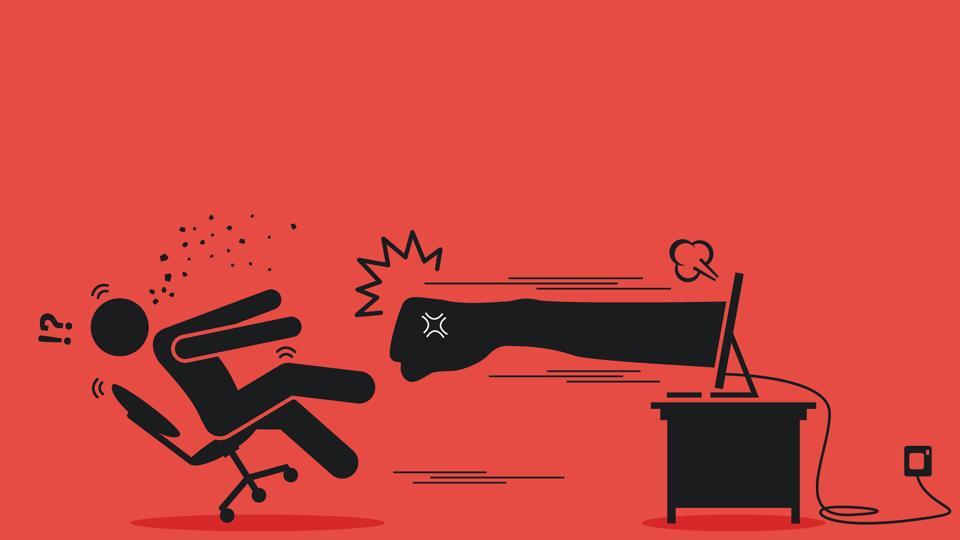
When bad behaviour is rewarded, we pave the way for a worse society
I had planned my last column of the year to be a reflective, introspective piece about the intersection of the internet and our identities: the good, bad and ugly of how the online shapes the offline, and who we are as a function of what we consume online.
As I was collecting my thoughts about the topic, a video of a heated argument between an air hostess and a passenger on an Indigo flight went viral online. The video revealed the passenger calling the air hostess a ‘servant’, even as she pushed back to remind him that she’s an ‘employee’. As it turns out, unfortunately, this video is an appropriate analogy for everything I’ve been reflecting on: we’ve, in large parts, become jerks because of the internet.
Algorithms of hate
Let me explain. We may be the land of ‘atitthi devo bhava’ (the guest is akin to God), but we’ve never really been the kindest of cultures. There is an inherent class, caste, community, creed, gender and religious prejudice that we’ve always carried in our hearts, conditioned by a society that’s always erred on the side of power, looking down upon, bullying, mocking, and oppressing those born without it. But in the world before social media, these biases were largely well-concealed, camouflaged by our pretenses and our sociological need to be liked, revealing themselves only in unabashed power centres even as they simmered beneath the surface of every interaction of, by and between the generations that came before us.
But social media changed everything. Suddenly, even the people with the worst impulses and loudest bigotries found communities online that cheered for them. Algorithms incentivised not kindness or even peaceful coexistence but the most extreme, boorish, mean-spirited and hateful comments and posts, because they got the deepest engagement. And, as the first generation of people with a first-of-its-kind addiction to our mobile devices, we’ve all been stuck in an endless loop of mindless consumption that’s slowly and steadily normalised cruelty online, to a degree that our world leaders and tech moguls are a direct reflection and some of the worst perpetrators of this ‘jerk culture’.
Yes, there is an argument to be made that we can curate our feeds and consume only ‘positive’ or ‘meaningful’ content. And yet, even if we may not be following ‘negative’ handles or engaging in ‘toxic’ conversations, can anyone truly claim never to have been at the receiving end of an unnecessary, harsh or vicious comment or ‘trolling’ even on the most mundane opinion, post or picture we posted?
Going to extremes
Unfortunately, this is also the kind of behaviour we are now encountering in offline spaces as well, whether or not we go looking for it. When you reward bad behaviour in any space, we pave way for a worse society in every space. So, it is upsetting but unsurprising to see the obnoxious behaviour we are meting out openly, whether on ground or in the skies, expecting no consequence, and perhaps even seeking applause, because we are now so used to seeing the rudest comment getting the highest likes on a social media post.
But interestingly—as the reaction to the video shows online, with more and more people condemning the passenger and calling out unkind behaviour—social media also incentivises moral posturing, especially when it leans towards the condemnation of a seemingly ‘immoral’ act. While in this case, it is a beautiful example of allyship to the victim of a verbal assault, there are times we’ve also taken this idea to the extreme, often getting so angry about the tiniest perceived act of aggrievement that we are ready to call for capital punishment for the ‘offender’.
I’m not saying that this is also being a jerk, but I’m also not not saying it. As the year ends, I hope we can collectively take a step back and recognise how the internet is affecting us—how it is pushing our behaviour to one extreme or the other, and how we can catch ourselves from having—and proclaiming—knee-jerk reactions both in online and offline spaces.
It would benefit us to acknowledge that perhaps the antidote to the internet is the same as that to being a jerk: find a way, in every situation you find yourself in, to err on the side of kindness.
Nikhil Taneja is a writer, producer, storyteller, public speaker, feeler of feelings, men’s mental health advocate and co-founder of Yuvaa. That Feeling When is a fortnightly column that offers a relatable take on mental health and emotional well-being.
From HT Brunch, December 31, 2022
Follow us on twitter.com/HTBrunch
Connect with us on facebook.com/hindustantimesbrunch


