
 E-Paper



Wellness by Luke Coutinho: The gut clock

 Prefer HTon Google


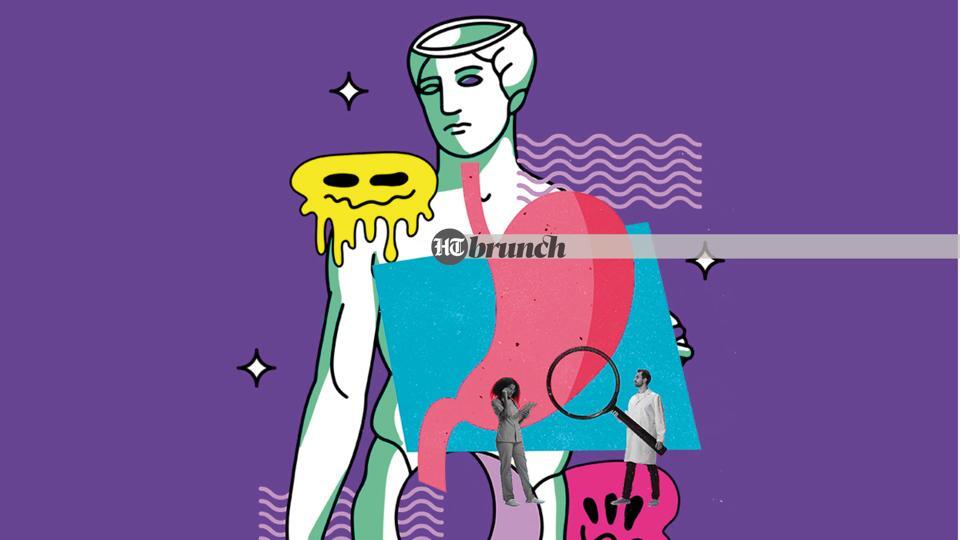
The strong connection between dietary patterns and circadian rhythm must not be ignored. How good are you with your gut health?
Do you know our dietary patterns, appetite, and satiety are all regulated by our circadian rhythm? Unfortunately, we do not align our eating habits to it and revolve it around our work schedules, social calendars, and convenience instead, not realising the pressure we put on our bodies to work against what it’s designed for.
With my years of experience in coaching patients across the globe, I am convinced that not everyone needs a diet plan. Just by tweaking their meal timings and aligning it with the circadian rhythm, they can start to see noticeable improvements in their health like high energy levels, alertness, better sleep, digestion, and water retention, waking up with a flatter stomach, no bloating, clearer skin, lesser cravings, and so much more.
What does eating according to the circadian rhythm mean?
In simple words, it means aligning our meal timings and patterns to the sunset and sunrise, because of its impact on our digestion. As per the circadian rhythm, our digestive fires wake up as the sun rises, peak around noon, and slow down as the sun sets.
Eating in accordance with this rhythm means we consume our first meal of the day after sunrise, eat a substantial lunch in the afternoon, and our last meal of the day with, or close to, sunset, followed by fasting through the night till the next morning.
The morning appetite
As the sun starts to rise, so does our digestive fire. The first meal of the day thus should be post sunrise, especially if you feel hungry. If you don’t, embrace it because your body is still eliminating and processing the last meal.
At the same time, eating too early, before the sun rises, can go against circadian rhythm because your metabolic fire and digestive ability are not activated yet. The body is still in the detoxification process, and nothing that you eat so early is going to be broken down effectively.
The afternoon appetite
When the sun is atop, our digestive fire is at its peak. This makes lunchtime really important and gives us the opportunity to have a really good meal. In fact, aiming for a maximum calorie intake from your breakfast and lunch and the least from your dinner best supports our digestion and the circadian rhythm.
What this also means is that the ideal time to eat a dessert is in the afternoon!
The evening appetite
As the sun starts setting and it gets dark, our body naturally starts to secrete melatonin, the hormone that is responsible for inducing sleep. As a result, our body slows down and is least interested in digestion. It is now more focussed on repair, recovery, growth, rejuvenation, elimination, and healing. To support this, it’s best to start tapering calorie intake and eat your last meal close to sunset, followed by giving our digestion a complete breakthrough by fasting.
This is also called the circadian rhythm and is by far the most natural way to fast.
Late night meals
Our body is not designed to digest and break down food, as the sun starts setting. If you do have a late-night meal, your body will still try to digest, but at the cost of:
• Irregular blood sugar levels • Constipation • Acidity
• Bloating • Sluggishness the next day
This is because the circadian rhythm is challenged. Several studies have shown that the pancreas also has a melatonin receptor, indicating that on the release of melatonin when it gets dark, it binds to the receptor on the pancreatic cells, thereby suppressing its function. This speaks volumes about why a late-night meal can mess up your digestion, and sugar levels, and you may even wake up feeling acidic and heavy. Melatonin, upon its release, blocks pancreatic function, because digesting food at night is not what your body is interested in.
If you do end up eating late, since your metabolism is slow, it is a struggle for your body to break down the food. You make your pancreas churn out more digestive enzymes, make your stomach produce more acid, and force itself to digest the meal. The Dutch and Europeans enjoy croissants, chocolate pastries, and similar foods in the morning when the metabolism is at its highest.
What about late-night snacking? Your body is not designed to digest food late at night. It is that simple. Now, consider all of these events, how the body functions, and what may happen when you disrupt this circadian rhythm. The moment you have a late-night meal, you disrupt every part of the rhythm, because it is all connected.
The circadian rhythm and its impact on digestion is a law of nature. If we challenge the laws of nature by going against the circadian rhythm that governs thousands of functions in the human body at a cellular level, then even the best treatment, medicines, doctors, nutritionists, spiritual healers, or yoga experts will not work.
And, what if we align ourselves with the laws of nature, and add the right medicine, lifestyle, food, and so on? That is when we begin to see prevention, healing, recovery, and healthy improvement occur.
Luke Coutinho practices in the space of Holistic Nutrition—Integrative & Lifestyle Medicine and is the founder of You Care-All about You by Luke Coutinho
From HT Brunch, September 10, 2022
Follow us on twitter.com/HTBrunch
Connect with us on facebook.com/hindustantimesbrunch


