
 E-Paper



26 letters which redefine Indianness
Indian fashion isn’t just exotic inspo that international brands can use as reference. It’s a discipline in itself


On the occasion of Republic Day, here’s the lowdown on the Indian style vocabulary. Indian fashion is more than just an eclectic mood board to be referenced by international brands. It’s a set of canons, a discipline, a vocabulary, a grammar. From Indian handwoven textiles to our age-old embroidery techniques, designers across the world continue to incorporate our country’s vibrant aesthetic and insignia in their design process. Chanel Pre-Fall 2012 collection titled, Paris-Bombay comes to mind right away. And it’s hard to erase from mind Hermes’ limited edition sarees unveiled in 2011 and more recently, Paco Rabanne’s take on Indian paisley prints in its Spring-Summer 19 collection. From couturier Elie Saab, who has often been inspired by Indian drapes, to the likes of Ulla Johnson, who inculcated plaids in her collection which were loomed in India — the subcontinent has been a treasure trove for artistic alchemies. Let’s recount India’s priceless offerings to the world of fashion.
A
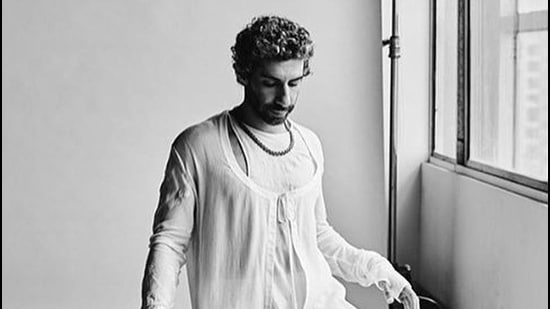
Angrakha
In 2008, designer Rajesh Pratap — in his autumn/winter line titled ‘Valentino Rossi meets Mother Teresa, Biker Jacket meets the Saree’ — redefined angrakha jackets, styling it with dhoti pants, thus, resurrecting it on fashion map.
B
Bandhani
Trust designer Rahul Mishra to entrench the craft of Bandhani on the global firmament. It is a tie-dye textile realised by plucking the cloth with fingernails into many tiny bindings that form a patterned design.
C
Chintz
Originally a woodblock printed, painted or stained calico produced in India from 1600 to 1800. Over the years, brands such as Nikasha, Anamika Khanna, Rohit Bal and Payal Singhal have reinterpreted the quintessential chintz prints as their brand soul.
D
Drape
India has always been known as a fashion movement defined by the sensual fluidity of drapes. Couturier Tarun Tahiliani, over the years, has reinvented draping techniques in Indo-Western fusion silhouettes.
E
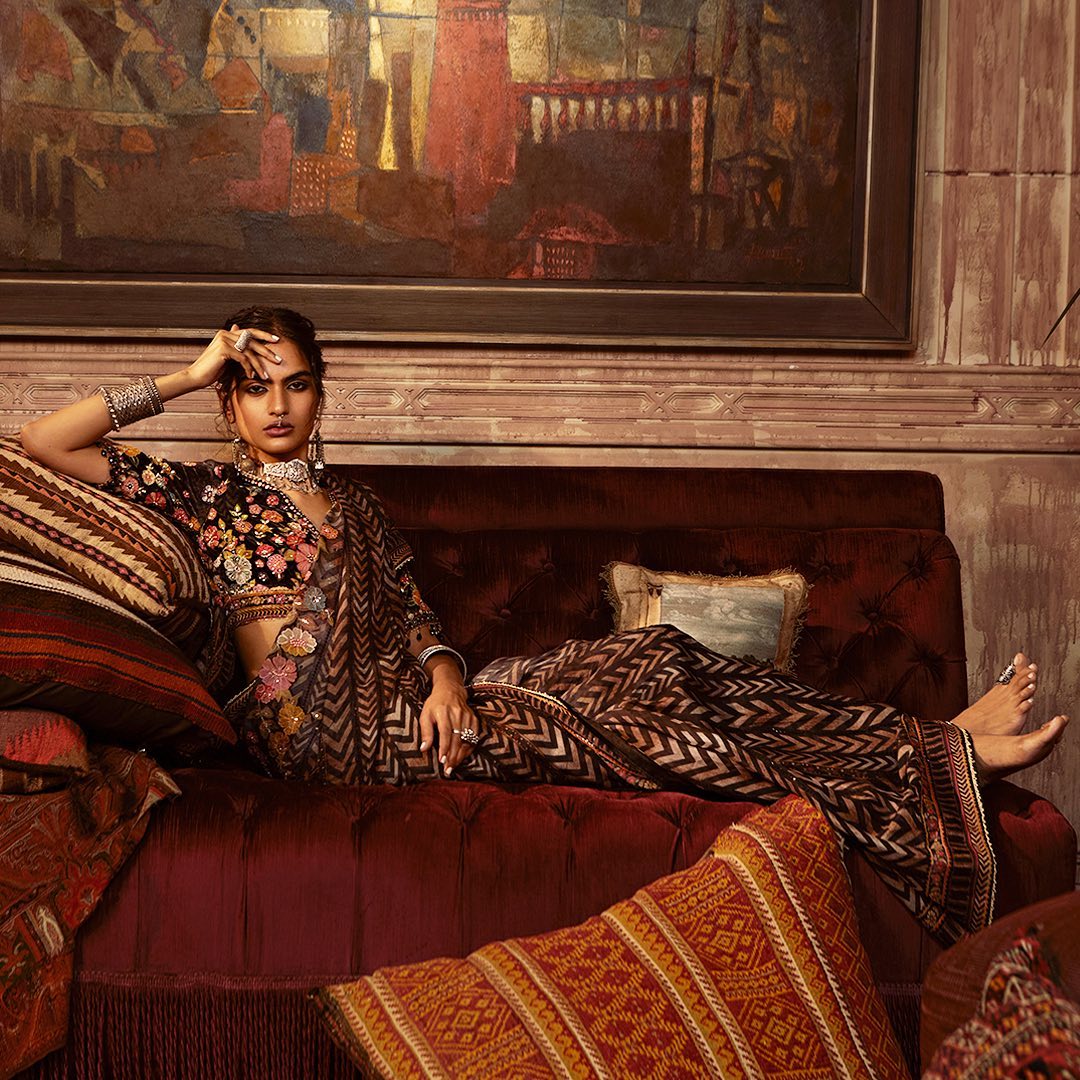
Elegance
Indian designs have always been a reflection of age-old elegance. Be it our form-flattering silhouettes or artisanal embroideries, our design houses have taken to modernity with great gusto, without compromising on elegant quotient.
F
Finery
Indian maharajas and nobility, and their lavish way of living, have inspired several generations of designers. Chanel Metiers d’Art Pre-Fall collection show, titled ‘Paris-Bombay’ merits a mention.
G
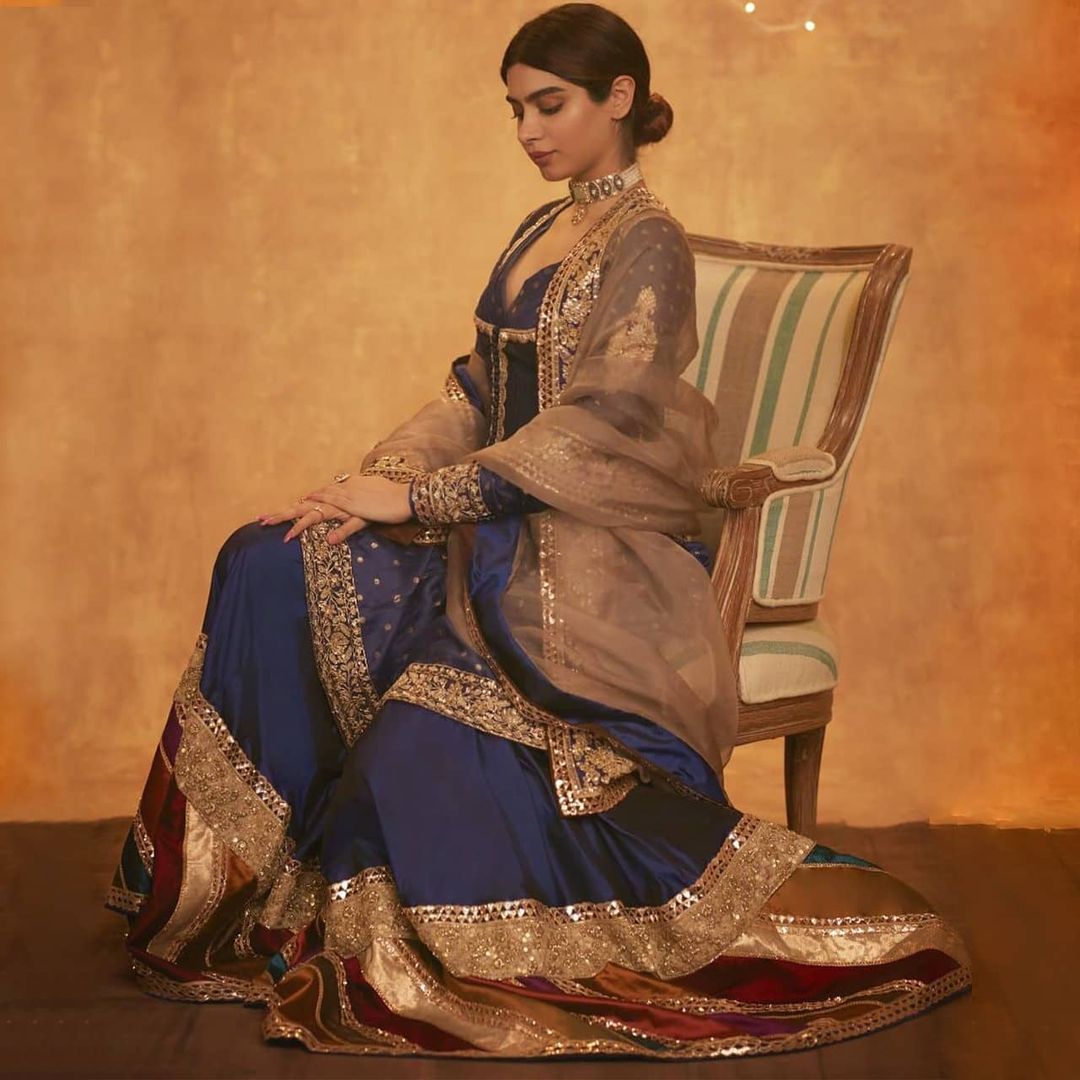
Gharara
The charm of a gharara remains unmatched and couturier Manish Malhotra has successfully reimagined it season after season. Favoured by the likes of Kareena Kapoor Khan and Khushi Kapoor, the classic is a bridal closet’s staple.
H
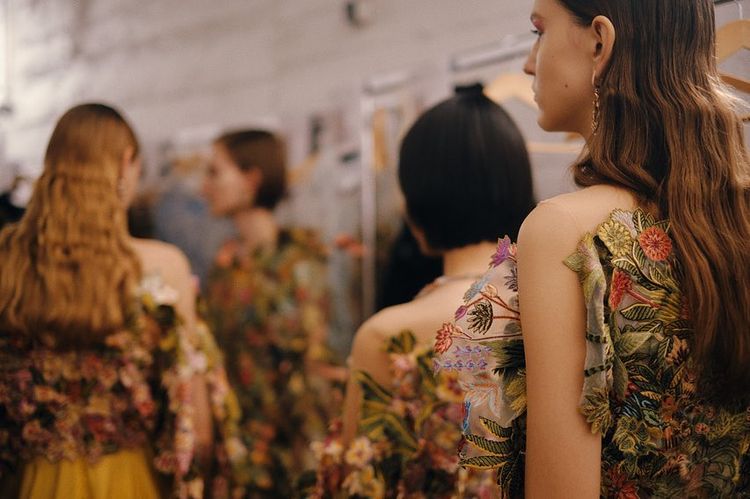
Haute designs
Indian couturier Rahul Mishra has time and again made his presence felt in the global catwalks, proving that Indian craftsmanship is at par with the best in the world.
I
Indigenous
Every indigenous textile in India evokes an emotion. From Kota, Banarasi and Paithani to Kochi, Kalamkari and Phulkari — Indian weaves are a metaphor for our weavers’ extraordinary skills.
J
Jamdani
Hailing from Bengal, this weaving tradition is one of the most time- and labour-intensive forms of handloom weaving. In the first half of the 19th century, James Taylor described the figured or flowered jamdani.
K
Kurti
Kurti went through myriad metamorphosis over the years — from a kurti dress to a kurti gown. Monisha Jaising reinvented it in chiffon, peppering it with diamante and Swarovski. Today, it’s worn as a chic cover-up over a swimsuit and even as mini resort dress.
L
Lucknowi craft
Chikankari is a signature of the Nawabi city of Lucknow. Believed to have been introduced by Nur Jahan, the wife of Mughal emperor Jahangir, it is one of Lucknow’s best known embroidery styles.
M
Metaphorical
Indian designers have made strong socio-political commentary through their presentations. During the fashion week last year, Ashish N Soni made a strong case for the Black Lives Matter movement in his digital showcase.
N
Nonchalant
Indian street style has always been synonymous with a rakish nonchalance. The way a cop layers his uniform with a sporty cable knit jumper or the way a saree-clad woman teams the nine yard wonder with a pair of comfy sneakers as she shops. Indians know how to marry style with comfort without trying too hard.
O
Oomph
Indian couturiers such as Amit Aggarwal, Rina Dhaka and Falguni and Shane Peacock have churned out designs with a ‘more is more’ vibe, which radiates oomph without compromising on taste.

P
Pashmina
Pashmina is a synonym for a chic variant of spun cashmere, the animal hair fibre. The word pashm implies wool in Persian, but in Kashmir, pashm implies the raw unspun wool of domesticated Changthangi goats. .
Q
Quiet
Over the last decade, there has been an emergence of designers known for their quiet and restrained aesthetic. From Love Birds Designs to Vaishali S, they are visually and emotionally impactful without noise.
R
Radical
Indian designers have time and again taken a drastic departure from rigid codes of dressing, thus throwing the observers off-kilter. Suneet Varma’s metallic breast plate look comes to mind instantly, and so does Nachiket Barve’s X ray saree.
S
Shimmer
Shine-on pieces, an orgiastic overdose of sequins and holographic recycled polymer textiles are worth mentioning. Couturiers like Amit Aggarwal and Rimzim Dadu have reimagined sparkle in their unique handwriting.
T
Tant
Woven from cotton threads and characterised by lightness and transparency, this Bengali saree is the best antidote to the hot and humid weather of the subcontinent.
U
Uber chic
Indian designs have been toasted in all the fashion capitals in the world — from New York runway to Parisian catwalks. From Sabyasachi to Bibhu Mohapatra, there’s always an unmistakable air of chic.
V
Voluptuous
The form-flattering saree silhouette has been the most forgiving in Indian style lexicon, lending a sensual edge to all body types. The way Indian drapes celebrate voluptuous body forms, no other clothing culture does.
W
Woven
Indian labels such as Anavila and Eka have recontextualised local textiles, giving them a contemporary touch. Kudos to these home-grown labels for ushering in the all-pervading wave of organic fabrics!
X
X factor
Our Indian fashion chromosome has an indescribable X genome which gives us a distinctive identity. It could be a sensual drape of a dupatta or a choli with a sweetheart neckline.
Y
Youthfulness
The current crop of Indian designers have stayed true to our heritage while reinventing themselves. Be it Ritu Kumar’s Label which speaks to today’s Gen Z girls or Namrata Joshipura’s sporty separates, it’s a love letter to the spirit of youthfulness.
Z
Zeitgeist
Every decade in Indian fashion history has been redefined by an air of free-spiritedness. From the 60s’ mod style in Bollywood films to the current wave of pared-back, sporty minimalism on the runway, there’s an unmistakable touch of freedom.
manish.mishra1@hindustantimes.com
Catch your daily dose of Fashion, Taylor Swift, Health, Festivals, Travel, Relationship, Recipe and all the other Latest Lifestyle News on Hindustan Times Website and APPs.


