
 E-Paper



Korean vs Indian sunscreen: What works best for Indian skin and weather?
Confused before choosing between an Indian or a Korean sunscreen? Here's what you need to know.

 Prefer HTon Google


Our Picks
Our Picks
| Product | Rating | Price |
|---|---|---|
Beauty of Joseon Relief Sun Rice + Probiotics 50 ml SPF 50+ PA++++ Lightweight Korean Sunscreen for Oily SkinView Details  | ₹1,050 | |
 | ||
SKIN1004 Hyalu-Cica Water-Fit Sun Serum SPF 50 PA++++| Lightweight Korean Sunscreen for All Skin Types with Hyaluronic Acid & Centella, 50mlView Details | ₹1,499 | |
| ||
LANEIGE UV Barrier Sunscreen SPF 50+ | Moisture Based Barrier Strengthening | Light & Non-Greasy | No White Cast | Soothing Hydration | Suitable for All Skin | For Men & Women-20mlView Details | ₹731 | |
| ||
The Face Shop All No Shine Hydrating Sunscreen Spf 50+ Pa++++ With Uva/B Protection, No White Cast, Water Resistant, Lightweight Korean Sunscreen for Oily Skin, 50MlView Details | ₹839 | |
| ||
Innisfree Hyaluronic Moist Sunscreen SPF50+ PA++++ 50ml - Korean Sunscreen with UV Protection, No White Cast, Hydrating & Moisturizing, Suitable for All Skin Types, Lightweight & Non-Greasy FormulaView Details | ₹1,234.41 | |
| ||

Research-Backed Choices
Every product we recommend is chosen through a combination of Primary Research and Secondary Research.
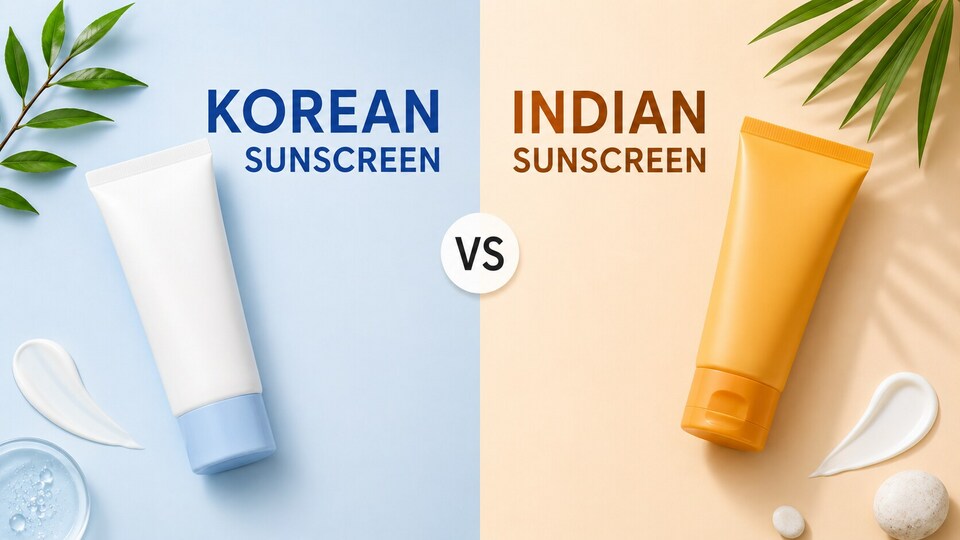

Sunscreen has become one of the most essential skincare products today, especially in countries with strong sun exposure like India. Over the last few years, Korean sunscreens have gained immense popularity for their lightweight textures and skincare-focused formulas, while Indian sunscreens have evolved to suit the country’s intense heat, humidity, and melanin-rich skin tones.
Choosing between Korean and Indian sunscreens depends on your skin type, lifestyle, climate, and skincare priorities.
What are Korean sunscreens?
Korean sunscreens are widely appreciated for their elegant formulations and advanced UV filters. Many Korean brands use modern photostable filters such as Tinosorb S, Tinosorb M, Uvinul A Plus, and Uvinul T150. These ingredients provide broad-spectrum protection against both UVA and UVB rays while remaining lightweight and cosmetically elegant. Korean sunscreens are also known for including skincare ingredients like hyaluronic acid, centella asiatica, niacinamide, rice extract, probiotics, and ceramides. These ingredients help hydrate, soothe, and brighten the skin while protecting it from UV damage.
Benefits of Korean sunscreens
One of the biggest advantages of Korean sunscreens is their texture. They are usually serum-like, non-greasy, and leave little to no white cast. This makes them ideal for daily wear, layering under makeup, and for people who dislike the heavy feeling of traditional sunscreens. Korean sunscreens are particularly suitable for dry, normal, and combination skin types because many formulations focus on hydration and skin barrier support.
What are Indian sunscreens?
Indian sunscreens, on the other hand, are increasingly being formulated specifically for Indian weather conditions and skin concerns. Since Indian skin is more prone to pigmentation, tanning, and post-inflammatory hyperpigmentation, Indian sunscreens often focus heavily on UVA protection and PA ratings. Many Indian formulations are designed to be sweat-resistant, matte-finish, and suitable for oily or acne-prone skin. Common ingredients found in Indian sunscreens include zinc oxide, titanium dioxide, avobenzone, octinoxate, octocrylene, and increasingly newer filters like Tinosorb S and Uvinul A Plus. Modern Indian brands are slowly moving toward photostable and broad-spectrum filters to compete with global formulations. Additionally, Indian sunscreens often include ingredients such as vitamin C, niacinamide, green tea, and antioxidants to help reduce tanning and pigmentation
Benefits of Indian sunscreens
The biggest strength of Indian sunscreens is their suitability for harsh weather. They are usually more durable during sweating, outdoor activities, and high UV exposure. Many Indian pharmacy sunscreens are specifically developed for oily, acne-prone, or sensitive Indian skin. However, some older formulations can feel thick, greasy, or leave a visible white cast on deeper skin tones.
How to choose between the two
So how do you choose between Korean and Indian sunscreen? The answer depends on your skin type, lifestyle, climate, and skincare goals.
If you spend most of your day indoors, work in air-conditioned environments, wear makeup regularly, or prefer lightweight skincare, Korean sunscreens may be a better option. Their elegant textures encourage consistent daily use, which is one of the most important factors in sun protection. However, if you live in extremely hot or humid conditions, sweat heavily, spend long hours outdoors, or need strong durability, Indian sunscreens may offer better performance.
The difference between Korean and Indian sunscreen
| Feature | Korean Sunscreens | Indian Sunscreens |
| Texture | Lightweight, serum-like, elegant finish | Often thicker or matte-focused |
| White Cast | Usually minimal or none | Can vary depending on formulation |
| Climate Suitability | Better for mild or indoor environments | Better for hot and humid climates |
| UV Filters | Uses advanced modern filters | Mix of older and newer filters |
| Skin Benefits | Hydration, soothing, brightening ingredients | Focus on tanning and pigmentation control |
| Sweat Resistance | Moderate in many formulas | Usually stronger for Indian weather |
| Finish | Dewy or natural glow | Matte or semi-matte |
| Price | Usually more expensive | More affordable |
| Availability | Mostly online/imported | Easily available locally |
| Best For | Daily wear, makeup layering, sensitive skin | Outdoor use, humid weather, sports, travel |
Dermatologists generally recommend choosing a broad-spectrum sunscreen with SPF 30 or higher and PA+++ or PA++++ protection. Whether Korean or Indian, the right sunscreen should suit your skin type, lifestyle, and climate while making daily sun protection comfortable and sustainable.
Similar stories for you
Discover radiant, youthful skin with these 7 anti-ageing face serums for women
Lip balm vs lip oil: Which one is better to give you soft and supple lips
These 10 sunscreen body lotions SPF 50 are your basic summer skincare essentials
At Hindustan Times, we help you stay up-to-date with the latest trends and products. Hindustan Times has an affiliate partnership, so we may get a part of the revenue when you make a purchase. We shall not be liable for any claim under applicable laws, including but not limited to the Consumer Protection Act, 2019, with respect to the products. The products listed in this article are in no particular order of priority.

Catch your daily dose of Fashion, Taylor Swift, Health, Festivals, Travel, Relationship, Recipe and all the other Latest Lifestyle News on Hindustan Times Website and APPs.


