
 E-Paper



Guinea worm disease nears eradication with 14 cases reported in humans in 2021


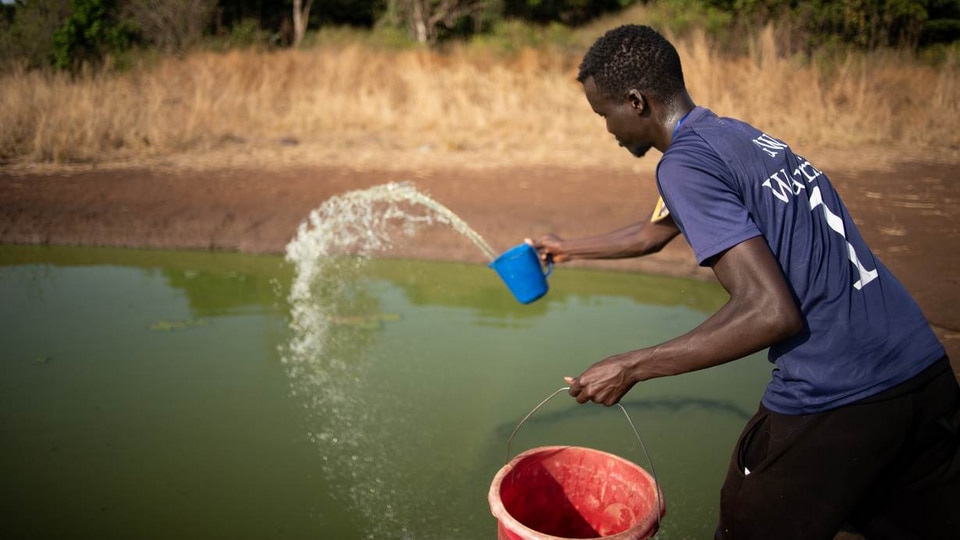
Researchers believe that Guinea worm disease that once infected millions of people in more than 20 countries a year could be on its way out as only 14 cases of Guinea worm infections were detected in humans in 2021.
Scientists believe that the Guinea worm disease - a parasite that causes painful skin lesions - may be on its way to near eradication. Researchers believe that this scourge that once infected millions of people in more than 20 countries a year could be on its way out as only 14 cases of Guinea worm infections were detected in humans in 2021, Nature, a British weekly scientific journal reports. However, some scientists believe that the parasites' presence in animals complicates the situation and indicates that a near eradication, if possible, could take some time.
Adam Weiss, Director of the Guinea Worm Eradication Program of the Carter Centre, headquartered in Atlanta, Georgia, told the scientific journal, "It's pretty amazing. Fourteen people on a planet of almost eight billion. It's mind-bending to think about." The centre had announced the tally in late January. Additionally, the International Task Force of Disease Eradication believes that the Guinea worm disease could be eradicated in the coming decades, thus improving the quality of life for millions of people.
In 2020, 27 cases were reported, suggesting a nearly 50 per cent drop. According to Weiss, this reduction became possible with a nearly 40-year effort by international organisations and national governments to rid the world of Guinea worm.
ALSO READ | Covid-19: Endemic doesn't mean life can return to normal, says virologist
What Is Guinea Worm Disease?
Guinea worm disease, a neglected tropical disease (NTD) caused by the parasite Dracunculus medinensis, infects humans and some animals - cats, dogs and baboons - when they drink water contaminated with Guinea worm larvae. After spending a year growing inside the host, the parasite - which can be up to one metre long - pushes through the skin of its host. It waits to come into contact with water to release its larvae. The worm's escape is painful and can last for up to six weeks, sometimes preventing people from working or even walking. This recognisable character of the Guinea worm disease makes it easy to detect.
Eliminating The Disease
Julie Swann, a disease modeller at North Carolina State University in Raleigh, told Nature that the 50 per cent drop in the number of Guinea worm disease cases is "remarkable", considering there is no recognised treatment or vaccine for the parasite. She added that eradication campaigns have focused on preventing the transmission of the disease.
Seven of the 14 cases were reported last year in Chad, a Central African country. Philippe Tchindebet Ouakou, the coordinator of the nation's Guinea Worm Eradication Program and based in N'Djamena, told Nature that the field agents track the disease by creating a network to find contaminated water sources. After discovering it, the agents prevent people from drinking the water and use pesticides to disinfect it.
The same method is used in countries like South Sudan, Mali and Ethiopia, where the remaining seven detected cases occurred in 2021. This method keeps the numbers low and could be used to tackle other endemics, according to Ouakou.
However, Julie Swann isn't convinced that complete eradication is possible as the Guinea worm disease has animal reservoirs. She told Nature that 790 cases of Guinea worm infection were reported in dogs in Chad alone last year.
But Adam Weiss, Director of the Guinea Worm Eradication Program, believes otherwise. He says that animal cases came down by 45 per cent in 2021, and thus he remains optimistic that eradication is within reach. He added that eradication programmes are tackling animal reservoirs by tethering dogs to curb the spread of the parasite. "I absolutely believe Guinea worm is eradicable. It will take more work, but if we couldn't do it, I'd be the first one to say it," he said in the end.


