Ever feel like your skincare routine requires a degree in chemistry? Between dodging the latest social media hacks, wondering if your phone or laptop screen is secretly giving you dark spots, and trying not to burn your face off with acid serums, caring for melanin-rich skin can feel like a gamble. Also read | Glass skin, slugging or skin cycling: Which skincare trends actually work for Indian skin?
Because Indian skin sits comfortably in that phototype 3 to 6 zone, our pigment-producing cells are basically overachievers — one wrong move, and a tiny breakout turns into a dark mark that stays for months.
To clear up the chaos, HT Health Talk — a reader-centric series by HT Lifestyle that gets doctors and healthy experts to answer your actual, everyday questions — tapped Dr Aparna Santhanam, consultant dermatologist at P D Hinduja Hospital & Medical Research Centre, Mahim, Mumbai. Ahead, she is breaking down what actually works for brown skin — and what you should officially stop worrying about:
1. Are chemical peels, lasers, and microneedling safe for Indian skin with more melanin?
Indian skin can absolutely be treated safely with peels, lasers and microneedling. The important thing is that darker skin has a greater tendency to develop post-inflammatory hyperpigmentation when it is irritated or overheated. The right procedure, with proper patient selection and at the right intensity, is very safe for Indian skin, which falls between Phototypes 3 and 6. I am particularly cautious with aggressive lasers and deep peels, which I avoid in the darker phototypes. Microneedling and superficial peels can be very useful when appropriately performed in all skin types. Good diagnosis, conservative settings, adequate skin preparation and strict sun protection are more important than simply choosing a particular machine or peel.
2. Which laser or chemical peel works best for Indian skin?
{{/usCountry}}Indian skin can absolutely be treated safely with peels, lasers and microneedling. The important thing is that darker skin has a greater tendency to develop post-inflammatory hyperpigmentation when it is irritated or overheated. The right procedure, with proper patient selection and at the right intensity, is very safe for Indian skin, which falls between Phototypes 3 and 6. I am particularly cautious with aggressive lasers and deep peels, which I avoid in the darker phototypes. Microneedling and superficial peels can be very useful when appropriately performed in all skin types. Good diagnosis, conservative settings, adequate skin preparation and strict sun protection are more important than simply choosing a particular machine or peel.
2. Which laser or chemical peel works best for Indian skin?
{{/usCountry}}There isn't one laser or peel that is universally ‘best’ for Indian skin. It depends completely on what we are treating: acne, acne marks, melasma, pigmentation, scars or ageing. For someone prone to pigmentation, I generally prefer treatments that stimulate the skin or work with epigenetics rather than those that cause excessive inflammation. For pigmentation, topical treatment and photoprotection remain the foundation, with procedures used selectively. Certain Nd:YAG and fractional laser approaches can be useful in appropriately selected patients, but they have to be used very carefully. Similarly, superficial peels can be effective, while aggressive medium or deep peels carry a higher risk of pigmentary complications.
3. Does using phones and laptops too much make pigmentation and melasma worse on Indian skin?
Melasma causation is multifactorial, linked to genetics, hormones, lifestyle patterns, and sun exposure. There is very little evidence to prove that it is linked to phone or laptop usage. The evidence for everyday screen exposure causing clinically significant pigmentation is much weaker than the evidence for UV exposure. However, visible light can affect pigmentation, particularly in people with melasma or a predisposition to hyperpigmentation. So I would not panic about screen time, but I would take photoprotection seriously. In India, we have intense sunlight for much of the year, and that is a far more important concern. I would advise every Indian to use broad-spectrum sunscreen 365 days a year. Also read | HT Health Talk: You asked, our experts answered how to manage migraine in summer
4. Is regular sunscreen enough for blue light from screens, or do I need tinted/mineral sunscreen?
For most people, a good broad-spectrum sunscreen is the most important thing because it protects against UV radiation, which remains the major environmental driver of pigmentation. If someone has melasma or significant pigmentation, I would go one step further and consider a mineral sunscreen containing iron oxides, because these formulations provide better protection against visible light. I wouldn't say everyone needs this sunscreen specifically because they use screens. The bigger issue is outdoor visible light. In someone with stubborn melasma or recurrent pigmentation, however, tinted mineral sunscreens can be a very useful addition to the routine.
5. Why do brightening serums like vitamin C, niacinamide, or alpha arbutin stop working on dark spots?
Usually, the serum hasn't necessarily “stopped working”. Pigmentation is a complex condition and not just a problem of excess melanin at a static point. It is often an ongoing process. If there is continued sun or visible light exposure, hormonal influence, acne, inflammation or irritation, new pigment can continue to form while you are treating the old pigment. There is also a point where a single ingredient may simply not be enough. I tell patients that pigmentation treatment is a marathon, not a quick fix. Sometimes we need to change the active, combine treatments or address the underlying trigger rather than continuously increasing the strength of the same serum.
6. What’s the safest way to use multiple active ingredients without irritation or more dark spots?
With Indian skin, I strongly believe that more is not necessarily more. Irritation itself can trigger pigmentation, so I prefer a simple, structured routine rather than layering five or six actives together. Start one active at a time, give the skin time to adjust, and don't introduce multiple new products simultaneously. A basic routine usually includes gentle cleansing, moisturisation, and sunscreen, with treatment actives introduced according to the person's concerns. If the skin starts burning, stinging, peeling or becoming persistently red, that's a signal to step back. The goal is controlled treatment, not constantly keeping the skin irritated. Active rotation also works, but all these treatments, including home care, are best pursued under a dermatologist’s watchful eye.
7. How can I prevent acne marks from becoming permanent dark spots?
The best way is actually to treat the acne early and prevent inflammation in the first place. In Indian and other darker skin types, acne commonly leaves post-inflammatory hyperpigmentation. So I don't like the approach of waiting for acne to disappear and then treating the marks. We should manage the acne and pigmentation together. Don't pick or squeeze pimples, because additional inflammation increases the likelihood of marks. Sunscreen is also important because UV exposure can make pigmentation persist. If someone is repeatedly developing dark marks after acne, I would rather address the acne properly with a dermatologist and then tackle the PIH medically. Also read | HT Health Talk: Bengaluru dietician answers all your burning questions about the right food for weight loss
8. Do diet or daily habits make facial pigmentation worse in India’s hot and humid weather?
There isn't good evidence that a particular Indian food or a spicy diet directly causes facial pigmentation. I would be much more concerned about sun exposure, heat, inflammation and hormonal factors. Interestingly, an Indian study found an association between prolonged cooking or occupational heat exposure and the severity of melasma. So heat may matter for people who are already prone to melasma. Daily habits also matter: inadequate sun protection, spending long hours outdoors, and repeatedly irritating the skin can all work against treatment. I would therefore focus less on unnecessarily restricting food and more on controlling the environmental and inflammatory triggers we actually know about. Adding foods rich in antioxidants, like red and orange foods, may actually benefit from sun protection.
9. Which should I focus on first: screen protection, acne marks, or skin treatments?
I would actually put screen protection last on that list. First, identify and control the cause of the pigmentation. If you have active acne, treat it, as each new inflammatory lesion can create another dark mark. Second, establish good daily photoprotection. Once the skin is stable, treatments such as peels, microneedling or lasers can be considered depending on the diagnosis. I don't believe in jumping straight to a procedure just because pigmentation is visible. Particularly for Indian skin, the treatment itself should not cause further inflammation or pigmentation. The basic principle is to diagnose first, control inflammation, protect the skin, and then treat residual pigmentation. What we do daily in our lives supports us longer than just immediately jumping to treatments. Also, only do treatments under the supervision of certified dermatologists.
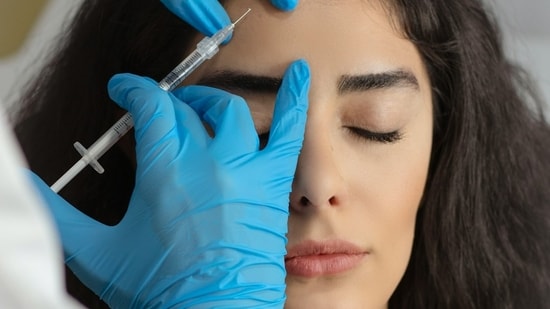
10. Can Botox cause any special risks for brown skin, like scars or dark spots from the needles?
Botox itself does not have a special tendency to cause dark spots simply because someone has brown skin. Botulinum toxin has been shown to be generally well tolerated in people of colour, and we have been using it with great success for youth benefits for over two decades. However, any injection creates a small amount of trauma, and darker skin can be more prone to post-inflammatory pigmentation after inflammation or injury, in those already so inclined. So technique matters: appropriate needle size, gentle injection technique, good asepsis and avoiding unnecessary trauma are important. I would also distinguish pigmentation from scarring. A tiny injection mark is not the same thing as a scar. With a properly performed Botox treatment by certified experts, significant scarring or pigmentation is uncommon and highly unlikely.Note to readers: This article is for informational purposes only and not a substitute for professional medical advice. Always seek the advice of your doctor with any questions about a medical condition.
Catch your daily dose of Fashion, Taylor Swift, Health, Festivals, Travel, Relationship, Recipe and all the other Latest Lifestyle News on Hindustan Times Website and APPs.
Catch your daily dose of Fashion, Taylor Swift, Health, Festivals, Travel, Relationship, Recipe and all the other Latest Lifestyle News on Hindustan Times Website and APPs.