
 E-Paper



A blood test to detect drowsy drivers on the anvil

 Prefer HTon Google


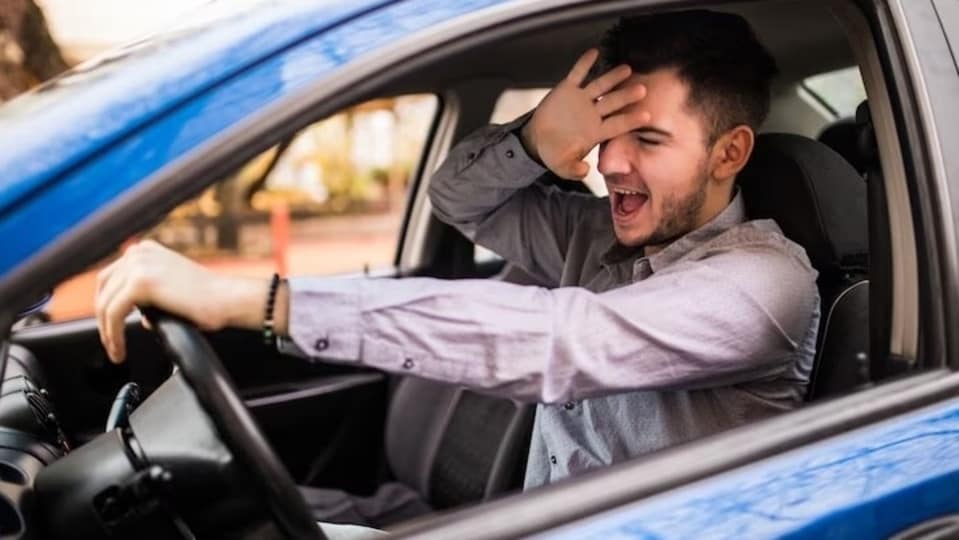
Sleeping behind the wheel could land you in legal trouble. A blood test to detect sleep-deprived drivers may soon become a reality in two years' time.
Drowsy driving is as deadly as drunk driving if not more and both can result in road accidents and fatalities due to slow reaction time and lack of alertness on the part of the person behind the wheel. While so far there was no way to determine if a driver was fatigued or sleep-deprived at the time of accident, a new blood test could pave the way for taking legal action against drowsy drivers, reports The Guardian, adding that the test could be available within two years. (Also read: Reasons people fall asleep while driving and what can be done about it)
“There has to be a system to check whether someone has had enough sleep, because they could be putting other people’s lives at risk,” Prof Steven Lockley, a sleep expert at Harvard medical school, told The Guardian.
People who are sleep deprived could be suffering from a sleep disorder and may have microsleep episodes due to fatigue. This could lead to deadly road accidents. Microsleeps can last from a few seconds to a few minutes. While one doesn't completely fall asleep during microsleep, it is enough to lose focus as the brain drifts away for a few seconds.
According to a study, people may have a steep cognitive decline after 18 hours of staying up, which is like having alcohol in the system. Recent research proves that driving with less than 5 hours of sleep could be as dangerous as driving with excessive alcohol in your system.
Dr Murarji Ghadge, ENT Consultant Surgeon and Sleep Specialist earlier told HT Digital that many people who are sleep deprived mistakenly think that they can work well on a few hours of sleep every night for an extended period of time. The expert added that even a partial lack of sleep could have a negative impact on both physical and mental performance, including driving.
"Insufficient sleep or nighttime driving might make you drowsy, which increases your risk of being in a car accident. Drowsiness was predicted to be a factor in 13% of severe injury crashes and 21% of all fatal motor vehicle crashes in recent studies," said Dr Ghadge.
The test to measure the number of hours a driver has slept could soon become a reality thanks to a team of researchers led by Clare Anderson, a professor at the Turner Institute for Brain and Mental Health at Monash University, Australia, that is currently working on it. The team has identified five biomarkers in the blood that can tell if a person has been awake for 24 hours or more with 99 percent accuracy, as per The Guardian report.


