
 E-Paper



PM Modi visits Indonesia's 1,000-year-old Prambanan Temple: Why this ancient Shiva shrine is unlike any other in world

 Prefer HTon Google


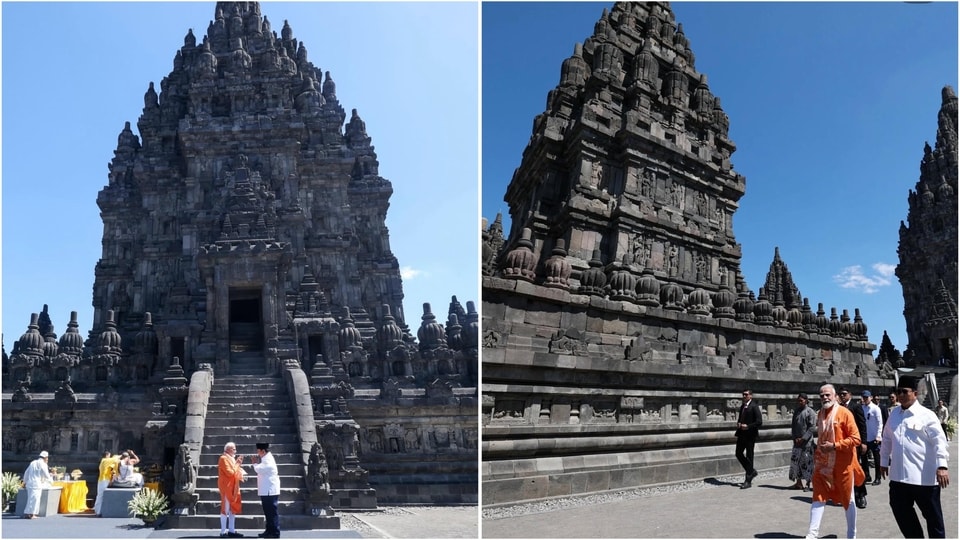
PM Modi visited Indonesia's 1,000-year-old Prambanan Temple, one of the world's largest Hindu shrines. Here's what makes the UNESCO site so iconic.
Prime Minister Narendra Modi on July 8 visited the iconic Prambanan Temple in Indonesia with President Prabowo Subianto, offering prayers at the nearly 1,000-year-old Hindu shrine dedicated to the Trimurti—Lord Shiva, Lord Vishnu and Lord Brahma.
One of the largest and most spectacular Hindu temple complexes outside India, Prambanan is not just an architectural marvel but also a symbol of the centuries-old cultural ties between India and Indonesia. Here's what makes the UNESCO World Heritage Site so extraordinary. (Also read: New Zealand travel vlogger shares his ‘brutally honest’ ranking of north India; names this city the most underrated )
History and architecture of Prambanan Temple
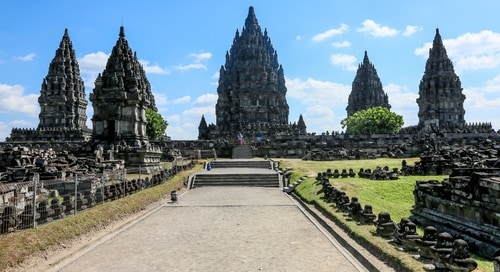
Built in the 9th century, Prambanan is Indonesia's largest Hindu temple complex and one of Southeast Asia's greatest architectural achievements. Constructed during the reigns of Rakai Pikatan and Rakai Balitung of the Mataram Kingdom, the sprawling complex originally consisted of 240 temples dedicated to the Hindu Trimurti—Lord Shiva, Lord Vishnu and Lord Brahma.
Located near the renowned Borobudur Buddhist temple in Central Java, Prambanan reflects an era when Hinduism and Buddhism flourished side by side. The temple complex is laid out in three concentric courtyards, with the towering 47-metre-high Shiva Temple at its centre. Inside are statues of Lord Shiva, Goddess Durga, Lord Ganesha and the sage Agastya.
The temple walls are adorned with intricate bas-reliefs depicting scenes from the Ramayana, making Prambanan one of the world's most remarkable artistic interpretations of the ancient Hindu epic. Every year between May and October, the temple also hosts the famous open-air Ramayana Ballet, where the epic is performed against the illuminated backdrop of the temple.
The legend behind the 1,000 statues
Prambanan is as famous for its folklore as it is for its architecture. According to Javanese legend, Prince Bandung Bondowoso fell in love with Princess Roro Jonggrang, who agreed to marry him only if he could build a temple with 1,000 statues in a single night.
With the help of supernatural spirits, the prince managed to build 999 statues before dawn. To prevent him from completing the challenge, the princess tricked him by asking villagers to light fires and pound rice, making it appear that morning had arrived. Realising he had been deceived, the prince cursed Roro Jonggrang, turning her into the 1,000th statue—a legend that continues to be closely associated with Prambanan.
Why PM Modi's visit is significant
After centuries of abandonment and damage caused by earthquakes, Prambanan underwent extensive restoration and was designated a UNESCO World Heritage Site in 1991 for its outstanding cultural and architectural significance. Today, it remains both an active place of worship for Indonesian Hindus and one of the country's most visited heritage attractions.
During his visit, PM Modi announced that India will assist Indonesia in conserving the Prambanan Temple, describing it as a symbol of the shared civilisational heritage between the two countries. Both leaders also welcomed an Archaeological Survey of India (ASI)-supported restoration project that will help preserve the ancient monument using the anastylosis technique, which reconstructs damaged structures using their original stones.


