
 E-Paper



Coronavirus: Social distancing necessary until 2022 to prevent Covid-19 seasonal outbreaks

 Prefer HTon Google


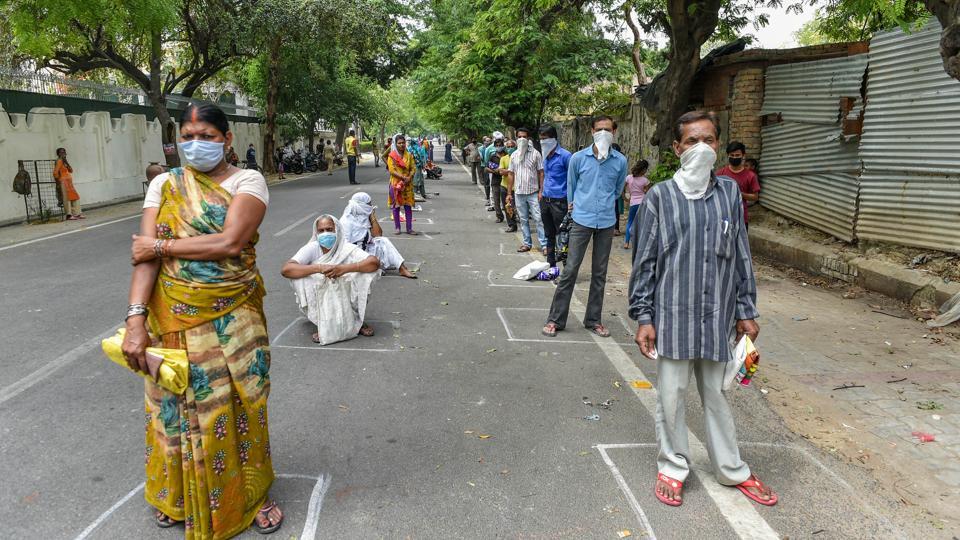
Prolonged or intermittent social distancing may be necessary even until 2022 to prevent future Covid-19 seasonal outbreaks, a new study from Harvard University has found.
Prolonged or intermittent social distancing may be necessary even until 2022 to prevent future Covid-19 seasonal outbreaks, a new study from Harvard University has found.
Researchers from Harvard University, led by Stephen Kissler, used estimates of seasonality, immunity, and cross-immunity for two betacoronaviruses from time series data from the United States, to inform a model of Covid-19 transmission, Xinhua news agency reported.
Recurrent wintertime outbreaks of Covid-19 “will probably occur after the initial, most severe pandemic wave,” researchers wrote on in the study ‘Projecting the transmission dynamics of SARS-CoV-2 through the postpandemic period’, published in the online journal Science.
The researchers added that without a vaccine or other interventions, “prolonged or intermittent social distancing may be necessary into 2022.”
Noting that “a key metric for the success of social distancing is whether critical care capacities are exceeded,” the study said that “additional interventions, including expanded critical care capacity and an effective therapeutic, would improve the success of intermittent distancing and hasten the acquisition of herd immunity.”
Longitudinal serological studies are urgently needed to determine the extent and duration of immunity to the virus, the researchers said.
Even in the event of apparent elimination, Covid-19 surveillance should be maintained since a resurgence in contagion could be possible as late as 2024, according to the study.
The number of people infected with the new coronavirus worldwide has surpassed 1.8 million with 71,779 cases verified over the past 24 hours, the World Health Organization (WHO) said on Tuesday.
According to the update, the global count of confirmed COVID-19 cases has reached 1,844,863, with the majority of them concentrated in Europe (943,272) and the Americas (644,986). The death toll has grown by 5,369 cases over the past day to a total of 117,021 fatalities, the report read.
(This story has been published from a wire agency feed without modifications to the text. Only the headline has been changed. )


