
 E-Paper



Covid-19: As businesses open slowly, here’s your guide to safe shopping


The US Food and Drug Administration (FDA) issued guidelines this week to reassure consumers that food and food packaging are safe.
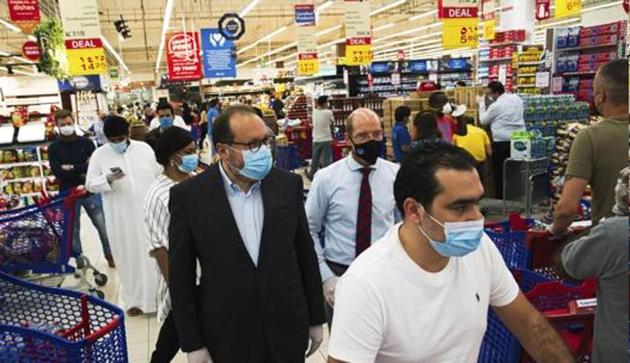
As small stores opened on Sunday and shopping options widened for many, concerns over how to navigate markets and order in food and groceries have resurfaced. Is it safe to handle packages and cartons stocked in shops? Can mail-order packages spread infection? Is home-delivery safer than stepping out?
Sars-Cov-2, the virus that causes the coronavirus disease (Covid-19), does not survive for long on environmental surfaces, and exposure to aerosols and droplets generated through coughing, sneezing, talking and breathing are the main sources of infection.
The US Food and Drug Administration (FDA) issued guidelines this week to reassure consumers that food and food packaging are safe. “There is currently no evidence of human or animal food or food packaging being associated with transmission of the coronavirus that causes Covid-19. This particular coronavirus causes respiratory illness and is spread from person-to-person, unlike food-borne gastrointestinal viruses, such as norovirus and hepatitis A that often make people ill through contaminated food,” according to an FDA advisory.
Studies on the shelf life of Sars-Cov-2 published in two of the world’s most often cited research journals, the New England Journal of Medicine (NEJM) on March 17 and The Lancet on April 2, found that the virus loses half its potency every 66 minutes; it is only one-eighth as infectious three hours after landing on a surface. It has 2% potency after six hours, the researchers found, which lowers the possibility of contracting the infection through packages and paper.
Neither study accounted for environmental factors that also help inactivate the virus, such as sunlight, heat and moisture, or the concentration of the virus, which is low in open spaces.
James Lloyd-Smith, who is one of the authors of the NEJM analysis on how long Sars-CoV-2 survives in aerosols, plastic, stainless steel, copper, and cardboard, said that despite his research finding, the virus may live on cardboard for up to 24 hours, and on metal and plastic for two to three days, he doesn’t bother to wipe his own groceries or takeout.
“I don’t, personally. I treat my hands as potentially contaminated while I’m handling the groceries and unpacking them and I make sure that I wash them fully when I’m done with that process,” Lloyd-Wright was quoted as saying by CNN on Saturday.
The chances of someone depositing enough virus on a grocery item or takeout container are pretty low, he said. “I view it as sort of a hypothetical risk. So yes, I’m careful, I’ll wash my hands, but I don’t sort of regard it as glowing radioactively with virus,” said Lloyd-Smith.
There’s very little risk of catching coronavirus from packages and newspapers as most deliveries take time to travel from the warehouse and printing presses to your door, and are exposed to frequent shifts in temperature and humidity along the way that reduce its survival time, according to the World Health Organisation (WHO).
“Finding Sars-Cov-2 genetic material (DNA and RNA) is not indicative of virus viability, as RNA by itself is not transmissible and infective. The outer wall of the virus, which is what it uses to enter human cells and cause infection, gets destroyed pretty quickly (in the environment). Basic precautions are enough. Instead of worrying about how long the virus survives on surfaces, wear masks, practice social distancing and handwashing,” said Dr Jacob John, professor emeritus and former head of virology at Christian Medical College, Vellore.
Food safety precautions in the time of Covid-19 are no different from those that protect from gastrointestinal infections, such noroviruses as H. Pylori, rotaviruses, and E.coli, so washing all fruits, vegetables and farm produce is a must, as is cooking food thoroughly, recommends the WHO.
How to minimising exposure to Sars-CoV-2
* Make a shopping list in advance to minimise time spent in a store.
* Phone in your order, when possible.
* Wash reusable shopping bags after each use.
* Leave packages and groceries that don’t need refrigeration aside for a day or more before unpacking to reduce contamination that may be present from any source.
* Practice social distancing while shopping, keeping at least one metre between you and other shoppers and store employees.
* Wash your hands with water and soap for at least 20 seconds when you return home and again after you put away shopping.
* Rinse fresh fruits and vegetables under running tap water, including those with skin and rind.
* Regularly clean and sanitise kitchen counters using a commercial disinfectant or a home-made sanitising solution made by mixing 4 teaspoons of liquid chlorine bleach with one litre of water. Warning: Do not drink the disinfectant or use it to clean food.
Source: US Food Drug Administration


