
 E-Paper



‘We must go on’: Lebanese fashion designer Elie Saab affected by Beirut blast

 Prefer HTon Google


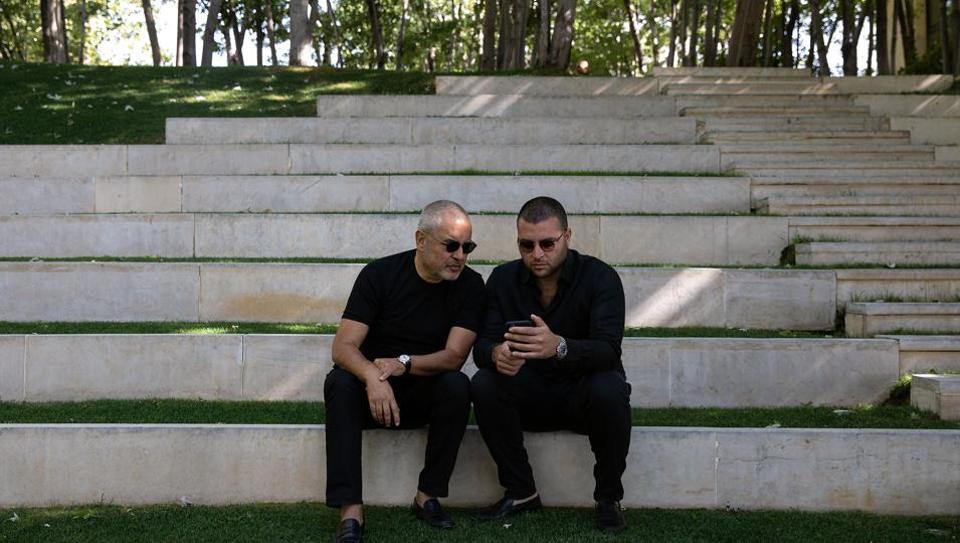
Elie Saab’s office and headquarters have been badly damaged by the August 4 blast, while his home, located a few hundred metres from the port, was gutted.
In a split second, plenty changed for several people on August 4. The explosion killed 178, injured 6,000 and damaged whole neighbourhoods. Several buildings of heritage value, traditional Lebanese homes, museums, art galleries have also sustained various degrees of damage.
Haute couture fashion designer Elie Saab scrambled to make sure his 200 staff members, including his son Elie Saab Jr. who works with the designer, were safe when the massive explosion shook Beirut.
Like many Lebanon residents, when chemicals at the port detonated, the 56-year-old designer felt the blast was on his doorstep.
“I saw my son covered in blood, I could not believe it. I said okay, he is wounded, but it was okay, it was just cuts to his head and arms,” Saab told Reuters.
“But it was 15 minutes that felt like two days long. It was not just because it is a father and son thing, it was because we all work together like one family under one roof.”
ALSO READ: Fashion designer Elie Saab’s home affected by Beirut blast
Saab’s office and headquarters have been badly damaged by the August 4 blast, while his home, located a few hundred metres from the port, was gutted.
The blast also destroyed the shops and ateliers of at least two other famous fashion designers, Zuhair Murad and Rabih Keyrouz, himself badly injured.
Saab, however, is no stranger to devastation. He started his label in 1982, when Lebanon’s 1975-1990 civil war was at its peak.
The August 4 blast revived those memories for the designer.
“It was the same smell, the same dust, the broken glass. Honestly, we did not want to relive this and it was not necessary,” he said while speaking with Reuters.
“This is a huge setback but we have to be like Beirut - every time dusting itself off and returning to the way it was,” Saab said.
Saab’s team shows ultimate resilience at a time such as this and plans to go back to their offices from August 20 to meet a deadline for the designer’s September Paris couture show.
He also plans to rebuild his residence, with its high ceilings and arches, marble columns and Arabesque tiles, which was the most-affected when the calamity took place. For now, it’s just rubble and dust everywhere.
“We must go on ... It does not become us as Lebanese to give up,” Saab said. “That is the doable part. But the biggest loss is the people you can’t bring back.”
-- with Reuters inputs


