
 E-Paper



Climate crisis is real, must be seen in perspective
Unless the discussion on climate change goes beyond yada yada — not just in political and bureaucratic circles, but in households, universities, schools — there will be meagre remedial action.


A journalist friend who now lives in another city called up Thursday morning egging me, as he has been doing for a few years now, to move away from Mumbai. “The quality of life sucks,” he said, “and in any case, by 2050 everything will be underwater!’’
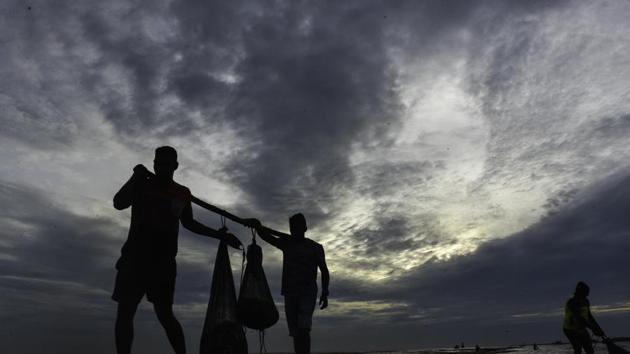
His second concern -- obviously not limited to my life, but of future generations -- was derived from apoplectic headlines and reports in Thursday’s newspapers on the latest study put out by Climate Central, an American research organisation, suggesting that in 30-odd years, most of Mumbai will be submerged.
The biggest danger, says Climate Central, is likely to be to south Mumbai, with the sea rising two to seven feet, perhaps more, engulfing almost everything from Colaba, right up to Mira Bhayander on the western front; and on the eastern stretch almost up to Thane.According to the report, this is largely because of the absence of natural barriers like mangroves destroyed over decades and compounded by rampant, ill-thought-out constructions along the city’s vast coastline on either flank.
Areas that may withstand this ‘takeover’ are more likely to be in and around Sanjay Gandhi National Park, where the still dense forest cover would be of help. But the topography and geography of the city would change so dramatically, as to make it unrecognisable.
Mind you, Mumbai is not the only city under such severe threat. Heavy flooding could submerge Kolkata, Dhaka, Hong Kong, Osaka, Ho Chi Minh City, and even Shanghai, among others. So irrespective of whether in the third world or first, changes in climate are likely to devastate cities. There is now enough evidence from changing weather patterns and natural calamities, of the growing dangers. The problem is global, as everybody across the world is now beginning to accept, but with varying degrees of urgency. That is of the crux.
In India, in recent months there has been a great deal of discussion about climate change. This is encouraging. However, unless it goes beyond yada yada — not just in political and bureaucratic circles, but in households, universities, down to schools — there will be meagre remedial action.
The lethargic response (so far) in the country has largely been because of a lack of political will and awareness among the people. The latter constituency is important as it influences those in power and therefore shapes the direction politics will take in such matters.
I remember at his book’s release in Mumbai a couple of years back, author Amitav Ghosh talked passionately about climate change. It was a packed house and everybody nodded their heads in agreement with what he said about the challenges ahead. After the talk was over, a person came up to me and questioned the need to look so far ahead into the future, and go against the demands of development. “Much of this is alarmist stuff. We would still be in the Middle Ages if there had been no progress.’’ This is an often heard, but flawed argument. The problem is not the pursuit of development and progress. Without that, where would we have been in the fields of medicine, engineering, economics, politics, philosophy, and the humanities?
From inventing the wheel to the Internet, from health diagnoses to complex surgeries, from devising economic systems for wealth creation and improving lifestyles, human beings have used imagination, intelligence, ingenuity, ambition, desire, and enterprise over eons to reach where we are today.
Curiosity and adventurousness are intrinsic to human nature but so is invasiveness and greed. So much of life, in virtually every aspect, even research, is lived and learnt by trial and error. While history suggests that this has largely been to the betterment of the human race, sometimes things can get thrown off-grid.
This does not mean that progress and development should not be pursued, rather that warning signs should be heeded and studied carefully and as swiftly as possible, to craft out responses that can help avoid pitfalls and stave off potential crises.
Again, history shows there is no fool-proof method of doing this. But being disdainful to the possibility of crises – especially those posed by nature – in spite of sufficient signals and evidence is not just folly, but outright lunacy.

Stay updated with all the Breaking News and Latest News from Mumbai. Click here for comprehensive coverage of top Cities including Bengaluru, Delhi, Hyderabad, and more across India along with Stay informed on the latest happenings in World News.


