
 E-Paper



How 16th-century Ahmednagar palace in Maharashtra stayed cool in summer
The natural cooling technique kept temperatures inside the building 8-12 degrees Celsius lower than the 46 to 48 degrees Celsius that the region experiences between March and June

 Prefer HTon Google


Archaeologists studying Farah Baug, a 16th-century summer palace of the Ahmednagar sultanate, have found that the building used a unique lime technology that kept those staying there cool in the blistering Deccan summer.
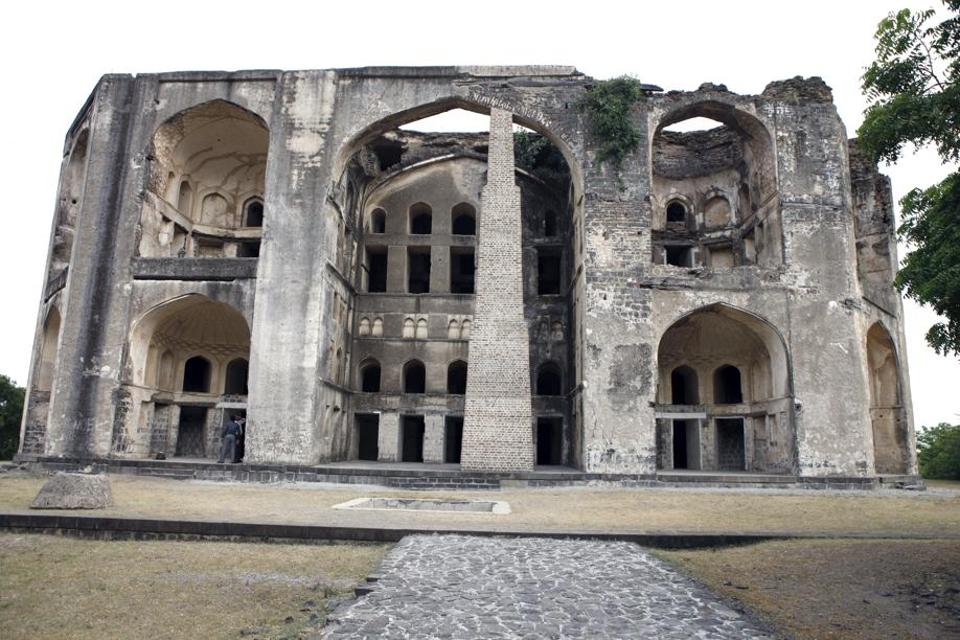
Also called Farah Baksh Bagh or Faria Bagh, it was built in 1583 by the Nizam Shah rulers, and sits at the centre of a huge palace complex. Delhi-based National Museum Institute (NMI) of the History of Art, Conservation and Museology, and the Archaeological Survey of India (ASI), Chennai, which analysed material used in the palace’s construction, found that its 13-cm-thick lime plaster was embedded with stone, fired pottery and brick pieces that may have improved its permeability. Sand, jute fibre and dry paddy stem increased porosity, durability and flexibility, helping the plaster absorb moisture from the surrounding water fountains. In the summer heat, the moisture escaped slowly through the plaster, cooling the interiors. The natural cooling technique, said MR Singh, lead author and professor, department of conservation, NMI, kept temperatures inside the building 8-12 degrees Celsius lower than the 46 to 48 degrees Celsius that the region experiences between March and June.
The study ‘Architectural features and characterisation of 16th century Indian Monument Farah Bagh, Ahmed Nagar, India’, was published in the International Journal of Architectural Heritage on May 8.
“Lime plaster and potsherds, which absorb water 300% more than their volume, exhibited almost the same porosity. The high open porosity of air lime and the ability of potsherds to hold moisture contributed towards the exchange of moisture from the underlying materials without causing any functional instability,” said Singh. “Instead, the embedded potsherds provided mechanical strength to the plaster and helped in its survival.”
The high percentage of air pores in the plaster mix also contributed to the diffusion of moisture from the underlying building materials. Researchers said the construction technology of Farah Baug is rare, unlike palaces in India that used wind to cool to interiors.
“The architectural form, the building location, the context of large pools of water around it, and the vegetation that it was set in, are the major factors that would shape temperature,” said Pushkar Sohoni, cultural historian and assistant professor, Indian Institute of Science Education and Research, Pune, who was not involved in the study.
The octagonal palace is flanked by gardens surrounding the lake, forests, and a shallow pond for bathing. It is in ruins, with the first floor having collapsed. “No conservation measures have been undertaken to restore and protect the monument,” said Singh.


