
 E-Paper



Metro-3 car shed: Current government in Maharashtra has shown sustainable development can be achieved
The decision by the chief minister of Maharashtra, Uddhav Thackeray, is one that is filled with compassion for nature, coupled with economic wisdom


It has rained after many years on a parched, drought-hit land. The land is happy, the farmer is grateful. Nature plays its music again. That’s what happened to the #SaveAarey cause today!
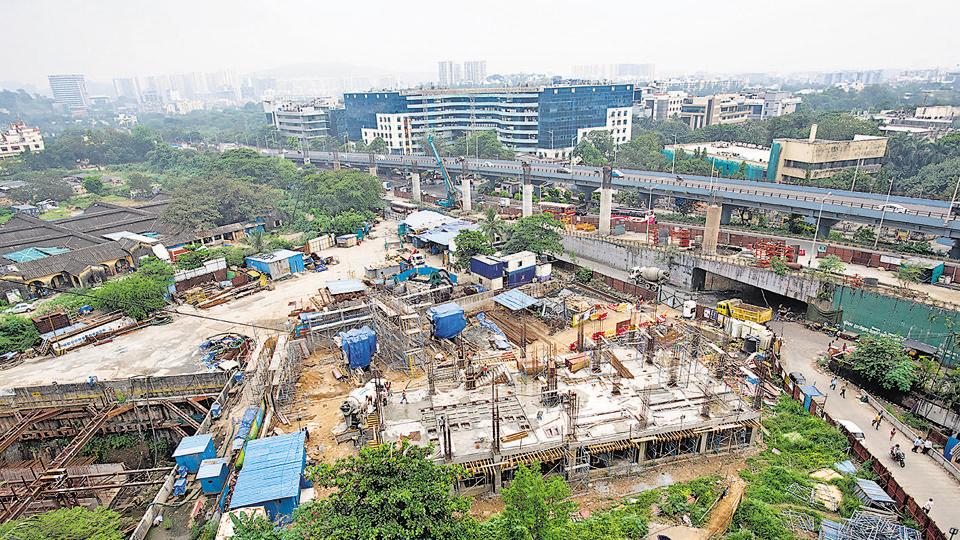
We had always maintained that Aarey is a forest. The proof was always there as all ecological indicators of this green lung pointed to it. Instead, the previous government chose to rely on documents which did not have any connection with ground reality to deny the status of a forest to Aarey – an area contiguous to Sanjay Gandhi National Park (SGNP) – with over five lakh trees, grasslands, three lakes, two rivers, marshlands and wildlife in it. With its thriving leopard population of at least eight resident leopards and a host of other wildlife – some of which is endemic – it is nothing short of a biodiversity heaven. The five lakh trees, thanklessly for decades if not centuries, have kept delivering ecological services such as lower temperatures, cleaner air, recreation and educational value and providing a wildlife habitat.
Forests are frontline defenders in the battle against global warming. A city like Mumbai grappling with air pollution needs its trees and forests to keep the city liveable. Aarey forests are huge carbon sinks that contribute in keeping air pollution and global warming under check. Aarey is a place for social bonding, a heaven for children deprived of natural spaces. The fertile lands cultivated by the indigenous forest dwellers provide sustenance and food security to the underprivileged.
Ecosystems evolve over decades and are closely interlinked. Forests are not only about trees. Planting saplings elsewhere can never compensate for loss of ecology in another area. The hollow claim of 25,000 saplings being planted in SGNP – where actually less than 4,000 saplings were seen (most of them dead) – could never cover up for the loss of Aarey’s natural forests. Mumbai is chaotic and bustling, yet blessed with green areas like Aarey. To sacrifice a forest to construct a polluting industry is not something that can be passed off.
Citizens had researched and given at least eight other options that were less damaging. Let us take Kanjurmarg as an example. The land is barren since the past 15 years and is rapidly getting encroached by slums. The land belongs to the Maharashtra government, and is free from all encumbrances. It does not have a single tree on it. The grass on the land is cultivated illegally by diverting sewage water onto it. Directions by Brihanmumbai Municipal Corporation (BMC) to stop this activity have gone unheeded. Before the land becomes another sprawling slum, it should be put to use for a larger public cause.
We have often heard the word ‘sustainable development’ being used at all forums along with the word ecosystem, without the speakers understanding its true meaning. When you destroy without a conscience for projects that don’t need the ecological lamb to be sacrificed despite having the option to save it, it cannot be called sustainable development. Mercifully, Aarey has escaped annihilation. The fateful night of October 4, 2019, when 300 trees were chopped down in the dead of the night saw despair, disgust and anger in people’s minds. People courted arrest, hugged the trees and stormed the site.
It shook the nation’s conscience and instilled a sense of responsibility in youth. Students from Noida went to the house of the then Chief Justice of India, and got the matter heard on a Dussehra day. It deserves a special mention. The sacrifice of the 300 trees has not gone in vain.
We are so used to criticising governments for destruction of nature but rarely in a lifetime do we get to thank a government for protection of nature. The decision by the Chief Minister of Maharashtra, Uddhav Thackeray, is one that is filled with compassion for nature, coupled with economic wisdom. Instead of 80 hectare (ha) land used for two car sheds (actually it is 100ha or more considering that Mumbai Metro Rail Corporation Ltd was given 66ha when they demanded only 30ha), now only 40ha will be used for both the Metro lines 6 and 3. This has resulted in a net saving of over 60ha land. I leave it to the imagination of the people to put a value or cost on 60ha of land in Mumbai and then decide if the decision was a wise one or not. Further, by extending the utility of the route, by incorporating east-west connectivity, it is a logistical masterstroke. Mumbai for long had been blackmailed that it could have either the Metro or Aarey. The present government has shown that sustainable development can be achieved.
So let Mumbai savour the moment. On this historical day, let the celebration of nature continue in the hearts and minds of all nature lovers. Take a bow, all the warriors who participated in this ‘satyagraha’ as described by the CM today. Cheers!
(Environmentalist Stalin D is the director of non-governmental organisation Vanashakti, who petitioned before the National Green Tribunal, Bombay high court and the Supreme Court to declare Aarey a forest. He had also proposed Kanjurmarg as an alternative site to the state and appealed for the scrapping of the exemption of 165ha area from the eco-sensitive zone of Aarey.)
Stay updated with all the Breaking News and Latest News from Mumbai. Click here for comprehensive coverage of top Cities including Bengaluru, Delhi, Hyderabad, and more across India along with Stay informed on the latest happenings in World News.


