
 E-Paper



Mumbaiwale: What’s your favourite city stereotype?
Artist Abhijeet Kini sees the city as a mix of characters old, new and fondly missed


I promised myself I’d avoid writing about dabbawalas. Mumbai’s tiffin-delivery servicemen are punctual, honest, well organised and indisputably enterprising. But they seem to me one of those Mumbai clichés that reduce the city to a template. You know what I mean: Marine Drive sunsets, the Virar Fast, Dharavi trivia, Juhu chaat.
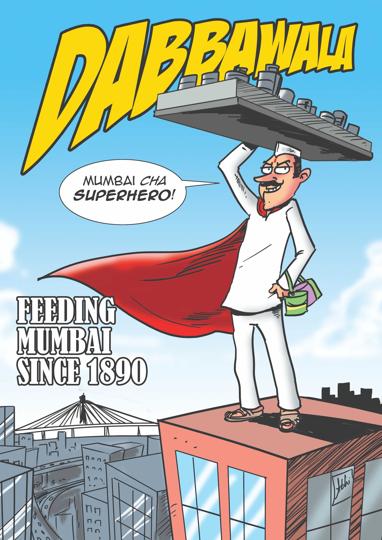
So when Abhijeet Kini, an illustrator I’ve known for 20 years, came out with a comic book about them, I braced myself to hear more of the same. But Kini’s view surprised me. “I think of the dabbawala as a superhero,” he says. “Think about it. They will deliver hot, homecooked, fresh food to you. And they’ve been doing it consistently every single day for decades. That’s nothing short of a superpower, especially in this city where hunger and deadlines can be villains.”
Kini’s take comes from looking closely at the city and creating tonnes of characters for his Rhyme Fighters comic series. (If you’re lucky, they’re still available on Amazon.in. Collected editions feature the adventures of Mumbai types old and new: from traffic cops, paanwalas and Irani shop owners to pesky telemarketers, delivery boys, and the watchman who also runs errands.
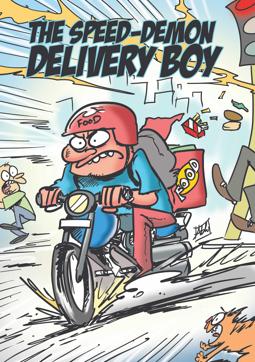
“I think the trick to making stereotypes work is having genuine affection for them,” he says. “They’re all part of Mumbai and you have to see them as people who inhabit your world and are struggling in the same way you are.” This applies both up and down the social order. “The hipster bicycling through Bandra in a big beard –I have so many questions about how he’s making money. But he’s part of Mumbai. The perfumed, blonde-highlighted, tote-carrying Aunty who invariably has a hoarse voice when she calls out ‘Rehaan’ or ‘Rohan’ or whatever to her kids… she’s part of it too.”
If you’ve lived in Mumbai long enough, some clichés eventually live on only in the memory. Kini remembers balloon sellers who’d twist balloons into animals and also create sound effects – shrill ones with the long balloon, base notes with a short one. He misses the guys who’d scalp tickets outside the cinema – rendered obsolete by multiplexes and virtual bookings. He wishes he’d been able to better observe a green grocer who’d transport his wares on baskets suspended from a pole on his shoulder. “The PCO guy who’d keep a sharp eye on how much you spent and knew who you were chatting with, our own ironing man to whom we gave our pet parrot, they were stereotypes until they disappeared.”
Kini keeps looking. And he’s noticed what’s changed. “The city, even your neighbourhood, has grown too big to think of as a community,” he says. “There’s less camaraderie, but only because none of us can stretch so far to so many people.” Today’s stereotypes may not be around for much longer. Which is why Kini is trying to record all he can – that’s his super power.


Stay updated with all the Breaking News and Latest News from Mumbai. Click here for comprehensive coverage of top Cities including Bengaluru, Delhi, Hyderabad, and more across India along with Stay informed on the latest happenings in World News.


