
 E-Paper



‘No science meets in the US next year if Trump does not revoke ban on Muslim-majority nations’
The International Union of Pure and Applied Physics has resolved that no science conferences will be organised the US in 2018 until President Trump revokes the ban on entry of citizens from Muslim-majority countries


Physicists from across the world, including those from India, have resolved that no scientific conferences will be organised in the US in 2018 if the Trump government continues with its ban on the entry of citizens from Muslim-majority countries.
The International Union of Pure and Applied Physics (IUPAP), comprising 61 countries that includes India (via the Indian National Science Academy), passed the resolution saying that “bans on movement of people based on nationality will have adverse effects on physics in the US and worldwide.”
“Should any ban on the entry of citizens of any country to the US be in place in October 2017, when IUPAP determines which conferences it will support in 2018, the IUPAP Policy on Free circulation of Scientists will require it to refrain from supporting any conferences in the US,” read a statement from Bruce H J McKellar, president, IUPAP.
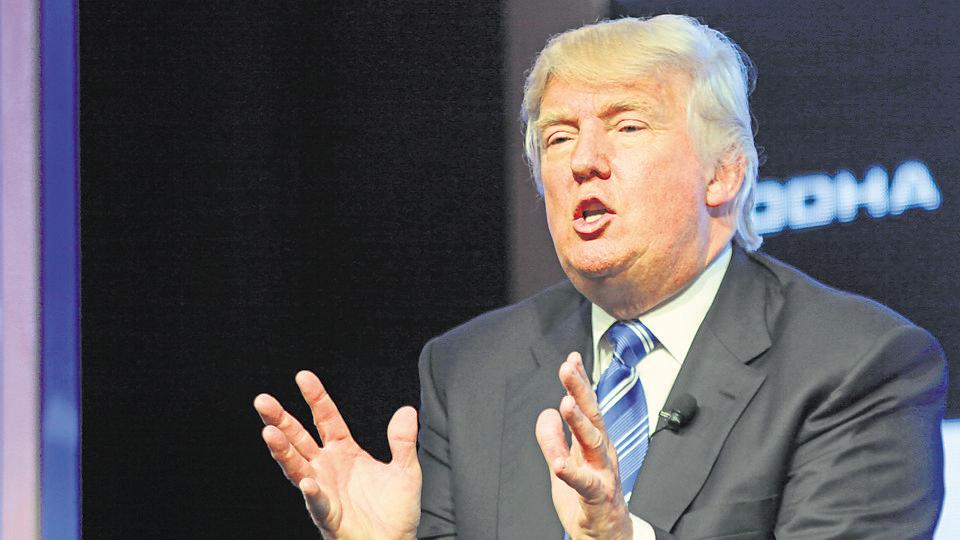
In January, US President Donald Trump signed an executive order that placed a temporary ban on refugees and travellers to the US from seven Muslim-dominated countries – Syria, Iran, Iraq, Sudan, Libya, Somalia and Yemen. But earlier this month, Trump signed a new executive order that exempted Iraq from the original list of seven banned countries.
“It (the resolution) is in line with a long-standing policy of the Union that no bona fide scientist should be excluded from participating in an international conference on the grounds of national origin, nationality, or political considerations unrelated to science,” professor Deepak Mathur, chairperson of the IUPAP National Committee, and physicist at the Tata Institute of Fundamental Research told HT. “India has consistently supported this policy, which is based on the universality of science.”
The IUPAP Council has requested the Trump government to revoke the executive order, and not place bans based on nationality in the future.
“Legitimate concern about the access of terrorists to the US can be addressed through more focussed and thus more effective measures,” it said.
The council has also said that the ban on the movement of scientists is not in the interest of the US and is “an assault on the progress of physics in the US and around the world”.
“The Executive Order: Border Security and Immigration Enforcement Improvements has negative consequences for physics in the US and around the world…The restrictions placed on free circulation of scientists by this Executive Order will have unintended consequences on the quantity and quality of physics research done in the US. And because many of the students, when they graduate, work in the US industry, the quality of industrial innovation, especially in high-tech industries, will also be adversely affected,” read the statement.
The IUPAP Council’s decision follows a policy adopted at the 27th General Assembly in 2011, calling for free movement of scientists since physics is an international discipline. The IUPAP Policy on Free circulation of Scientists reads, “If scientists are excluded from attending IUPAP-sponsored international conferences by a host institution or country, it should register its concern at the highest level of that institution or country, and should not sponsor any future events in that country until such exclusions have been eliminated.”
READ MORE
India’s neutrino observatory project delayed again
International scientists can access Astrosat data after 6 months

Stay updated with all the Breaking News and Latest News from Mumbai. Click here for comprehensive coverage of top Cities including Bengaluru, Delhi, Hyderabad, and more across India along with Stay informed on the latest happenings in World News.


