
 E-Paper



Not easily spotted: Yellow-footed buttonquail rescued from Sahar area in Mumbai
The elusive yellow-footed buttonquail, a ground-dwelling bird, was rescued from Sahar area in Andheri on Friday by an animal rescue group. The bird is protected


The elusive yellow-footed buttonquail, a ground-dwelling bird, was rescued from Sahar area in Andheri on Friday by an animal rescue group. The bird is protected under schedule IV of the Wildlife Protection Act, 1972.
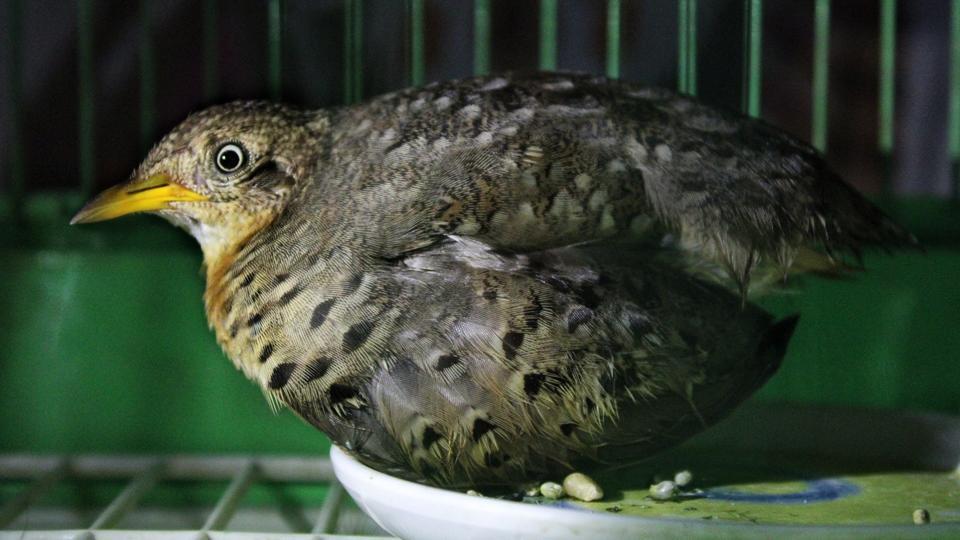
Members of Aasha The Hope for Animals Welfare Trust rescued the bird from near Sahar police station after receiving a distress call from resident Chandrakant Shinde.
“We were told the bird fell from a tree or some height and dislocated its right wing.
We informed the Mumbai forest department about the rescue,” said Naveen Solanki from the animal welfare group. “Since this bird is elusive and is not familiar with a human touch, it will need some time to get adjusted to our presence following which we will take it to the veterinary doctor for a detailed health examination.”
Solanki added the bird was approximately 4-5 inches in length. “The forest department has been informed about the rescue,” he said.
According to experts, the bird is generally spotted across grasslands and buffer areas of forests. “It is not rare for Mumbai but it is spotted very less due to its ability to camouflage easily as it is ground-dwelling. However, it is very much present in and around Sanjay Gandhi National Park,” said Girish Jathar, assistant director (climate change and Himalaya program), Bombay Natural History Society. “An interesting fact about this bird is females are brightly coloured and can be distinguished from males as the latter have a rufous neck collar on the throat. At the same time, males incubate the egg of the bird and not the female as opposed to other birds.”
Stay updated with all the Breaking News and Latest News from Mumbai. Click here for comprehensive coverage of top Cities including Bengaluru, Delhi, Hyderabad, and more across India along with Stay informed on the latest happenings in World News.


