
 E-Paper



Shiv Sena’s bargaining power improves
Political analysts say that unlike 2014, the BJP needs Sena to form the government, which in turn will extract its pound of flesh.


After Thursday’s Maharashtra Assembly election results, the seat of power in the state would no longer solely be with the Bharatiya Janata Party (BJP). A shift in balance of power was clearly visible and audible in the body language and tone of Sena chief Uddhav Thackeray, who reminded BJP of their equal power-sharing pact.
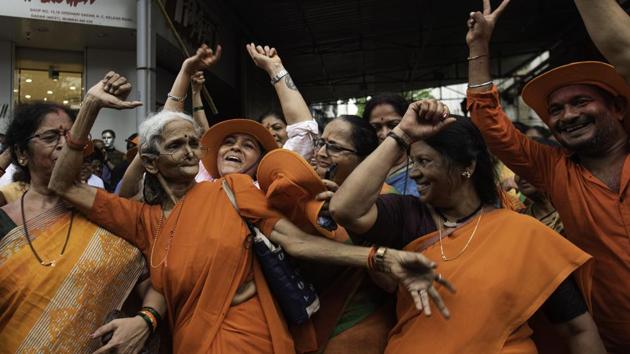
Contrary to 2014, the Sena is in a better position to bargain. Although the Sena won seven fewer seats than in 2014, the slide in ally BJP’s numbers has given them a boost. In 2014, BJP won 122 seats, while the Sena won 63, effectively making BJP the ‘big brother’ in the alliance. The Sena reluctantly accepted the junior-partner status in the Assembly elections and contested 126 seats— its lowest ever. With BJP winning 105 seats this time, which is 40 short of the majority mark, the Sena’s 56 seats put it in a commanding position.
Political analysts say that unlike 2014, the BJP needs Sena to form the government, which in turn will extract its pound of flesh. The BJP emerged as the largest party, but its depleted strength in the 288-member assembly means that its dependence on the Sena increases.
Uddhav Thackeray made his move swiftly and stressed that they would have to implement the 50:50 formula. “Who will be the chief minister is an important question. If you remember, a formula of 50:50 was decided before the Lok Sabha elections. The seat-sharing formula was 144:144. The BJP’s Chandrakant Patil asked me to understand their position. I accepted fewer seats, but if they are going to face hurdles now, then I cannot understand them, because I have to take my party ahead,” Thackeray told reporter at party headquarters in Dadar.
Thackeray said they would go forward to form the next government after a discussion with the BJP leadership from Delhi in a transparent manner. “[BJP national president] Amit bhai [Shah] had come to my house and we had decided a formula and now the time has come to implement the formula. We will divide the power in a transparent manner. We will decide the formula and then stake claim to form the government,” he said.
The Sena and the BJP, which contested the 2014 elections independently, shared an uneasy term in power. With the BJP-led government running the show almost single-handedly, the Sena was stifled on many issues. However, it did corner the BJP on issues such as farm distress, inflation, farm-loan waiver, among others. Political observers said the Sena will be even more aggressive now. “The tone that Thackeray spoke in shows they will put pressure on the BJP now and it will be a hard bargain for the BJP. They will seek a deputy CM post or even a rotational one. They will get big-brother status, if not in numbers, but by putting pressure,” said Prakash Bal, political analyst. Sena functionaries said the one-man show of the BJP will reduce. Ravindra Mirlekar, Sena deputy leader, equated the verdict to the 1995 results, when the Sena-BJP government came to power for the first time in Maharashtra. “Only in 1995, it was the opposite. The BJP was number two then. Balasaheb gave them respect then and gave them the deputy CM post and other portfolios. Now they should show similar grace.”
Neelam Gorhe, Sena deputy leader and spokesperson, conceded that the Sena did not perform as per expectations. She attributed the loss of seven seats to anti-incumbency. “There is a clear-cut mandate to Sena-BJP and also for the Opposition, which is in a strong shape. Uddhavji today used the term that there needs to be transparency in decision-making. We will continue to take up issues of the people,” she said.
Bal said the poor performance of BJP is due to the “extreme overconfidence” of Devendra Fadnavis. “The BJP’s calculation of sidelining the Sena ahead of the next BMC election has gone awry. The Sena will flex its muscle now,” he added.


