
 E-Paper



Noida’s urban wildlife in positive health, latest census data reveals
Noida sees a hike in the breeding population of certain species like fox, porcupine (sahi), civet (bijju), wild cat and wild boar also made their way to the forest department checklist.


In a positive indication of the district’s ecological balance, a boost in urban wildlife has been recorded in a recent census concluded on May 28. Some species like blackbuck, fox and peacock have doubled their populations over the last eight years.
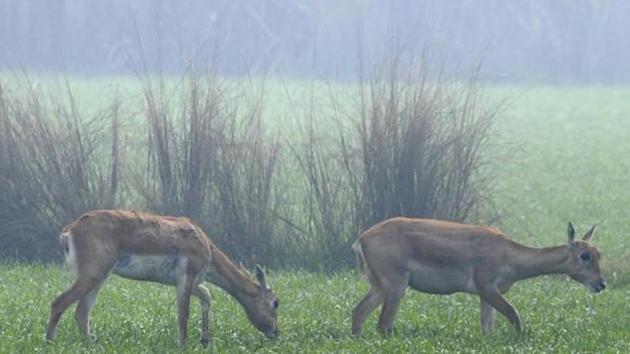
A hike in the breeding population of certain species like fox, porcupine (sahi), civet (bijju), wild cat and wild boar also made their way to the forest department checklist of 4,228 animals of over 15 species in the 2019 census.
The last census, held in 2011, recorded 3,692 animals.
A total of 215 individuals of vangai or feral cows were also spotted in Gautam Budh Nagar with 62 males, 128 female, and 25 calves ranging in city’s forest patches. Discarded by their owners, the feral cow population is of the new generation of the free-ranging bovines born out of domestication or captivity.
The census was held by the district forest department over 20 days, between May 9 and May 28, for which eight teams of foresters spotted animals in two shifts — 5am to 8am and 6pm to 8pm — across four forest ranges of the city, officials said.
“The city’s urban wildlife has a breeding population of a range of animals, which means they are getting enough food, pasture or prey to feed and procreate. For instance, of the 248 blackbucks that we spotted, 48 were fawns,” Pramod Kumar Srivastava, divisional forest officer, Gautam Budh Nagar said.
He added that unlike 2011, the 2019 census focused on a wide range of species.
The best outcome of this census was the more than double increase in the spotting of a free ranging population of Bengal fox, also known as Indian fox, with 44 individuals against 19 in 2011, even though no pups were spotted in 2019.
“The number is a nice outcome. Foxes live in burrows and their predation rate is very high. Due to the small size of their pups, even wild cats and kites often hunt them, which makes spotting rare. However the range of male and female indicates that the population is breeding,” Ujjwal Kumar, project scientist at Wildlife Institute of India (WII), said.
Forest officials said the population of blackbucks and cheetals were mostly spotted in areas like Musakpur, Maksudpur, Jewar, Dankaur (under Sikandrabad) and Dadri forest ranges of the district. Other ranges include the NTPC and Okhla ranges.

Stay updated with all the Breaking News and Latest News from Mumbai. Click here for comprehensive coverage of top Cities including Bengaluru, Delhi, Hyderabad, and more across India along with Stay informed on the latest happenings in World News.


