
 E-Paper



A different Tokyo, Berlin confront the world today
Thanks to China and Russia, both Japan and Germany have changed their strategic, political orientation. And while it is a work in progress, the historical significance of this move is hard to miss

 Prefer HTon Google


When Kishida Fumio visited Washington DC last week, he was representing a different Japan — a Japan transformed by Shinzo Abe who was the first in the region to wake up to the China threat. And nowhere was this more stark than in a significant policy speech that Japan’s prime minister delivered at the Johns Hopkins University, titled “Japan’s decision at history’s turning point”.
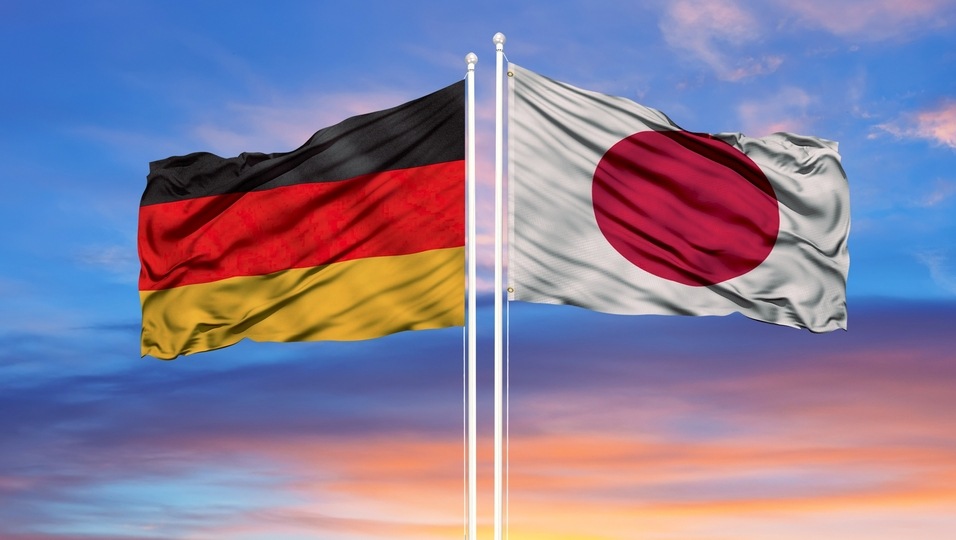
When Olaf Scholz wrote an essay for Foreign Affairs, he was representing a different Germany — one that has changed in the past year due to Russia’s invasion of Ukraine. And nowhere was this more stark than in a term the German chancellor used in the first sentence of his piece to describe the world; Zeitenwende, an epochal tectonic shift.
Responsible for World War II, the two countries have spent much of recent history ridden by guilt at the destruction that they inflicted on the world and embracing a pacifist policy. But today, thanks to Moscow and Beijing, there’s a shift in Berlin and Tokyo.
In his speech, Kishida made the following argument.
The free, open and stable international order is under challenge. Japan is committed to “proactively” playing a role to defend this order. To do this, Japan and the United States have to deepen their bonds even further. In 2022, Tokyo made two key strategic decisions. The first was to actively oppose Russia’s aggression in Ukraine because if a unilateral change in status quo due to force was allowed unchallenged, it could happen in Asia too. The second — based on a security environment in East Asia and Indo-Pacific not seen since World War II, and a visible trend by countries around Japan seeking to change the status quo by force — was to increase defence spending to 2% of the Gross Domestic Product (GDP), possess counterstrike facilities, improve cybersecurity responses and step up defence posture in Japan’s southwest. Japan’s diplomacy will now be backed by defensive capabilities.
Kishida added that for Japan, three challenges lay ahead. The first was for G7 to stay united — it was “absolutely imperative” that the US, Europe and Japan stood united in “managing their respective relationship with China”. The second was improving relations with the global south, and this required being humble and recognising the diverse historical and cultural backgrounds of different countries. Specifically, it meant improving ties with ASEAN and India (“a partner with shared fundamental values and strategic interests”). And the third was managing relations with China — Japan would respond to the challenge from China with its “comprehensive national power” and in cooperation with allies, like-minded countries and others; Japan will “never allow” any attempt to unilaterally change the status quo by force and reinforce its deterrence. Managing the China relationship peacefully, Kishida said, was “key to determining success or failure of statesmanship in this era”-- this required strongly calling out China and demanding responsible behaviour, while cooperating on issues of common concern.
In his essay, Scholz made the following argument.
Germany’s history gave it a “special responsibility” to fight fascism, authoritarianism and imperialism. In the post-Cold War era, it appeared Russia would become the West’s partner and Germany shrank its defence budget and forces. Germany’s business community saw Russia as a reliable supplier and China as an attractive market. But Vladimir Putin saw the dissolution of the Soviet Union as a catastrophe and since 2007, took Russia on an externally belligerent and internally repressive path. With Moscow’s invasion of Ukraine, “imperialism had returned to Europe”.
Germany’s role, Scholz suggested, has now changed. One, it was ready to take up its share of security responsibilities, which is why it designated $100 billion to equip its armed forces, and even changed its constitution to do so. Germany will invest 2% of its GDP in defence. And it will strengthen its air defences over the following year. Two, Germany is, for the first time in its recent history, delivering weapons in a war to a warring party and will support Ukraine for “as long as necessary”. Three, Germany has ramped up its presence on the North Atlantic Treaty Organization (NATO)’s eastern flank. Four, Germany will play an active role in integrating countries of the western Balkans into the European Union.
Arguing that China’s rise did not warrant “isolating” it or “curbing cooperation”, the Chancellor said that nor did its growing power justify “claims for hegemony in Asia and beyond”. “No country is the backyard of any another — and that applies to Europe as much as it does to Asia and every other region”. Germany was concerned about the South China Sea, Taiwan, China’s approach to human rights, and the lack of a level-playing field for European companies. Germany must also cooperate with democracies outside the West, treat them as equals, and here Scholz mentioned India in particular as the G20 chair for the year.
The speech and essay show that Japan is more concerned about China and Germany about Russia. Japan’s strategic clarity is visible in its actions while Germany is still struggling through its transition as seen in its defence minister’s resignation this week. In both countries, business lobbies remain invested in ties with Beijing. In both countries, the strategic shift is a work in progress.
Both remain under the American security umbrella, but Japan is now an active agent in shaping the US security worldview. For both, India is important — though the Tokyo-Delhi-relationship is, of course, of a qualitatively superior nature.
Eighty years ago, Washington DC, Moscow and Beijing defeated Berlin and Tokyo. Today, Berlin and Tokyo, with DC in the lead, are emerging from the shadows to fight Moscow and Beijing. History has come a full circle.
The views expressed are personal


