
 E-Paper



Building the digital bridge for tomorrow
The Northeast is expected to emerge as a digital corridor and innovation hub that seamlessly connects India with its eastern neighbours in the next 10 years

 Prefer HTon Google


Once viewed as a distant frontier, Northeast India has undergone a remarkable transformation. No longer a peripheral region, it is quickly emerging as India’s strategic gateway to the East, forming a crucial bridge between our “Neighbourhood First” and “Act East” policy pillars.
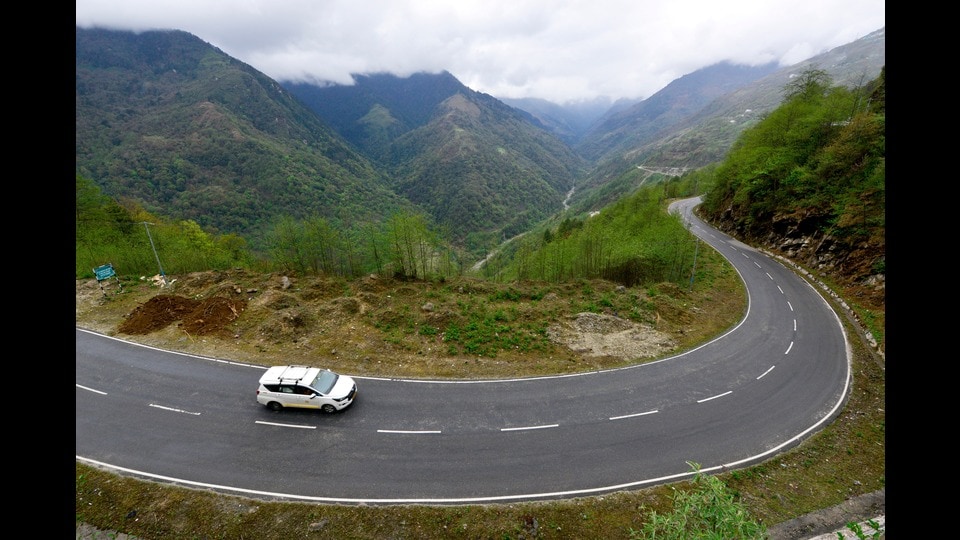
PM Narendra Modi’s personal focus and attention to the Northeast has resulted in an unprecedented shift from a conflict-ridden and infrastructure-deficient region to a zone of development, connectivity, and prosperity. In the last 10 years, budgetary allocation for Northeast India has risen by over 200%, with over ₹5 trillion (approximately $60 billion) invested in creating new highways, rail links, border trade points and energy corridors, that are reshaping the regional landscape.
This massive infrastructure push is converting Northeast India into a vital land bridge, connecting the Indian subcontinent with Southeast Asia and beyond. The region’s strategic importance cannot be overstated: It represents the physical manifestation of India’s broader ambitions in the Indo-Pacific; it is where the subcontinent merges seamlessly with Asean.
But Northeast India’s emergence as a land bridge extends far beyond physical infrastructure. The region is rapidly evolving into a digital hub that connects not just territories, but minds and markets across borders. India’s commitment to digital connectivity in the Northeast includes building cutting-edge telecommunications and internet infrastructure that positions the region at the forefront of the digital revolution.
The establishment of 5G training labs across all eight northeastern states exemplifies this commitment. These facilities are designed to bridge the digital divide and equip the region’s youth with skills essential for the information age. The goal is ambitious yet achievable: transforming Northeast India into India’s “new growth engine” in the digital economy.
Most significantly, India’s $1-billion line-of-credit for digital connectivity with Asean promises to create optical-fibre highways linking us to Myanmar, Laos, Cambodia, and Vietnam through Northeast India. This initiative transforms the region into a digital bridge, enabling neighbouring nations to access enhanced bandwidth while fostering unprecedented regional integration in cyberspace.
AI represents the next frontier in Northeast India’s development journey. The potential applications are as diverse as the region itself, spanning governance, disaster management, health care, agriculture, and environmental conservation. In a region prone to natural disasters, AI-driven early warning systems could revolutionise disaster preparedness, providing timely predictions for floods, earthquakes, and other calamities. The lives saved and economic damage prevented would justify the investment manifold.
Health care delivery, long a challenge in remote hill villages, can benefit enormously from AI-powered telemedicine. Quality medical consultation and diagnosis could reach the most isolated communities, breaking down geographical barriers that have historically limited access to essential services.
Agriculture, the backbone of the region’s economy, can be optimised through AI applications that improve yields while supporting sustainable practices. Similarly, the region’s extraordinary biodiversity can be better conserved through intelligent monitoring and management systems.
One of Northeast India’s greatest strengths lies in its vibrant cultural tapestry. The region is home to hundreds of languages, dialects, and traditions that represent an irreplaceable part of human heritage. AI and digital technologies can serve as guardians of this cultural wealth, ensuring that modernisation enhances rather than erodes cultural identity.
Machine-learning algorithms can document endangered tribal languages, while digital platforms can preserve and promote Naga folklore, Assamese literature, and countless other cultural treasures. This approach mirrors successful global initiatives, such as AI tools developed for Māori language preservation in New Zealand or efforts to maintain Icelandic linguistic heritage. Mizoram’s pioneering work in building multilingual e-governance platforms using AI tools demonstrates how technology can bridge language barriers and deliver government services in local languages. This model of inclusive digital governance could be replicated across the region, ensuring that technological advancement serves all communities.
Realising Northeast India’s AI potential requires unprecedented collaboration and synergy between government, academia and industry. The foundation is being laid through initiatives like the National Programme on AI and Digital India, but success depends on sustained partnership across sectors.
India’s active participation in the Global Partnership on AI (GPAI) and other international digital cooperation forums reflects our commitment to developing responsible and inclusive AI frameworks. These global engagements inform domestic policies and ensure that our AI development aligns with international best practices.
The synergy between public policy, academic research, and private sector innovation will determine whether AI solutions for Northeast India are truly effective, ethical, and equitable. Universities must collaborate with startups, government agencies must work with civil society organisations, and traditional knowledge systems must inform cutting-edge technological solutions.
Looking ahead, Northeast India in the next 10 years could be unrecognisable when compared to today — a thriving digital corridor and innovation hub that seamlessly connects India with its eastern neighbours. This transformation is not merely a regional aspiration but a national imperative that strengthens India’s entire position in the Indo-Pacific. The convergence of broader foreign policy goals — from Act East to Aatmanirbhar Bharat — finds its most tangible expression in Northeast India’s development. AI, deployed responsibly and inclusively, can accelerate this convergence while powering economic growth, enhancing human security, and celebrating cultural diversity.
As India champions human-centric AI development in global forums, Northeast India offers the perfect laboratory to demonstrate how technology can uphold humanity’s highest values. With sustained vision and collective effort, the region will emerge as a crucial player in India’s AI-powered future, driving inclusive prosperity at home while fostering connectivity and goodwill across borders.
The journey from periphery to digital bridge is well underway. The destination — a prosperous, connected, and culturally vibrant Northeast India — is within reach.
Harsh Vardhan Shringla is a Rajya Sabha MP and former foreign secretary, and Subimal Bhattacharjee is former country head of General Dynamics. The views expressed are personal


