
 E-Paper



Civilisational dispute settled through a reasoned debate
Irrespective of how the centuries-long coexistence between Hindus and Muslims gave rise to a unique composite culture, the initial centuries were violent and laid the foundations of the fault lines that still haunt the subcontinent today.


The Ayodhya verdict by the Supreme Court of India has paved the way for the reconstruction of a Ram Mandir at Ayodhya and, with it, a painful chapter in the turbulent history of Indian civilisation has reached closure. The Islamic invasions and destruction of numerous Hindu, Buddhist and Jain temples in the medieval period make up one of the most harrowing times of history when an ancient civilisation was brought to its knees.
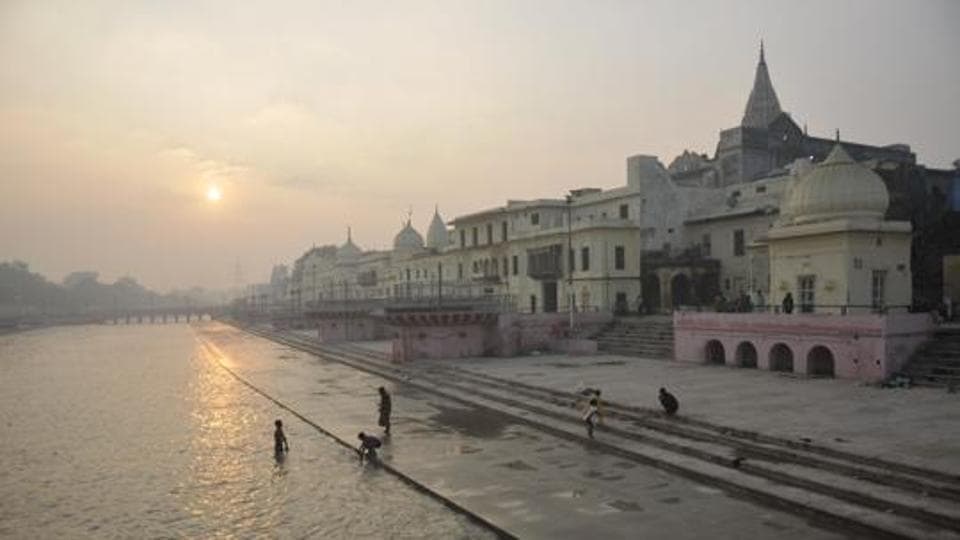
Irrespective of how the centuries-long coexistence between Hindus and Muslims gave rise to a unique composite culture, the initial centuries were violent and laid the foundations of the fault lines that still haunt the subcontinent today. Generation after generations of Hindus and Muslims have carried these old animosities and disputes with them, unable to view each other without suspicion and distrust.
There is hardly any Hindu temple in north India that is 200 years old. The famous Laxminarayan temple in Delhi, inaugurated by MK Gandhi in 1939, is the first large Hindu temple built in Delhi in over 800 years. Temples represented not only the faith but also the cultural and artistic expressions of society with social life intimately woven together with the sacred sites and shrines. But such was the fear and historical trauma that Hindus in the north had stopped building public temples, and temples at homes would often be so small that they were hidden in the corner walls. Most of the famous temples today at the sacred sites were rebuilt only after the imperial power of Islamic rule waned with the rise of the Marathas.
But the very fact that they were rebuilt shows that Hindus never accepted the loss of their sacred sites and kept the memory alive for when the time was right and they could reclaim and rebuild them.
As the historian, Meenakshi Jain, documents in her recent book, Flight of Deities and Rebirth of Temples: Episodes from Indian History, if stones could speak the story of Hindu temples it would be one of resilience and rebirth in the face of unprecedented odds. The story of the Ram mandir is one such story. It is a story spanning centuries of struggle in hopeless circumstances to reclaim Ramjanambhoomi.
Hindus never renounced their claim to the sacred land and continued the efforts to reclaim the city and the temple site and thereby gained significant access to the site before the colonial government restricted them to the outer wall after 1858. The rest of the history and legal dispute is well known.
The judgment is a significant moment of truth. It has blown away the blatant falsification of history by so-called eminent historians who were shown to be the mere propagandist pamphleteers in the decades-long court proceedings.
It is a moment of realisation that the falsification of history cannot lead to a peaceful future. Only the closure of the old wounds is capable of bringing people together. It is also a significant moment in the civilisational history of India where the ghosts of the past are being exorcised so that the future generations shall be free of the shackles of the old disputes.
Otto von Bismarck famously said that the great questions of the day will not be settled by speeches or majority votes but by blood and iron.
But today, as the world watches, a country of 1.3 billion settled its centuries-old civilisational dispute neither by blood and iron nor by speeches and majority votes. It did so through reasoned debate and deliberation over evidence in the hallowed halls of the Supreme Court.
It is unprecedented in world history that a religious community of one billion people waited for over five centuries and then left the fate of one of their most sacred sites to the wisdom of five judges. It is unprecedented that the religious community of 200 million accepted the verdict peacefully even if some among the community believe their claim was legitimate. With this, one more brick has been laid in the foundation of modern India.
(Abhinav Prakash is assistant professor atShri Ram College of Commerce, New Delhi)


