E-Paper



Climate and Us | India needs a heat stress strategy, not just heat action plans
States and the Centre were not prepared for an spring heat wave this March and April. Apart from issuing health advisories and heat wave warnings, not much could be done to reduce people’s exposure

 Prefer HTon Google


Prime Minister Narendra Modi chaired a high-level meeting to review heatwave management and monsoon preparedness last week and asked states and Union territories (UTs) to prepare heat action plans as a standard response at all levels. This direction on preparing heat action plans is significant. It’s the least India can do to prepare itself for severe heat stress which will continue to rise in the coming years.
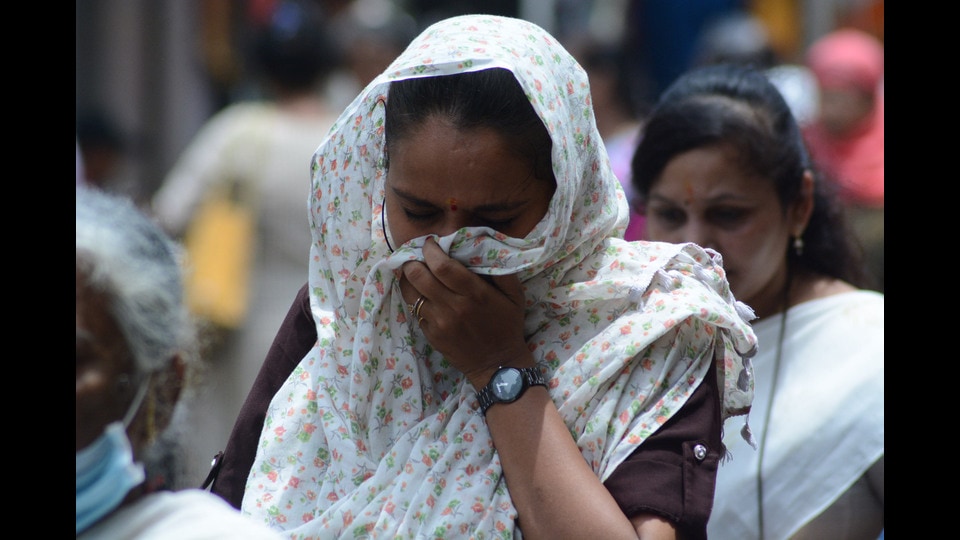
But are heat action plans enough to deal with a crisis of this scale where millions of people are exposed to uninhabitable conditions for days together? HT’s data team reported on May 3 that 49.4% of India’s work force including agricultural labour works outdoors, irrespective of temperature and other meteorological considerations.
States and the Centre were not prepared for an unprecedented spring heat wave this March and April which affected large parts of South Asia in India and Pakistan. Apart from issuing health advisories and heat wave warnings, not much could be done to reduce people’s exposure.
Firstly, state and district heat action plans need to prioritise care and shelter for the poorest who may not afford a paid leave on extremely hot days. Perhaps even consider a heat allowance for those affected giving them an option to stay home on severe heat wave days.
Heat action plans of course should be pre-emptive and kick in even before a heat wave spell sets in next time, based on India Meteorological Department’s advance forecasts. The Ahmedabad heat action plan provides a template on inter-agency coordination, capacity building of officials, and details on how to maintain links with hospitals; water and power utilities; schools etc to implement the action plan.
Coordination with power and water utilities will be key to prevent or reduce the number of fatalities linked to heat stress. India saw major outages and load shedding in different parts of the country during the latest heat wave spell. That may have been detrimental for the health of infants, the elderly and those with co-morbidities. The heat action plans need to ensure power is supplied during hot days without fail.
But the impact of the March and April heat wave is not known yet. Considering its impact on a very large area over northwest, east and central India, the Centre and the National Disaster Management Authority should have by now released the details on deaths, impacts on labour, agriculture and other sectors. To put action plans in place, it’s also important to understand the magnitude of the impact of these heat extremes.
Heat action plans however are an emergency response. They cannot be our only strategy to deal with heat extremes. Our policies on infrastructure and development need to incorporate rising temperatures and vulnerability of various regions in the country.
For instance, several parts of central India suffered severe heat waves as temperatures peaked to above 45 degree C last month. This region also has large contiguous forests and rich biodiversity and massive reserves of coal and iron ore. Business Standard reported on May 7 that India plans to reopen 100 coal mines to meet the spike in power demand. A senior official is quoted saying India is expected to increase output by up to 100 million tonnes in the next three years by reopening closed mines. Reopening mines and opening new coal blocks under forests would definitely accentuate heat stress in central India.
Perhaps, the government needs to consider impacts of such major infrastructure projects in ecologically important areas and assess them through the climate lens. In fact, it is not just mines; the government need to consider very cautiously the impact of any large project involving forest diversion. Ease of business may be an important issue for the economy but so is our increasing vulnerability to climate impacts.
I read most minutes of the Forest Advisory Committee meetings which deal with proposals of forest diversion for various infrastructure projects. Rarely do they consider issues such as micro-climate impact on local people of forest loss. These are emerging concerns that also need FAC’s consideration.
The Centre for Science and Environment, in a briefing note on May 6, highlighted that extreme heat can lead to thermal discomfort inside buildings which can have adverse health outcomes related to sleep disorders, irregular blood pressure, respiratory and cardiovascular diseases, mental health disorders, and pregnancy-related complications, among others as per World Health Organization’s Housing and Health Guidelines. Other than the public health risk, heatwaves are bound to upset the energy budget as they cause a surge in electricity demand due to increased use of air conditioners. It is of utmost importance to prevent energy lock-in in our new buildings and also retrofit older buildings to withstand the warming environment and reduce energy consumption, CSE researchers said.
Urban heat island effect in cities is also an imminent crisis as built-up areas increase. In Delhi, Yamuna Sports Complex for example recorded maximum temperatures over 46 degree C on a couple of days last month when other stations recorded maximum temperatures that are 2-3 degree C lower. This is because of the lack of foliage, green spaces around the sports complex. These islands need to identified to make interventions that cool them down.
For now, states in northwest and central India need to prepare immediately for another heatwave spell. “Harsh heat will build in Southern Asia (again) in the coming days. Pakistan will break 50°C (122°F) in places. This follows a very hot March and hottest April on record. The heat really is relentless. Very hot also for large parts of India,” tweeted Scott Duncan, a Scotland based meteorologist. IMD has also warned of a 2-3 degree C rise in maximum temperatures over south Punjab, south Haryana-Delhi, Rajasthan and north Madhya Pradesh during next 4 days and said several pockets are likely to experience heat wave to severe heat wave conditions.
The views expressed are personal