E-Paper



Climate and Us | Two dire warnings that India can't sweep under the rug
The findings of two studies relating to PM2.5 pollution and climate tipping points highlight the grave risk of cancer and extreme weather events respectively. Authorities should take note.


Two research papers published last week should wake central, state and city level authorities up from their slumber.
PM2.5: The elephant in the room
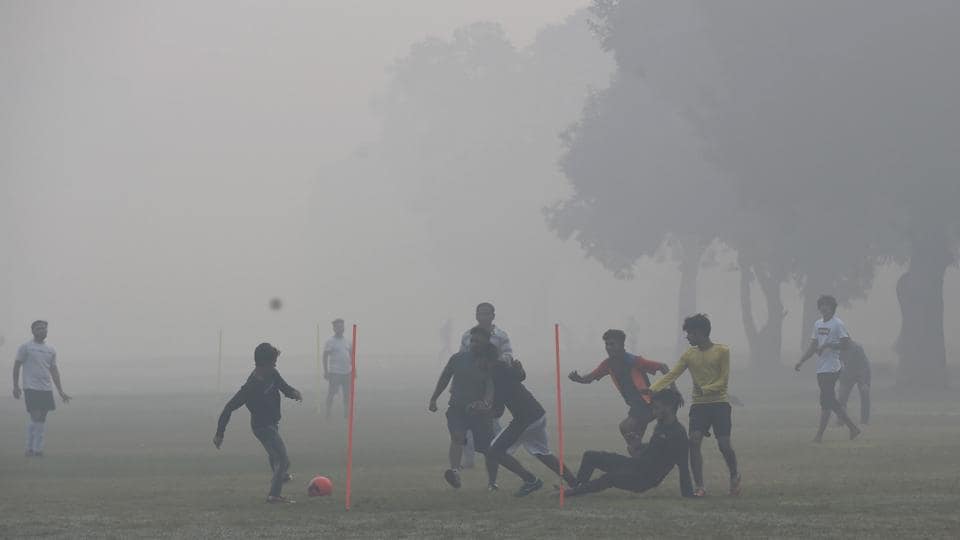
Air pollution is deadlier than we understand, and in particular PM2.5 particles (tiny, respirable pollution particles that can get lodged in the lungs) are threatening the lungs of millions of non-smoking children and adults in India.
Research by the Francis Krik Institute and the University College of London found that PM2.5 pollution causes the growth of cells in the lungs, which already carry cancer-causing mutations. This is the first time a research paper has revealed the pathway by which air pollution particles can cause cancer among some people.
The research team examined data from over 400,000 people and also found higher rates of other types of cancers in areas with high levels of PM2.5. They speculate that air pollution could promote the growth of cells carrying cancer-causing mutations elsewhere in the body. The research was presented at the ESMO Congress in Paris, a conference of medical professionals in the oncology sector on September 10.
“Although smoking remains the biggest risk factor for lung cancer, outdoor air pollution causes roughly 1 in 10 cases of lung cancer in the UK. An estimated 6,000 people who have never smoked die of lung cancer every year in the UK, some of which may be due to air pollution exposure. Globally, around 300,000 lung cancer deaths in 2019 were attributed to exposure to PM2.5,” researchers wrote.
While public health professionals and scientists in India have already acknowledged the role of PM2.5 particles in endocrine disruption causing insulin resistance and aggravating diabetes; complications associated with chronic pulmonary obstructive disorder; depression; compromised heart function and strokes, this research paper once again drives home the fact that air pollution needs to be addressed on a war-footing.
The paper is significant for India because the country is presently implementing the National Clean Air Programme (NCAP) – which was launched in 2019 by the Centre to curb air pollution in Indian cities. NCAP has an aim to reduce PM10 and PM2.5 pollution by 20 to 30% over 2017 levels by 2024. It is being implemented in 131 cities covering 124 non-attainment cities, which did not meet air quality standards for five consecutive years.
Last week, the ministry said, of the 131 cities covered under NCAP, 95 cities are showing an improvement in air quality. And of the 95, Varanasi has recorded the highest improvement, with a 53% decline in PM10 (coarse, pollution particles) concentrations in 2021-22 compared to the baseline of 2017, officials said.
In 2017, Varanasi’s annual PM10 concentration was 244 micrograms per cubic metres. It declined to 114 micrograms per cubic metres in 2021-22. Delhi has improved too, as per assessments made by the Central Pollution Control Board recording a drop of 18.6% since 2017. In 2017, Delhi’s PM10 annual average concentration was 241 micrograms per cubic metres in 2017, which declined to 196 micrograms per cubic metres in 2021-22, officials said.
But the catch is that while reviewing the performance of NCAP, the ministry is considering only PM10 emissions and not PM2.5 emissions. To assess effectively whether NCAP is able to reduce the health risk from air pollution in Indian cities effectively, the criterion should be PM2.5.
PM2.5 emissions are mainly generated from various combustion processes like industry, waste burning, stubble burning and transport. These activities will have to be controlled and shifted to cleaner fuels if PM2.5 emissions have to reduce. A cursory reading of some of the city based air pollution action plans shows that they are focused on dust control, paving of roads and solid waste management. These actions are important considering that road dust is very high and waste segregation hasn’t taken off in most cities and towns. But overlooking PM2.5 would be ignoring the elephant in the room.
Climate: Tipping over
Another research paper on climate tipping points is telling us what we know but try to shove into the background. A research paper led by Stockholm Resilience Centre, Stockholm University published in Science journal on September 9 provides an updated assessment of the most important climate tipping elements and their potential tipping points, including their temperature thresholds, time scales, and impacts. Their analysis indicates that even at global warming of 1° C, a threshold that we already have passed, puts the planet at risk of triggering some tipping points. For example, the Greenland Ice Sheet; the Boreal Permafrost; the Barrents Sea Ice; the West Atlantic Ice Sheet; the low-latitude coral reefs are reaching the tipping points before the 2° C global warming threshold is breached.
“Our assessment provides strong scientific evidence for urgent action to mitigate climate change. We show that even the Paris Agreement goal of limiting warming to well below 2° C and preferably 1.5° C is not safe as 1.5° C and above risks crossing multiple tipping points. Crossing these CTPs can generate positive feedbacks that increase the likelihood of crossing other CTPs. Currently the world is heading toward ~2 to 3° C of global warming; at best, if all net-zero pledges and nationally determined contributions are implemented it could reach just below 2° C. This would lower tipping point risks somewhat but would still be dangerous as it could trigger multiple climate tipping points,” the team concluded.
The fact that we are reaching a point of no return is obvious from the scale of floods in Pakistan, Indian states like Assam, Karnataka and Odisha this year. Earlier in the year, India and Pakistan experienced unprecedented heat stress that triggered forest fires; extreme heat also reduced India’s wheat crop yields, causing the government to stop wheat exports; shortage of coal led to power outages.
From the climate crisis to air pollution, from questions of the development-environment tradeoffs to India’s voice in international negotiations on the environment, HT’s Jayashree Nandi brings her deep domain knowledge in a weekly column
The views expressed are personal
 ABOUT THE AUTHORJayashree Nandi
I write on the environment and climate crisis and I believe these are the most important stories of our times.