E-Paper



Climate and Us | What a reply in Parliament tells us about climate adaptation
The release of funds has seen a steady decline. As the crisis now sees pronounced impacts across the country, much more must be done to protect its vulnerable

 Prefer HTon Google


Last week, the government gave replies to several questions on India’s stand on the climate crisis in the Parliament. Some of them made me hopeful, but some were extremely concerning.
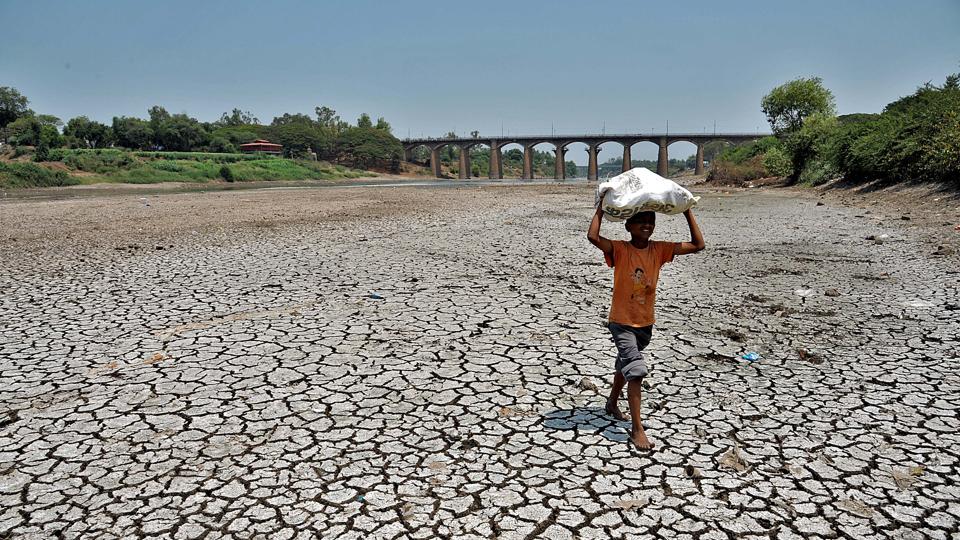
The impacts of the climate crisis are now so pronounced that humans and ecosystems have already reached their hard limits beyond which adapting to these changes is likely impossible.
Hard limits have been reached for warm-water coral reefs, coastal wetlands, some rainforests, and some polar and mountain ecosystems according to Intergovernmental Panel on Climate Change (IPCC). We know that globally, emissions are continuing to rise. Global energy-related CO2 emissions rose to their highest ever level last year because economies tried to bounce back from the pandemic, data from International Energy Agency showed.
In such a situation, when action on the climate crisis is slow, the least India can do is to help its vulnerable regions and people adapt to the changes.
But according to a reply by the environment ministry in the Rajya Sabha, under the National Adaptation Fund for Climate Change (NAFCC) which was set up to support adaptation activities in India, only ₹27.76 crore was released in 2021-22.
Since 2017-18, funds released for adaptation have been on a steady decline from ₹115 crore released 2017-18; ₹109 crore released in 2018-19; ₹33.5 crore in 2019-20; ₹42.94 crore in 2020-21 and only ₹27.76 crore in 2021-22. NAFCC was established in 2015 to support adaptation activities in the states that are vulnerable to the adverse effects of the climate crisis. NAFCC is implemented in project mode and to date, 30 projects are sanctioned in 27 states and Union Territories.
The National Bank for Agriculture and Rural Development (NABARD) is the national implementing entity for NAFCC and project funds are released to NABARD in instalments based on the project performance and utilisation of grants among other things.
But how can adaptation requirements for a country like India be so limited? From the list of projects supported by NAFCC, it appears that these are prototypes that are being tried. Some examples of adaptation projects under the scheme include climate-resilient livestock production in Punjab; climate-smart villages in select districts of Madhya Pradesh; rainwater harvesting in Banswara, Rajasthan; gene pool conservation of indigenous rice varieties in parts of Nagaland and so on. At this juncture, however, India needs large scale adaptation interventions to protect its poor and vulnerable populations.
The NAFCC needs to be several times more ambitious to protect those at risk. The same Rajya Sabha reply suggests that the demand and utilisation of funds released under the Climate Change Action Program (CCAP) are very modest.
The National Action Plan on Climate Change (NAPCC) was released on June 30 2008 under the then Prime Minister Manmohan Singh. The NAPCC includes eight national missions and 24 other initiatives, which are being implemented by the respective nodal ministries in the central government. Recognising the need of providing adequate resources for implementing state climate change action plans, the 12th Five Year Plan launched a Climate Change Action Programme (CCAP). The CCAP is meant to support state actions that build capacity to assess the climate crisis, formulate adequate response measures to the challenge and implement the relevant activities within agreed policy. In 2021-22, only ₹30 crore of funds were allocated under the scheme for states, of which only ₹11.98 crore have been utilised.
India has made very ambitious commitments in Glasgow. Prime Minister Narendra Modi announced that India will go carbon-neutral by 2070 and take other steps, including raising the share of renewable energy in supplies by 2030 and reducing aggregate carbon emissions by a billion tonnes by the same year.
Apart from meeting these global commitments, the government should focus on the adaptation and capacity-building of states to deal with the impacts of the climate crisis. From the inadequate funds that have been released and utilised it appears that both the adaptation scheme and the climate change action program are dying.
In response to another question, on whether the government has issued any notice to the big oil and gas companies and their policymakers regarding the process of making the country carbon-free, MoEFCC replied that India is trying to increase the production of oil and gas.
“The government has taken a series of measures to enhance energy security and improve efficiency in [the] use of energy for inclusive growth and sustainable development. These inter alia include diversification in sources of imports, promotion of alternate fuels, increasing production of oil and gas, substitution of energy demand, improving refinery processes, notification of fuel efficiency norms, etc,” it has said.
Diversification of imports and increasing domestic production of oil and gas are understandable in view of the massive disruption in the energy sector following the Russia-Ukraine crisis. But the government should be cautious of the ecological impacts of increasing oil and gas production and the bid to ensure energy security should not take away from the move to swiftly increase renewable energy capacities.
From the climate crisis to air pollution, from questions of the development-environment tradeoffs to India’s voice in international negotiations on the environment, HT’s Jayashree Nandi brings her deep domain knowledge in a weekly column
The views expressed are personal