Many, if not most, readers of this column have been through Covid-19. One or another variant of it. And by now, that is about two-and-a-half years since its first appearance, for most of us, the number of one’s relatives, friends and acquaintances who have been affected by the virus would be greater than that of those untouched by it. In fact, if one has not had the thing, one can count oneself miraculously lucky. A touchwood case.
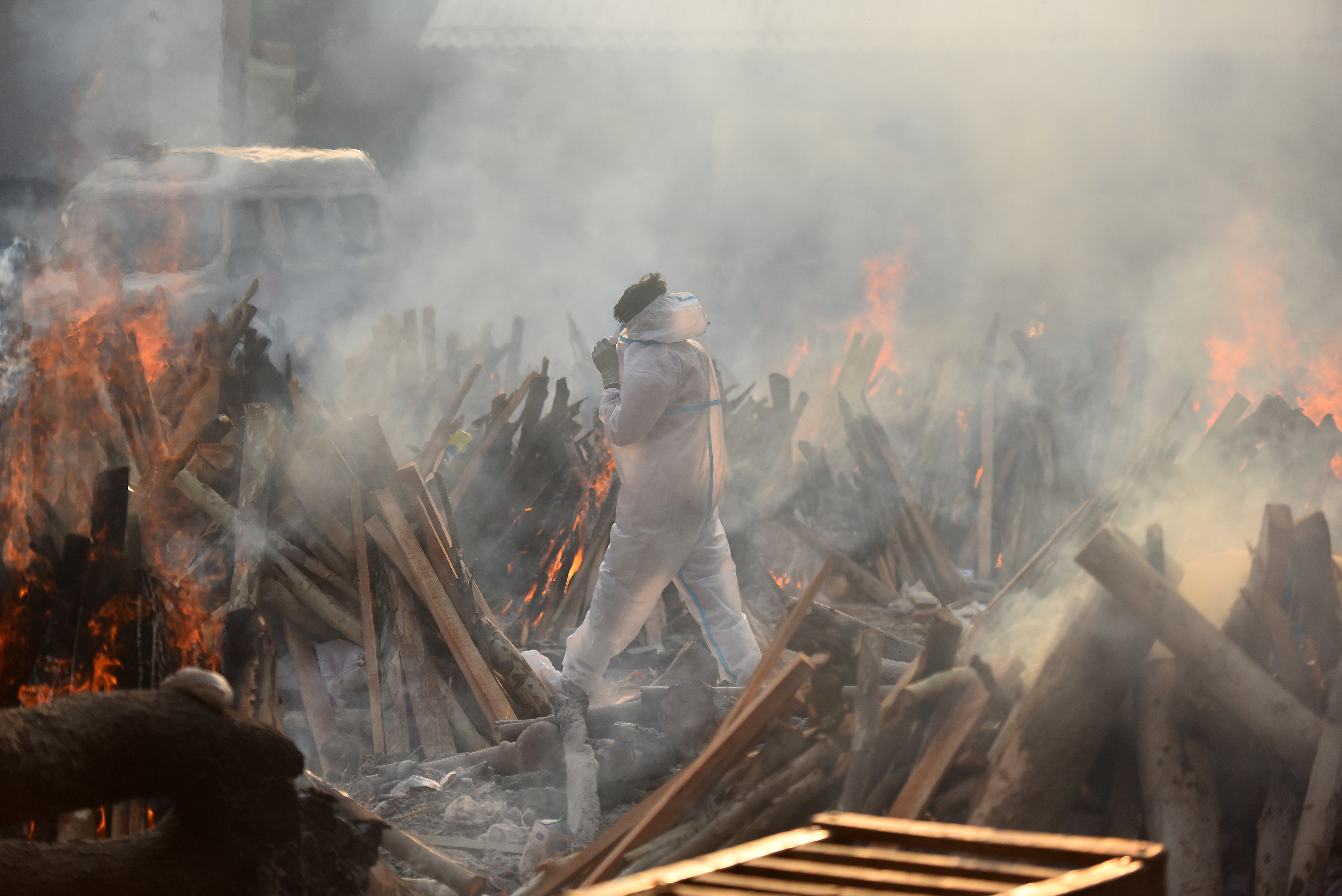
Let no one say ‘health is a state subject’. Death is not. It is on no list, Union, state or concurrent. But it is in the mind of the winged demon that is out to harry us. (HT Photo)
I steered clear of it, until a fortnight ago. And then when it did come knocking, it did so gently, almost apologetically. “Omicron is a milder version”, it is said. “Before you know it, it has come and gone.” True enough. But not wholly so. It can be described as a moderate member of what is essentially an extreme outfit. It subscribes to the parent’s creed.
But that worry – the Covid worry – having come and departed, I have been through another weird experience. A single mosquito, just that, a loner, has been hovering around my bedroom for the last four or five days. “How do you know it is the same one?” would be a legitimate question. I do not know how. I do not recognise its face, its features. But I just know. It is not one of the scourge or swarm or infestation that I know, as an old Chennaivasi, hell bent to outrage my ears, ravage my ankles, make of my forearms open counters of cherry-red wine.
Every night, these last few nights, as I settle down to my mandatory bedtime reading, he appears. And does so in exactly the same way. He first darts across my face, west to east. Yes, the face, drawing an Equator across the cheeks and nose. And by the time I have been able to raise my hands to clap and zap him, he is gone. Just for a minute of course. Before I have moved to the paragraph after the one I was reading on his first sortie, he is back but this time in the reverse direction, east to west. I venture the manoeuvre again and again, in vain. He next does a low flight sally, staying just above the skin of my face. I can almost feel its wings. And I then, against my better judgment, let the open book fall over my face, so as to bury it between the printed page and some part of my face. Luckily for the book and my face, but unluckily for my ego, the raider has escaped. My wife, a silent witness to all this, smiles and as always gives me practical advice: “Leave it… Use the mosquito repellent gel.” And she hands me a tube of it. She even offers me a choice: “Or would you like to try the spray?”
I do that, gratefully, but also aware of what the zooming syringe is telling me: “You think you have escaped the virus, don’t you? Maybe you have. But I am going to get you. Yes, me, bad old me. I am not going to let you off… Just you wait…” And then, thanking my wife, I tell him “Sorry, you old bit of bite, I am not going to let you”.
And so, it was with the attention of the afflicted that I read a recent article on the climate crisis by Dr K Srinath Reddy, president of the Public Health Foundation of India, in which he says,“Covid-19 is not the only infectious disease whose threat is amplified by climate change. On a more regular basis, even after this pandemic subsides, we can expect a rise in vector-borne diseases. Diseases transmitted by mosquito bite will increase, as the insects can rise to higher altitudes and spread farther afield wherever the warmer weather suits them. Dengue already poses a threat to vast swathes of the global population, while malaria still piles up deaths in Africa and Asia. Add chikungunya and zika to the list of mosquito-borne diseases that will find global warming to their liking.”
He adds, “India is already experiencing this spurt and spread of vector-borne diseases. New states in north and Northeast India are becoming malaria prone. Malaria is also spreading from central Indian states to the south-western coastal states of Maharashtra, Karnataka and Kerala.”
Grim truth. The virus may abate, but it would have left millions too enfeebled to be able to tackle the vector.
Dr Reddy, however, should not be the only one saying this. Other voices in authority need to say this. And tell all of us what is being done to prevent this threat from becoming a danger. And, what we should be doing about it.
Some major voice that has in it more than authority – that has a restless zeal to it, a kind of obsession. Nothing less will suffice. Let no one say “health is a state subject…”
Death is not.
It is on no list, Union, state or concurrent. But it is in the mind of the winged demon that is out to harry us.
Gopalkrishna Gandhi is a former administrator, diplomat and governor
Gopalkrishna Gandhi read English Literature at St Stephen’s College, Delhi. A civil servant and diplomat, he was Governor of West Bengal, 2004-2009. He is currently Distinguished Professor of History and Politics at Ashoka UniversityRead More

 E-Paper