
 E-Paper



Firebrand who shaped Bengal’s politics, culture
Born in Cuttack in 1897 in a prominent Bengali family, Subhas Chandra Bose went to college in erstwhile Calcutta and chose the city as his political arena.

 Prefer HTon Google


His life and death continue to intrigue generations, but 125 years after Subhas Chandra Bose was born, his legacy still shapes not just the politics of Bengal but also the region’s society, culture and literature — a testament to the abiding attraction of his firebrand patriotism and his grassroots connect.
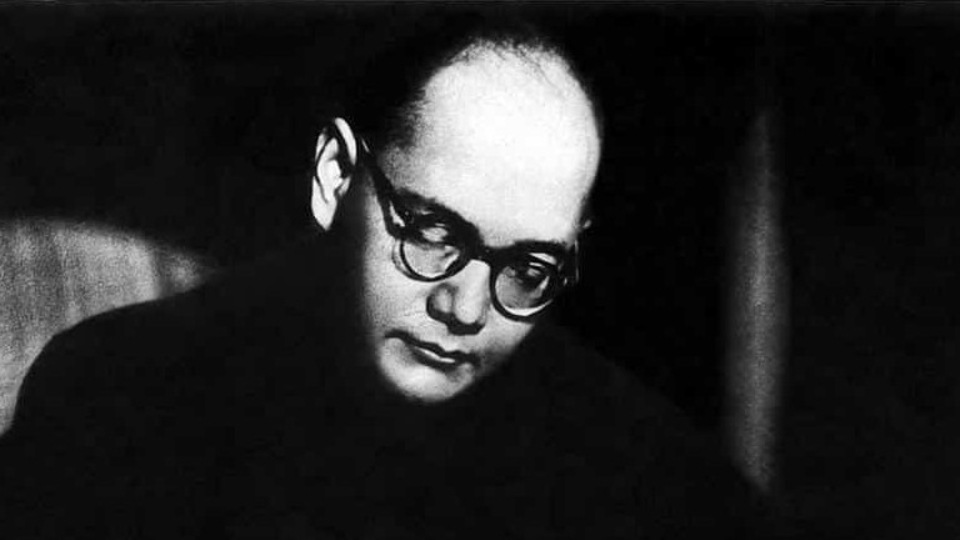
Born in Cuttack in 1897 in a prominent Bengali family, Bose went to college in erstwhile Calcutta and chose the city as his political arena.
He started a newspaper, rose steadily through the Congress, organised ground movements with his rousing addresses, and eventually became mayor in 1930. His rise to the top of the Congress, bitter fall-out with Mahatma Gandhi, and dramatic escape from house arrest in 1941 not only established his stature as the tallest politician from Bengal but also made the public believe that he was a magician who could achieve anything. His subsequent travels to Europe and south-east Asia, brushes with fascism and Nazi Germany, leading the Indian National Army and epic battles with British troops only burnished his colossal stature in the freedom movement.
“Culturally and socially, people of Bengal are highly emotional. They regard Netaji as the greatest patriot India has ever seen. Netaji has attained immortality in their hearts. The mystery surrounding Netaji’s death gives them some kind of self-satisfaction,” said Amal Kumar Mukherjee, former principal of Presidency College where Bose was a student before he was expelled after assaulting a professor for anti-India comments.
Since independence, ordinary people, media and governments have focused on the controversy surrounding his death, and the numerous theories abound over the claim that he survived an air crash in Taiwan in August 18, 1945. Even before independence people claimed that they had met Bose in a railway carriage. But the sightings gained more attention in the 1950s with links drawn to at least six different monks — the first being Saradananda who lived at Shaulmari in Bengal’s Cooch Behar district to Gumnami Baba, who died at Faizabad in Uttar Pradesh in September 1985.
To be sure, at least four separate commissions have found no conclusive evidence that any of these people were actually Bose, even though the Justice Mukherjee Commission controversially concluded in 2006 that Netaji didn’t die in the crash. Amal Kumar Mukherjee felt the confusion around the multiple findings helped fuel even more conspiracy theories.
“The Mukherjee Commission said after a thorough investigation that Netaji did not die in Taihoku but for reasons unknown the UPA government rejected its findings. For obvious reasons, the debates, which never really subsided, continue to this day,” he said.
Chandra Kumar Bose, Bose’s grandnephew and a Bharatiya Janata Party leader in Bengal, agreed. “Netaji lives in the hearts of millions as a deathless hero mainly because of the role played by of the government. The official version was that he died in the plane crash. Why in that case was the Mukherjee Commission formed when the Shah Nawaz Committee set up in 1956 and the Khosla Commission set up in 1970 clearly said that Netaji died in Taihoku?...People are confused,” said Bose.
“Last week I wrote a letter to Prime Minister Narendra Modi, seeking a DNA test of the last remains of Netaji. His daughter Anita Bose Pfaff made the same request three months ago. In reply to a letter from former external affairs minister Sushma Swaraj in 2016, the Japan government said that out of five files it has on Netaji, three are yet to be made public. Our government should find out what’s in those three files. I have urged the Centre to form a team, find some conclusive evidence and make it public. As long as it is not done, the absurd theories will continue,” said Bose.
In Kolkata today, Bose is everywhere — from small neighbourhood clubs and roadside shops to arterial roads and the city’s airport. Books written on his life, thought, legacy and death continue to be sold in the thousands, and he is indispensable part of any political debate — be it in an adda or the Prime Minister’s rally.
For National Award-winning director Srijit Mukherji, the success of his 2019 film, Gumnaami that was based on theories about Bose’s death, showed the power of Netaji in Bengal. “Every political party has its own agenda,” he said. “The Left wants to dismiss the death in Russia theory. The Congress obviously has its own reason to stand by the plane crash theory and the fact that it has been handed down for generations in history books and adopted as the state narrative despite a lot of inconsistencies. The Right support the Gumnami Baba theory that, in a way, supports their narrative well, especially in terms of the spiritual angle and the monk’s disenchantment with the Congress,” said the director.
Chandra Kumar Bose felt that the Centre should also make public every record it has on Gumnami Baba. “The Sahai Commission report says he was a follower of Netaji. But it is claimed that important politicians, including a former prime minister and union minister, visited him. If a monk was so important, people have the right to know his real background. If he had such high-profile visitors the intelligence bureau must be having a file on him. Even if he was an imposter, people have the right to know it,” said Bose.
For many other experts, the enduring relevance of Netaji is due to his ideology, not the controversy around his death. Shouvik Mukhopadhyay, a professor of history at Calcutta University, sees Bose as the architect of a nationalist thought process based on pluralism and secularism. He feels that to understand Bose’s legacy, one had to follow freedom fighter Chittaranjan Das, who was a mentor to Bose. “Bose left the civil service and entered political life under the guidance of the great freedom fighter Chittaranjan Das who was a follower of Bipin Chandra Pal. One cannot understand Bose without understanding Das, whose biggest contribution was revival of Bengal’s role in national politics. Bengal took a backseat after India’s capital was shifted from Calcutta to Delhi in 1911. Das not only restored Bengal’s regional identity on the national scene by forming the Swaraj Party with Motilal Nehru (Jawaharlal Nehru’s father) but also gave equal projection to people from every region of the country,” said Mukhopadhyay.
“Another cardinal point of the agenda Das had was to bridge the chasm between Hindus and Muslims at the state and national level. Bose took this job one step forward. Hence, he has become all the more relevant in today’s scenario. Whether it is the songs of the Indian National Army that Bose led or the differences he had with Syama Prasad Mookerjee (founder of the Bharatiya Jan Sangh) and the Hindu Mahasabha, one finds inclusiveness in his approach to nation building,” he added.
Chandra Kumar Bose shares the same thought. “Netaji believed in the unity of all religions and all races. Unless we can live his philosophy there is no point in celebrating his birthday. Unless that is done the nation will disintegrate. Just look around you,” he said.
Mukherji said he felt that the mystery around Bose’s disappearance did not amount to a lot anymore. “Bengalis have either forgotten him or are oblivious of the various theories surrounding his disappearance…it seems that if the truth comes out it might put a lot of parties in a lot of discomfort. People of India might start asking uncomfortable questions to the powers that governed us for 73 years,” he said.


