E-Paper



How Copenhagen celebrates less as more with active reuse culture
Nordhavn is not a shopping district or doesn’t have what are called amusement activities but gives its residents frugal joys

 Prefer HTon Google


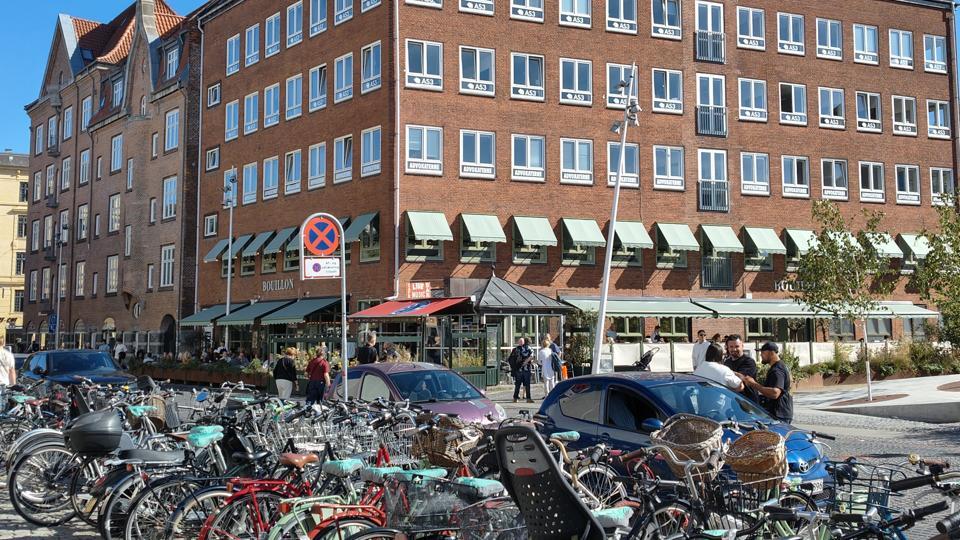
The idea that less is more, can be seen and felt in several parts of Denmark’s capital Copenhagen. It is there in the city’s raging cycling culture; in its flea markets; in city and home design and most importantly in its recycling units.
Would you leave your things, which you have no space for anymore, to be taken away by unknown citizens for their use? Not for charity, Copenhagen’s recycling units are places where people leave their things for other tenants, neighbours etc to benefit from a product’s entire lifecycle.
Strolling through Nordhavn, Denmark’s new city built in what used to be once an industrial port area, one will come across such recycling or Genbrug units where tenants or homeowners have left books, CDs, toys, lamps, kitchen utensils, porcelain, warm jackets, puzzles of several kinds, clothes and several things of daily utility. Tenants are free to pick up what they need and not pay in return.
The idea however is a little different from India’s way of dealing with excess by donating them. Here reuse is organically built in, in daily practices.
The person leaving their ware at a recycling unit is benefitting by decluttering and the one taking any of these items is expected to take only things that he/she needs. The concept of living with less is also seen in the design of the new city. Nordhavn is a place where people live and work in close proximity to green spaces; swimming pools; play areas; child care facilities; schools; cafes; shops which all are within a few minutes of walking distance saving both time to commute and emissions. The idea is to give people what would make them content with life, in simple ways.
Also Read: Reshaping India’s waste management story
Nordhavn is not a shopping district or doesn’t have what are called amusement activities but gives its residents frugal joys--like say a playground with trampolines and swings for adults and children on the terrace of a building; or a space where residents can workout before leaving for work. The new homes in Nordhavn also carry the same simplicity in their straightforward design and facade.
This frugality can also be seen in Copenhagen’s huge second hand economy. From flea markets to seconds store which are equally sought after by youngsters and not inexpensive as such.
“Actually, I think this culture has been there for a while. When I was a kid, it was like that. But maybe that came from my parents’ generation, which grew up in the Second World War. And there, of course, there are not many things, you know. Food was scarce, clothes, we made it ourselves, all that. So there was, and then we came to the 70s, and there was this tendency of, you know, we want to save the planet,” says Vibeke Quaade, a communications consultant who has grown up in Copenhagen.
“There was at that time a big climate movement as well, I think. Yeah, but we called it the environmental movement. That’s also when we had the oil crisis, and when this whole transition towards a greener Denmark started. Then, I think we had, you know, the 80s and 90s, and that was much more about spending money and looking big,” she recollects.
“We’re now back to the 70s, basically, where people are realising, you know, resources are not just abundant. We have to kind of try to take care of things. So it has become trendy also to wear second-hand clothes, particularly among the youth. Not to overbuy stuff, to have second-hand furniture, you know, all these kinds of things. It’s a trend, and you can hope that it will stay now. I think this is slowly coming in for food as well. They are like food banks. There is also food in the supermarkets where the things approaching expiring dates, you know, it’s being pushed and then it’s yellow marked,” she adds.
The flea markets of course are also a sign that there may be wasteful consumption by certain sections of Danish society, as people often put out things they have barely used, for sale.
On being asked why a lady was selling her new Burberry bag at the flea market, “I have too many. Like most women, I buy too much and then I do not like some.” But the ones buying from her are happy to get a deal.
This approach can be seen in the Danes’ love for cycling. You can see Parliamentarians cycling to work at the Parliament in Christiansborg Palace. Danish Prime Minister Mette Frederiksen is also often seen cycling to work, according to residents. Cars do not appear to overwhelmingly dominate road space.
These practices are supplemented by incentives like deposit-refund schemes for bottles and cans. Perhaps waste segregation, management and recycling in Copenhagen is far easier and implementable also because of controlled generation of waste in the first place.
Denmark was also considering a consumption tax in recent years focused on reducing wasteful food consumption especially meat. That had to be shelved because it could be too tough for some residents to implement, those aware of the matter say.
“While the west has flea markets, in urban India this trend is picking up, and you do see flea markets, marts in metropolitans. There are also several such spaces online, especially through Instagram/Facebook where browsers can pick flea items. Swap markets have also become common right before big festivals such as Diwali. So, it would be wrong to say that in India, we do not have that presence, we have,” says Swati Singh Sambyal, an international circular economy expert.
“Traditionally, and for decades spaces to exchange clothes for utensils or barter items for a newer item have always existed. I would say we have the DNA to mainstream it further and with the government missions promoting circular economy and reduce, reuse, recycle campaigns, it is picking up, but slowly. Scaling this requires three things: making reuse aspirational, creating enabling policies, and leveraging digital platforms. India already has the cultural DNA with government missions supporting circular economy and RRR, and businesses building trusted online and offline spaces, flea and swap markets can easily move from niche to mainstream,” adds Sambyal.
India is spearheading the Lifestyle for the Environment (LiFE) Movement. It is focused on RRR and a circular economy. Introduced at COP26 in 2021, it encourages “mindful and deliberate utilization” over “mindless and destructive consumption” by nudging individuals and communities to adopt sustainable habits.
(This reporter is in Copenhagen for the Danida Fellowship Centre’s Learning Programme)