
 E-Paper



How should India remember Jawaharlal Nehru?
When Nehru gave his famous tryst with destiny speech on the eve of Independence, it was not clear what this destiny held in store for India

 Prefer HTon Google


November 14 marked the 132nd birth anniversary of Jawaharlal Nehru, and, on the day, there was a section of the Indian public who took to Twitter to mock him. How should India remember Nehru?
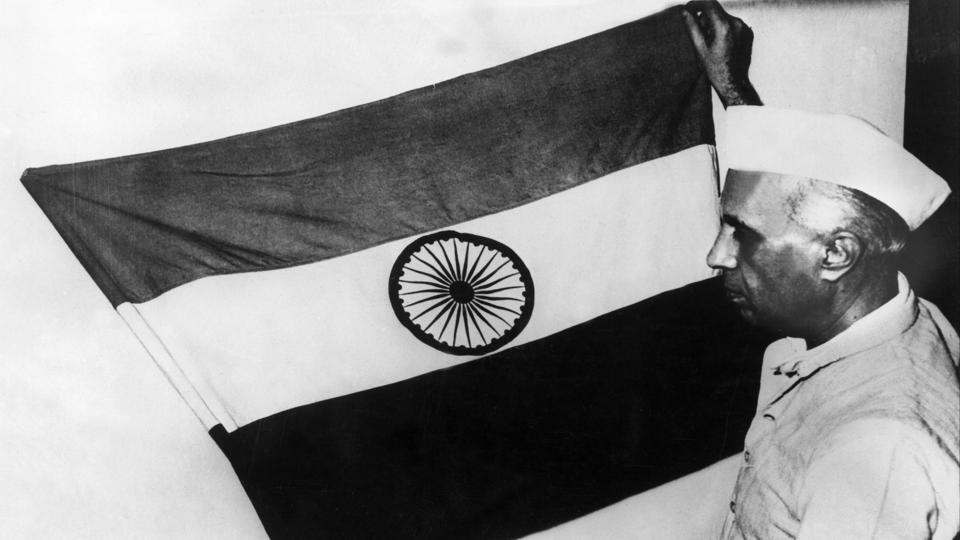
Let’s go back to August 1947 — a catastrophic time in India. Partition had claimed hundreds of thousands of lives, millions were forced to flee their homes; friends and neighbours had turned against each other. The treasury was in a shambles, and a large and diverse country did not have the peace, fraternity or resources to reconstruct itself.
When Nehru gave his famous tryst with destiny speech on the eve of Independence, it was not clear what this destiny held in store for India.
As independent India’s first prime minister, Nehru’s had onerous responsibilities. He had to deal with communal violence; the princely states were bargaining with the Indian Union, people’s basic needs had to be met. When Nehru completed his first term, there were glimmers of hope that India would achieve its potential.
We had inherited a 0.72% growth rate from the British. This had climbed to 3.6% in five years. The dream of a unified India had taken permanent shape. Nehru realised that India could only go forward if it adopted a scientific approach. At a time when there were not enough roads or trains, he laid the foundations for space and nuclear institutions. In the field of education and medicine, the Indian Institutes of Technology and the All India Institute of Medical Sciences were set up. All this in a country which began Independence with a 12% literacy rate.
It was to give India its rightful place in the world that Nehru, along with Yugoslavia’s Josip Broz Tito and Eygpt’s Gamel Abdel Nasser, conceptualised the Non-Aligned Movement (NAM). It did not espouse the radical communism that the erstwhile Soviet Union had adopted but it stood against the rampant capitalism of the United States. NAM countries called themselves the Third World. Nehru, whose popularity transcended geographical boundaries, was among the leaders of newly independent countries of the time.
Did this make him over-confident? Was this the reason he believed in the slogan “Hindi-Chini bhai-bhai” when dealing with China? The ignominious defeat of 1962 exposed his naiveté to some extent.
This was not the only mistake Nehru made. He failed to correctly assess the situation in Jammu and Kashmir. It was a gross error to promise a plebiscite in Kashmir. The situation, which worsened after the arrest of Sheikh Abdullah, has not returned to normal to date. However, Nehru later publicly admitted that Sheikh Abdullah’s arrest was a wrong decision and, in this, he displayed his ability to own up to his misjudgment and accept criticism.
On enacting the Hindu Code Bill, his critics were vocal that he should not have forgotten the minorities. Was he the only one to blame? It should not be forgotten that the Congress was a party of strong leaders at that time. Nehru often faced challenges from within the cabinet as well as in party forums. There was a discord between him and Purushottam Das Tandon, a resident of his city, Allahabad (now Prayagraj). Tandon had become president of the Congress without his consent and was later forced to step down by Nehru. In protest against his policies, Shyama Prasad Mookherjee also resigned from the cabinet and founded the Bharatiya Jana Sangh from which today’s Bharatiya Janata Party eventually emerged. What if Mookerjee had not left the Congress?
Nehru’s differences with Sardar Vallabhbhai Patel and Govind Vallabh Pant were well known. Babasaheb Bhimrao Ambedkar, a member of his cabinet, also parted ways later. The Congress of that time was a democratic party in the true sense and Nehru was the first among equals. He was the leader of his party, but not the last word. That pernicious trend started with Indira Gandhi.
Inspite of this, Nehru considered himself accountable to all Indians. It is said that he once went to Kanpur during an election campaign where a person at a public meeting told Nehru that he had given a ticket to a corrupt person. He listened, and answered that he may have made a mistake in giving the ticket but expressed confidence that the person who had made the assertion would not make the mistake of voting for a dishonest person.
Perhaps, it was to clean up politics that he established grassroots democracy. Today, millions have been elected from more than 2.5 lakh panchayats, several of them being women and Dalits. This is a unique experiment in empowering people at the grassroots through democratic methods. The India fashioned in large part by Nehru has never seen a military coup, as witnessed in our neighbouring country on several occasions.
We cannot assess Nehru through the prism of contemporary events. We can only get a true picture if we take into account the events of his time. This is something his critics often forget.
Shashi Shekhar is editor-in-chief, Hindustan
The views expressed are personal


